- Salary statistics
- Crematorium caretaker salary
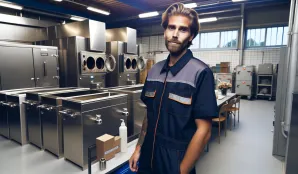
Crematorium caretaker salary
Latest available salary statistics are for 2025. Compare average pay, salary range and related job listings.
34 400 - 36 200 SEK / month
Women earn 100% of what men do.
Socialt arbete
Related tools
Salary progression Crematorium caretaker
What does a crematorium caretaker do? – Tasks and work environment
A crematorium caretaker is responsible for the operation of crematorium facilities and handling cremations. Tasks include receiving and preparing coffins, maintaining ovens and technical equipment, and ensuring compliance with laws and ethical guidelines. The role often involves close collaboration with funeral homes and relatives, requiring both technical skills and social competence. The work environment includes physical tasks as well as administrative responsibilities, with a strong focus on accuracy, respect, and discretion.
Salary development over time
Over the past three years, the salary for crematorium caretakers has shown a clear upward trend. In 2022, the average salary was 31,500 SEK per month, increasing to 35 000 SEK in 2023 and further to 34 700 SEK in 2024. This corresponds to a total increase of approximately 11 percent over the period. The positive salary development can be linked to increased demand for the profession, as well as a higher valuation of specialist skills within funeral and crematorium staff. At the same time, salary levels are influenced by labor market trends, where retirements and a growing need for qualified personnel drive wages higher.
Crematorium caretaker salary – comprehensive overview
- Average salary: 34 700 SEK/month
- Lowest salary: 34,600 SEK/month
- Highest salary: 36,400 SEK/month
- Hourly wage: 210 SEK
- Women: 34,600 SEK/month (100% of men's salary)
- Men: 35,600 SEK/month
- Regional differences: Data not available
Education and qualifications
To work as a crematorium caretaker, a high school diploma is usually required, often with a focus on technology or healthcare, combined with on-the-job training. The industry values practical experience, technical understanding, and the ability to handle sensitive situations. It is also common for new employees to take specialized courses in ethics and environmental technology related to the cremation process.
- Education: High school diploma, preferably in technology or healthcare (3 years)
- Further training: Internal courses in crematorium technology and ethics
- Practical training: Usually introduction and supervision at the workplace
- Certification: Some employers require certificates in handling hazardous waste
- Prerequisites: Precision, technical interest, and good teamwork skills
The profession of crematorium caretaker uniquely combines technical responsibility with compassionate interaction. Many describe that meeting with relatives requires great empathy and respect, while the work often involves working alone and independently in a quiet and peaceful environment.
Common benefits and compensations
Crematorium caretakers are often covered by collective agreements that include occupational pension, extra vacation days, and wellness allowances. Other common benefits may include work clothing, insurance, and opportunities for further training within the profession.
Competition and challenges
The competition for positions as a crematorium caretaker is relatively low, but the labor market is affected by the limited number of crematoria and retirements. Challenges in the profession include the requirement for technical competence and the ability to handle psychologically demanding situations professionally. Ethical considerations and the need to follow strictly regulated routines place high demands on accuracy and responsibility. A lack of formal education can sometimes be compensated by practical experience, but employers are increasingly seeking individuals with documented knowledge and strong social skills.
Tips for those wanting to become a crematorium caretaker
To succeed as a crematorium caretaker, it is important to be both precise and responsible, as the work requires strict adherence to laws and routines. A large degree of empathy and respect for grieving people is essential, especially in contact with relatives. Stress resilience is a valuable trait, as unexpected situations can arise requiring quick, correct decisions. Technical interest facilitates learning about crematorium machinery and processes, while the ability to work independently makes it easier to handle often solitary tasks. Flexibility and attentiveness help meet the needs of colleagues and relatives in a professional manner.
Key facts about crematorium caretakers
- Education level: High school diploma, often supplemented with internal training
- Work environment: Technical and peaceful, often independent work
- Typical work form: Full-time, daytime with some on-call duties
- Demand: About 237 available jobs within the profession in 2024
- Special skills: Crematorium technology, ethics, environmental management
Career paths and future outlook
After three to five years in the profession, a crematorium caretaker can advance to supervisory roles, such as crematorium manager or responsible for larger facilities. Further education in environmental technology, occupational health and safety, or leadership can open opportunities for career advancement within funeral services or technical operations. The Employment Service does not provide a specific forecast for the profession due to limited data, but there are indications of continued demand for qualified staff, especially considering retirements and a stable number of available positions. Specialization in environmental and safety issues can further strengthen career prospects.
Frequently asked questions about crematorium caretakers
- What does a crematorium caretaker earn?
- The average salary is 34 700 SEK per month, with variations between 34,600 SEK and 36,400 SEK. - How does one become a crematorium caretaker?
- The most common pathway is a high school education and on-the-job training at the workplace. - Are there gender differences in salary?
- Yes, women earn approximately 100% of what men do within the profession. - What personal qualities are important?
- Precision, empathy, technical interest, and a sense of responsibility are central qualities. - What are the future prospects?
- The prognosis is uncertain, but there are about 237 available jobs within the profession. - What are the working hours?
- Full-time daytime work is most common, sometimes with on-call duties.

Salary distributed by age and sector
| Age | Base salary | Monthly salary | |
|---|---|---|---|
| 35-44 | 35500 kr | 36300 kr | |
| 45-54 | 33100 kr | 33800 kr | |
| 55-64 | 91% | 35000 kr | 35900 kr |
| Snitt | 100% | 33900 kr | 34700 kr |
| Age | Base salary | Monthly salary | |
|---|---|---|---|
| 35-44 | 35500 kr | 36300 kr | |
| 45-54 | 33100 kr | 33800 kr | |
| 55-64 | 91% | 35000 kr | 35900 kr |
| Snitt | 100% | 33900 kr | 34700 kr |
| Age | Base salary | Monthly salary | |
|---|---|---|---|
| 35-44 | 35500 kr | 36300 kr | |
| 45-54 | 33100 kr | 33800 kr | |
| 55-64 | 91% | 35000 kr | 35900 kr |
| Snitt | 100% | 33900 kr | 34700 kr |
| Age | Base salary | Monthly salary | |
|---|---|---|---|
| 55-64 | 91% | 36300 kr | 37900 kr |
| Snitt | 100% | 33700 kr | 34700 kr |
| Age | Base salary | Monthly salary | |
|---|---|---|---|
| 55-64 | 91% | 36300 kr | 37900 kr |
| Snitt | 100% | 33700 kr | 34700 kr |
| Age | Base salary | Monthly salary | |
|---|---|---|---|
| 55-64 | 91% | 36300 kr | 37900 kr |
| Snitt | 100% | 33700 kr | 34700 kr |
| Age | Base salary | Monthly salary | |
|---|---|---|---|
| 45-54 | 34600 kr | 35200 kr | |
| 55-64 | 91% | 34100 kr | 34600 kr |
| Snitt | 100% | 34100 kr | 34700 kr |
| Age | Base salary | Monthly salary | |
|---|---|---|---|
| 45-54 | 34600 kr | 35200 kr | |
| 55-64 | 91% | 34100 kr | 34600 kr |
| Snitt | 100% | 34100 kr | 34700 kr |
| Age | Base salary | Monthly salary | |
|---|---|---|---|
| 45-54 | 34600 kr | 35200 kr | |
| 55-64 | 91% | 34100 kr | 34600 kr |
| Snitt | 100% | 34100 kr | 34700 kr |

About the data
All information displayed on this page is based on data from the Swedish Central Bureau of Statistics (SCB), the Swedish Tax Agency and the Swedish employment agency. Learn more about our data and data sources here.
All figures are gross salaries, meaning salaries before tax. The average salary, or mean salary, is calculated by adding up the total salary for all individuals within the profession and dividing it by the number of individuals. For specific job categories, we have also considered various criteria such as experience and education.
Profession Crematorium caretaker has the SSYK code 5161, which we use to match against the SCB database to obtain the latest salary statistics.
-

Freelance Funeral Advisor – Driven and Empathetic
Funeral and crematory staff
Mon, 13 Jul 2026 - 21:02 -

Customer Advisor for Funeral Services in Huddinge
Funeral and crematory staff
Mon, 13 Jul 2026 - 06:38 -
Customer Advisor for Funeral Services at Fonus in Borås
Funeral and crematory staff
Fri, 10 Jul 2026 - 21:08 -
Customer Advisor / Ceremony Host at Öström's Funeral Home in Gällivare
Funeral and crematory staff
Fri, 26 Jun 2026 - 21:50
Compare salary, work tasks and job outlook in adjacent occupations to find roles with similar skills or pay levels.
-

Housing assistance assistant salary
Average salary: 33 300 SEK/month • Socialt arbete
Caregivers, residential support
Compare with Crematorium caretaker
Mon, 13 Jul 2026 - 23:21 -

Average salary: 37 100 SEK/month • Socialt arbete
Treatment assistants and social pedagogues etc.
Compare with Crematorium caretaker
Tue, 14 Jul 2026 - 06:52 -

Average salary: 51 800 SEK/month • Socialt arbete
Priests
Compare with Crematorium caretaker
Mon, 13 Jul 2026 - 17:13 -

Average salary: 32 700 SEK/month • Socialt arbete
Recreation leaders etc.
Compare with Crematorium caretaker
Tue, 14 Jul 2026 - 04:46 -

Average salary: 37 100 SEK/month • Socialt arbete
Treatment assistants and social pedagogues etc.
Compare with Crematorium caretaker
Mon, 13 Jul 2026 - 19:29 -

Project manager, scout activities salary
Average salary: 32 700 SEK/month • Socialt arbete
Recreation leaders etc.
Compare with Crematorium caretaker
Mon, 13 Jul 2026 - 18:44


