- Salary statistics
- Ball mill caretaker, ore enrichment salary
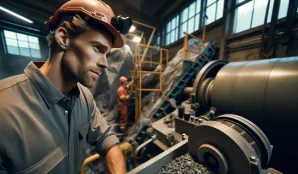
Ball mill caretaker, ore enrichment salary
Latest available salary statistics are for 2025. Compare average pay, salary range and related job listings.
46 200 - 51 100 SEK / month
Women earn 99% of what men do.
Industriell tillverkning
Related tools
Salary progression Ball mill caretaker, ore enrichment
What does a ball mill operator in mineral processing do? – Tasks and work environment
A ball mill operator in mineral processing is responsible for monitoring and controlling ball mills used to grind ore to the correct particle size for further processing. Tasks include checking machine functions, adjusting settings to optimize the grinding process, and supervising material flow through the system. Regular inspections and basic maintenance of equipment are included, as well as quickly identifying and fixing any operational disruptions. The work often involves shift work, and the environment can be noisy and dusty, demanding high safety awareness and precision.
Salary development over time
The salary for a ball mill operator in mineral processing has shown steady growth over the past three years. In 2022, the average salary was 43,200 SEK per month, followed by an increase to 47 800 SEK in 2023 and further up to 48 700 SEK in 2024. This development reflects a total increase of just over 10.6% over the period, indicating increased demand for the profession's skills and recognizing the value of experience and specialized knowledge. The wage increase can also be linked to technological advancements in mineral processing and the need to attract and retain qualified personnel. Despite the overall upward trend, the wage curve appears to level off somewhat, possibly due to market maturity and cost-efficiency measures within the mining industry.
Ball mill operator in mineral processing salary – complete overview
- Average salary: 48 700 SEK/month
- Lowest salary: 45,800 SEK/month (men), 47,200 SEK/month (women)
- Highest salary: 49,900 SEK/month (men), 47,200 SEK/month (women)
- Hourly wage (average): 287 SEK
- Women's salary in relation to men's: 99%
- Regional differences: Vary depending on mining region and employer
Education and qualifications
To work as a ball mill operator in mineral processing, a high school education with an industrial, technical, or process operator focus is typically required, combined with internal on-the-job training. Many employers prefer candidates with experience from similar process industries, while formal certifications can be advantageous. Practical knowledge of machinery, safety, and process control are essential qualifications for success.
- High school education: Industrial or technical programs, 3 years
- On-the-job training: Internships and introduction at the workplace
- Certifications/courses: Occupational safety, safety procedures, and machinery handling
- Prerequisites: Basic technical understanding and good physical condition
- Tips: Experience from process industry or mining is advantageous
Working as a ball mill operator often requires good multitasking skills, as multiple processes and machines must be monitored simultaneously. Collaboration with other roles in control rooms and production is crucial to ensure smooth and safe operation.
Common benefits and compensations
Ball mill operators in mineral processing are often offered benefits such as shift allowances, extra vacation days, wellness contributions, and pension schemes. Other common compensations include bonuses for meeting production targets, opportunities for further training, and access to company health services and workwear.
Competition and challenges
The competition for positions as a ball mill operator in mineral processing is moderate but can vary depending on region and industry conditions. A challenge is that the work environment requires high safety awareness, and technological developments demand continuous skill upgrading. Shift work and physically demanding tasks can be strenuous, making the profession unsuitable for everyone. The industry is also cyclical, with demand for certain metals and minerals affecting employment. Sometimes, there are limited job openings, but recent statistics show 1,437 job vacancies within the occupational group of process operators, stone crushers, and mineral processing.
Tips for aspiring ball mill operators in mineral processing
To succeed as a ball mill operator in mineral processing, it’s beneficial to have a technical interest and be detail-oriented, as machine monitoring and troubleshooting require attention to detail. Resilience is important because unexpected stoppages can occur and must be handled quickly and safely. Being solution-oriented helps in problem-solving and optimizing the grinding process, while good teamwork skills are essential for effective collaboration with colleagues in control rooms and production. Flexibility is valuable, as tasks can vary between supervision, maintenance, and adjustments. Communication skills are also a plus, as clear reporting of deviations and status is central to safety. Continuously taking initiatives to learn new technologies and processes enhances career development opportunities.
Key facts about ball mill operators in mineral processing
- Education level: High school with industrial focus
- Work environment: Shift work in noisy and dusty process environments
- Gender distribution: Small differences, women earn 99% of men’s salaries
- Job openings: 1,437 within the occupational group of process operators
- Experience requirements: Practical experience from process industry is advantageous
Career paths and future prospects
After three to five years as a ball mill operator in mineral processing, opportunities arise to advance to supervisory roles, such as shift supervisor or process manager. Some choose to further their education in process or production technology to move towards roles like process technician or maintenance manager. According to the Swedish Public Employment Service’s forecasts, no specific assessment has been made for this job title, but the broad field indicates continued demand for process operators in the mining and mineral industry. Technological advancements and a shift toward sustainable production may create new specialist roles in process control and automation. The high number of job openings suggests good prospects for those looking to establish themselves in the industry.
Frequently asked questions about ball mill operators in mineral processing
- What does a ball mill operator in mineral processing earn?
- The average monthly salary is 48 700 SEK, with variations depending on experience, education, and employer. - What are the gender differences in the profession?
- Women earn an average of 47,200 SEK per month, which corresponds to 99% of men's salaries. - What education is required to become a ball mill operator?
- High school education with an industrial or technical focus is recommended, preferably combined with internships and on-the-job training. - What occupational hazards are present?
- The work environment can be noisy and dusty, requiring protective equipment and a strong focus on safety routines. - Are there opportunities for advancement within the profession?
- Yes, with experience, one can move to supervisory roles or further education to become a process technician. - What is the job market like for ball mill operators?
- Currently, there are 1,437 job openings within the occupational group of process operators, stone crushers, and mineral processing. - What are the highest and lowest salaries in the profession?
- The highest salary is 49,900 SEK (male, private sector), and the lowest is 45,800 SEK (male, with compulsory education).

Salary distributed by age and sector
| Age | Base salary | Monthly salary | |
|---|---|---|---|
| 18-24 | 38800 kr | 46100 kr | |
| 25-34 | 100% | 40800 kr | 48200 kr |
| 35-44 | 97% | 42400 kr | 50200 kr |
| 45-54 | 41600 kr | 48600 kr | |
| 55-64 | 41800 kr | 49300 kr | |
| Snitt | 99% | 41300 kr | 48700 kr |
| Age | Base salary | Monthly salary | |
|---|---|---|---|
| 18-24 | 38800 kr | 46100 kr | |
| 25-34 | 100% | 40800 kr | 48200 kr |
| 35-44 | 97% | 42400 kr | 50200 kr |
| 45-54 | 41600 kr | 48600 kr | |
| 55-64 | 41800 kr | 49300 kr | |
| Snitt | 99% | 41300 kr | 48700 kr |
| Age | Base salary | Monthly salary | |
|---|---|---|---|
| 18-24 | 38800 kr | 46100 kr | |
| 25-34 | 100% | 40800 kr | 48200 kr |
| 35-44 | 97% | 42400 kr | 50200 kr |
| 45-54 | 41600 kr | 48600 kr | |
| 55-64 | 41800 kr | 49300 kr | |
| Snitt | 99% | 41300 kr | 48700 kr |
| Age | Base salary | Monthly salary | |
|---|---|---|---|
| 18-24 | 38800 kr | 45900 kr | |
| 25-34 | 100% | 40900 kr | 48200 kr |
| 35-44 | 97% | 42700 kr | 50500 kr |
| 45-54 | 41600 kr | 48500 kr | |
| 55-64 | 41900 kr | 49300 kr | |
| Snitt | 99% | 41500 kr | 48800 kr |
| Age | Base salary | Monthly salary | |
|---|---|---|---|
| 18-24 | 38800 kr | 45900 kr | |
| 25-34 | 100% | 40900 kr | 48200 kr |
| 35-44 | 97% | 42700 kr | 50500 kr |
| 45-54 | 41600 kr | 48500 kr | |
| 55-64 | 41900 kr | 49300 kr | |
| Snitt | 99% | 41500 kr | 48800 kr |
| Age | Base salary | Monthly salary | |
|---|---|---|---|
| 18-24 | 38800 kr | 45900 kr | |
| 25-34 | 100% | 40900 kr | 48200 kr |
| 35-44 | 97% | 42700 kr | 50500 kr |
| 45-54 | 41600 kr | 48500 kr | |
| 55-64 | 41900 kr | 49300 kr | |
| Snitt | 99% | 41500 kr | 48800 kr |
| Age | Base salary | Monthly salary | |
|---|---|---|---|
| 25-34 | 100% | 40300 kr | 48400 kr |
| 35-44 | 97% | 41100 kr | 49000 kr |
| Snitt | 99% | 40400 kr | 48400 kr |
| Age | Base salary | Monthly salary | |
|---|---|---|---|
| 25-34 | 100% | 40300 kr | 48400 kr |
| 35-44 | 97% | 41100 kr | 49000 kr |
| Snitt | 99% | 40400 kr | 48400 kr |
| Age | Base salary | Monthly salary | |
|---|---|---|---|
| 25-34 | 100% | 40300 kr | 48400 kr |
| 35-44 | 97% | 41100 kr | 49000 kr |
| Snitt | 99% | 40400 kr | 48400 kr |

About the data
All information displayed on this page is based on data from the Swedish Central Bureau of Statistics (SCB), the Swedish Tax Agency and the Swedish employment agency. Learn more about our data and data sources here.
All figures are gross salaries, meaning salaries before tax. The average salary, or mean salary, is calculated by adding up the total salary for all individuals within the profession and dividing it by the number of individuals. For specific job categories, we have also considered various criteria such as experience and education.
Profession Ball mill caretaker, ore enrichment has the SSYK code 8112, which we use to match against the SCB database to obtain the latest salary statistics.
-

Control Room Operator at Kristineberg Mine
Process operators, stone crushing and ore processing
Thu, 2 Jul 2026 - 21:18 -

Crusher Operator / Maintenance Mechanic in Munksund
Process operators, stone crushing and ore processing
Fri, 12 Jun 2026 - 06:36
Compare salary, work tasks and job outlook in adjacent occupations to find roles with similar skills or pay levels.
-

Average salary: 35 700 SEK/month • Industriell tillverkning
Grinders etc.
Compare with Ball mill caretaker, ore enrichment
Tue, 14 Jul 2026 - 10:55 -

Sheet metal straightener salary
Average salary: 40 100 SEK/month • Industriell tillverkning
Other machine and process operators, steel and metal
Compare with Ball mill caretaker, ore enrichment
Tue, 14 Jul 2026 - 07:11 -

Machine fitters, wood industry salary
Average salary: 34 700 SEK/month • Industriell tillverkning
Machine carpenters and machine operators, wood industry
Compare with Ball mill caretaker, ore enrichment
Tue, 14 Jul 2026 - 10:28 -

Average salary: 36 800 SEK/month • Industriell tillverkning
Welders and gas cutters
Compare with Ball mill caretaker, ore enrichment
Mon, 13 Jul 2026 - 19:09 -

Average salary: 38 300 SEK/month • Industriell tillverkning
Operators in sawmills, planing mills and plywood etc.
Compare with Ball mill caretaker, ore enrichment
Tue, 14 Jul 2026 - 11:56 -

Veneer presses, veneer manufacturing salary
Average salary: 38 300 SEK/month • Industriell tillverkning
Operators in sawmills, planing mills and plywood etc.
Compare with Ball mill caretaker, ore enrichment
Tue, 14 Jul 2026 - 11:57


