News and articles
- Home
- Articles






Latest posts

A mycologist is a biology specialist who studies fungi, their ecology, biology, and impact on ecosystems and society. Tasks often include fieldwork with collecting and identifying fungi species, laboratory analyses, and documenting and reporting findings. Many mycologists also conduct research on fungi's role in nature, their potential in medicine, food production, or environmental technology. The work environment varies between laboratories, universities, nature reserves, and sometimes industrial settings where fungi are used in various processes.
Read more ->
A cider worker is responsible for managing and supervising production in a cider plant, where fruit and berries are transformed into cider, juice, and other beverages. Tasks include receiving and sorting raw materials, operating and maintaining machinery, quality checks, and packaging finished products. The work often takes place in production facilities with a fast pace and requires accuracy, technical understanding, and good teamwork skills. Hygiene standards are strict, and the work environment can be noisy and sometimes humid, depending on the process stages.
Read more ->-

Opinion Landscape: Novus February 2026 – Social Democrats Still Largest
Thu, 19 Feb 2026 - 01:35 -

Policy rate remains at 1.75% – Riksbank signals stability
Thu, 29 Jan 2026 - 14:02


A music therapist works with using music as a means to promote health, well-being, and personal development for individuals or groups. Tasks can include leading musical activities, improvisation, listening, and music creation to support people with psychological, physical, or social challenges. Music therapists are often active in healthcare, schools, elder care, rehabilitation centers, and psychiatry. The work environment varies from calm treatment rooms to more lively settings where group activities are held, and the profession requires both teamwork skills and a high sensitivity to clients' needs.
Read more ->
A Music Technician is responsible for creating and optimizing sound environments at concerts, recordings, theater performances, and other events where music and sound engineering are in focus. Tasks include setting up and maintaining sound equipment, mixing and processing audio in real-time, and collaborating closely with artists, producers, and other technicians to ensure high-quality sound reproduction. The work environment varies from studios and stages to outdoor arenas, and working hours can be irregular, often in evenings and on weekends. Flexibility and the ability to handle stressful situations are central parts of the profession, especially during live performances where quick decisions may be required.
Read more ->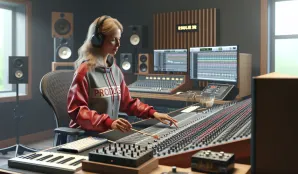
A Music Producer is responsible for the entire process of creating musical productions, from idea and songwriting to final recording and mixing. The role involves leading and coordinating artists, musicians, technicians, and other creatives in a studio environment, as well as selecting technical and artistic solutions to achieve the desired sound. The work environment is often studio-based but can also include live productions or remote work using digital tools. Many Music Producers are self-employed or freelancers, which means there is great variation in tasks and workplaces.
Read more ->
A music pedagogue at a music school is responsible for teaching children, teenagers, and sometimes adults in various musical subjects such as instruments, singing, music theory, and ensemble playing. The work involves planning and conducting lessons both individually and in groups, as well as motivating and developing students' musical skills and creativity. Often, organizing concerts and student performances, collaborating with colleagues, and participating in school development are included. The work environment is typically dynamic and social, with teaching taking place in classrooms, practice rooms, or on stage, and includes both daytime and evening work.
Read more ->
A music teacher in primary school is responsible for teaching students in the subject of music, which includes both theoretical and practical elements. Tasks include planning and conducting music lessons, leading choirs and ensembles, and organizing concerts and performances. In addition to teaching, mentoring and collaboration with colleagues across subjects are common. The work environment is varied and characterized by creativity, but can also present challenges such as large student groups and varying conditions regarding equipment and facilities.
Read more ->
A music educator in primary and secondary school is responsible for teaching students in music subjects, both practically and theoretically. Tasks include planning and conducting lessons, coaching ensemble playing and individual instrument or vocal lessons, as well as preparing and leading concerts and musical projects. The role also involves assessment and grading of students’ performances, and collaborating with colleagues within and outside the arts area. The work environment often varies greatly, with teaching taking place in classrooms, music halls, and sometimes on external stages or in cooperation with cultural schools.
Read more ->
A music director is responsible for planning, leading, and developing music activities, often within schools, cultural schools, or congregations. Tasks include teaching various instruments, conducting ensembles or choirs, and organizing concerts and musical events. The role also involves administrative elements such as scheduling, resource coordination, and contact with students, parents, and colleagues. The work environment can range from classrooms and rehearsal rooms to larger assembly halls or concert venues, requiring flexibility and strong organizational skills.
Read more ->
A music teacher in a music school is responsible for teaching students various musical instruments, singing, and music theory. The work often takes place both individually and in groups, with instruction tailored to students' age, experience, and interests. In addition to lesson planning, it is common to organize concerts, supervise ensembles, and collaborate with colleagues in other artistic subjects. Music teachers mainly work within municipal cultural schools, private music schools, or freelance, and the work environment is characterized by creativity, flexibility, and meetings with engaged students and parents.
Read more ->