News and articles
- Home
- Articles






Latest posts
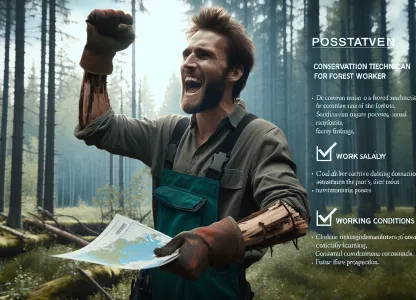
A nature conservation technician primarily works with practical conservation efforts in forests and on land. Tasks often include maintenance, restoration, and management of natural areas, biological surveys, and work to preserve and enhance biodiversity. The role typically involves fieldwork under varying weather conditions and on different types of terrain, from forests to wetlands and meadows. Nature conservation technicians often collaborate with biologists, landowners, and authorities, using both hand tools and machinery such as chainsaws or brush cutters. The work environment is physically demanding and requires a high degree of adaptability to the changing natural conditions.
Read more ->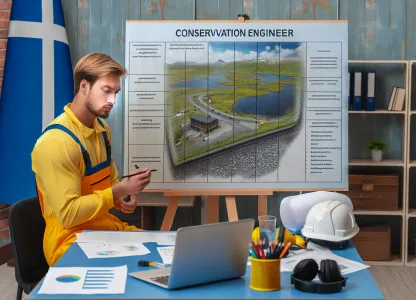
A nature conservation engineer works to protect, preserve, and develop natural environments and ecosystems. Typical tasks include inventorying species and habitats, conducting environmental assessments, developing action plans, and advising authorities, companies, and the public on legislation and environmental protection. The work environment varies between fieldwork in forests, land, wetlands, and watercourses, and office work where reports and investigations are compiled. Collaboration with other specialists in environmental protection and environmental technology is common, and work can be within the public sector, consulting firms, or private companies.
Read more ->-

Opinion Landscape: Novus February 2026 – Social Democrats Still Largest
Thu, 19 Feb 2026 - 01:35 -

Policy rate remains at 1.75% – Riksbank signals stability
Thu, 29 Jan 2026 - 14:02

A nature conservationist within forestry works to preserve, care for, and develop natural environments in the forest. Tasks include planting trees, clearing undergrowth, restoring wetlands, inventorying biodiversity, and implementing measures to protect endangered species. The work is often outdoors year-round, meaning the conservationist must be prepared for varying weather conditions and physically demanding tasks. Collaboration with landowners, authorities, and other actors in nature conservation is common, as is documentation and reporting of completed efforts. The work environment is characterized by close contact with nature and requires independence and good teamwork skills.
Read more ->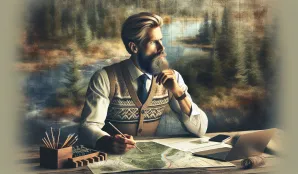
A nature conservation officer with an administrative focus mainly works with planning, coordination, and follow-up of conservation efforts within authorities, municipalities, or organizations. Tasks may include developing and monitoring action plans for conservation projects, writing reports, handling permit cases, preparing decision documents, and collaborating with other actors such as landowners, researchers, and the public. Information work, such as educational initiatives or communication about conservation issues, is often included. The work is largely office-based but may involve site visits for inventories or follow-up of measures when needed. The role requires good skills in managing administrative systems, documentation, and project management in an environment where both independent work and teamwork are important.
Read more ->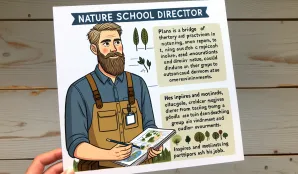
A nature school director is responsible for leading and developing the operations at a nature school, where children and youth have the opportunity to learn about nature, the environment, and sustainable development through practical outdoor activities. Tasks include pedagogical work and administrative duties such as lesson planning, staff supervision, collaboration with schools, and budget management. The work environment is often varied, involving outdoor time in nature and office work, requiring leadership skills and pedagogical expertise.
Read more ->
A nature guide leads groups and individuals through various natural environments with a focus on experience, learning, and safety. Tasks include planning and conducting guided tours, nature walks, paddling, birdwatching, or other outdoor activities. Nature guides inform about ecology, animals, plants, and cultural-historical aspects of the area. The role also involves responsibility for safety, adapting activities to participants' conditions, and handling unforeseen situations in the field. The work environment is often in forests, mountains, water, or coastal areas and involves outdoor work in varying weather conditions, sometimes early mornings or late evenings.
Read more ->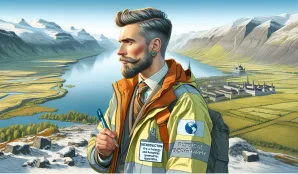
A geographer works to understand and analyze the interaction between natural processes and human impact on landscapes. Job tasks often include collecting and interpreting geographic data, fieldwork to examine land, water, climate, and ecosystems, as well as report writing and presenting results. Common work environments include offices, laboratories, and outdoor settings during field studies. Geographers are often employed by government agencies, universities, consulting firms, or research institutes and participate in projects related to environmental protection, planning, conservation, or climate change.
Read more ->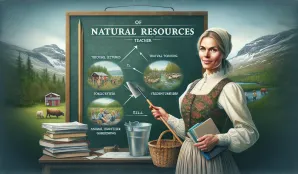
A natural resources teacher is responsible for educating students in subjects related to agriculture, forestry, animal husbandry, and the environment. Teaching usually takes place at agricultural high schools and can include both theoretical lessons and practical activities outdoors at the school farm or in nearby natural environments. The work environment is characterized by variation between classrooms, laboratories, stables, or machine halls, which requires flexibility and broad subject expertise. Natural resources teachers work closely with students and often serve as supervisors in practical projects and work-based learning.
Read more ->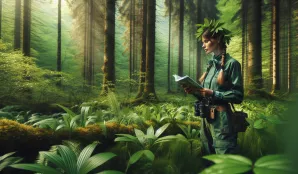
A nature conservation officer is responsible for monitoring, protecting, and caring for natural environments, as well as ensuring compliance with laws and regulations related to nature conservation. The work often involves supervision in protected areas, inventory of animals and plants, and efforts to preserve endangered species and ecosystems. Nature conservation officers usually work outdoors, often in varied and sometimes challenging terrain, which requires good physical condition and the ability to work independently in changing weather conditions. Contact with the public, landowners, and other authorities is also an important part of the profession, along with reporting and documenting performed actions.
Read more ->
A night watchman is responsible for maintaining safety at workplaces, properties, or areas during nighttime hours. Tasks include regular patrols, surveillance via cameras, control of access points, and reporting deviations or incidents. Night watchmen are often employed by security companies or property owners and may also be hired for special assignments at events or hospitals. The work environment is characterized by solitary work, varied workplaces, and a high degree of independent responsibility. Most work takes place at night, requiring good circadian rhythm and the ability to handle unexpected situations.
Read more ->