News and articles
- Home
- Articles





Latest posts
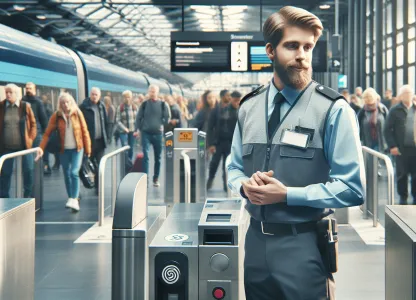
A Spärrvakt is responsible for monitoring and managing passenger flow at barriers on subways, commuter trains, and other public transport systems. Tasks include providing service and information to travelers, checking tickets, handling technical issues with barrier systems, and maintaining order and safety at stations. The work often involves shifts and can be both mobile and occasionally stressful, especially during rush hours. The Spärrvakt plays an important role in creating a safe and efficient daily experience for public transport passengers.
Read more ->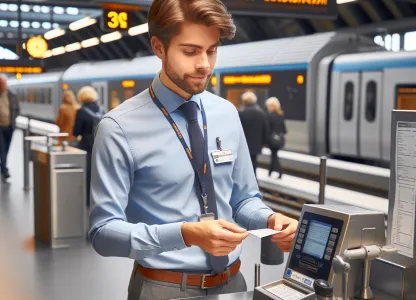
A Spärrexpeditör primarily works in public transportation environments, such as train stations or subway stations, focusing on providing service to travelers and managing ticket checks. The role involves assisting passengers with ticket purchases, answering questions about routes and schedules, and monitoring compliance with rules and safety regulations at turnstiles and entrances. Spärrexpeditörer also handle simpler administrative tasks, such as cash register reconciliation and incident reporting. The work environment is often fast-paced and requires accuracy and good communication skills, as one encounters many different people in varying situations daily.
Read more ->-

Opinion Landscape: Novus February 2026 – Social Democrats Still Largest
Thu, 19 Feb 2026 - 01:35 -

Policy rate remains at 1.75% – Riksbank signals stability
Thu, 29 Jan 2026 - 14:02

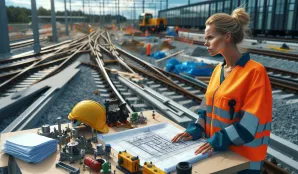
A track engineer is responsible for planning, designing, maintaining, and developing rail infrastructure, primarily railway and tram systems. Tasks include project management, technical investigations, inspections, and quality control of tracks, switches, and associated equipment. The profession often involves collaboration with other engineers, technicians, and contractors, as well as regular contact with authorities and clients. The work environment varies between office work, site visits, and construction sites, where safety procedures and precision are central to daily tasks.
Read more ->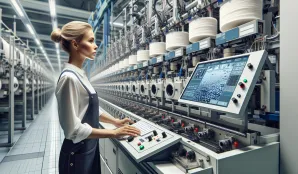
A spannramsförare primarily works within the textile industry and is responsible for operating, monitoring, and adjusting spannramar – a type of machine used to stretch and fix textile material, often in connection with bleaching, dyeing, or washing. The work involves precise control of process parameters such as temperature, speed, and tension to ensure consistent quality of the finished material. Spannramsförare follow detailed instructions and often work in production environments with shift work, including day and night shifts. The work environment can be noisy and require protective equipment, while demanding accuracy, responsibility, and the ability to quickly resolve operational issues.
Read more ->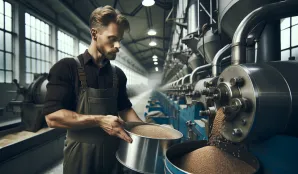
A grain dryer primarily works with monitoring and operating drying systems for grains, which is a central part of raw material processing in agriculture and food production. Tasks include starting, stopping, and adjusting the drying processes, controlling temperature and humidity, and performing basic maintenance on machinery. Loading and unloading grains, sampling, and quality checks are also often handled. The work environment is usually industrial, with elements of noise, dust, and shift work. Safety procedures are important as the work is performed near large machines and moving parts.
Read more ->
A Spannmålskonsulent works with advising and expert support for farmers and companies within grain production. Responsibilities include analyzing market conditions, advising on cultivation methods, monitoring harvest and quality, and supporting seed and plant protection choices. Spannmålskonsulenter often collaborate with suppliers, researchers, and authorities to ensure that production is both profitable and sustainable. The work environment varies between office work, field visits to farms, and participation in meetings or training sessions. The role requires good teamwork skills, analytical ability, and an interest in both agronomy and business.
Read more ->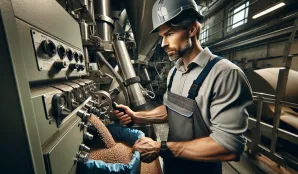
A grain worker is responsible for handling, processing, and inspecting grains at various stages of the processing chain. Tasks often include receiving grains, drying, storage, quality control, and monitoring machinery and process equipment. Grain workers work both manually and with automated systems to ensure the grain maintains the correct quality and is stored safely. The work environment is typically industrial, often located in mills, silos, or bakeries, where noise, dust, and heavy lifting may occur. Safety regulations are important, and the work requires precision, responsibility, and good physical endurance.
Read more ->
A Space manager is responsible for optimizing and developing the use of physical spaces within areas such as retail, offices, or public environments. Tasks often include planning store layouts, analyzing customer flows, coordinating renovations, and collaborating with purchasing, marketing, and property management. The role also involves ensuring that premises are used efficiently and profitably, often through data-driven decisions and continuous follow-up. The work environment is typically fast-paced, with many touchpoints and high communication demands, involving both on-site and digital work.
Read more ->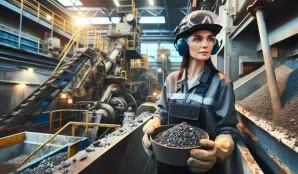
Sorting workers in ore beneficiation are responsible for monitoring and controlling processes where raw ore is separated, crushed, and refined into different mineral qualities. Tasks include inspecting machines and production flows, as well as performing quality checks on extracted material. The profession often involves shift work in industrial environments where safety routines are central. Sorting workers work closely with other process operators and technicians to ensure production is efficient, safe, and environmentally friendly.
Read more ->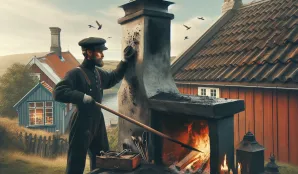
A chimney sweep primarily works with cleaning and inspecting chimneys, fireplaces, and ventilation systems in buildings. Tasks include both practical maintenance and preventive fire safety measures, where the chimney sweep ensures that installations and flues are safe and functioning correctly. The profession often involves working at heights and in confined spaces, requiring good physical condition and precision. Chimney sweeps also communicate with property owners, providing advice on heating, fire safety, and energy efficiency.
Read more ->