Latest posts
Image that illustrates

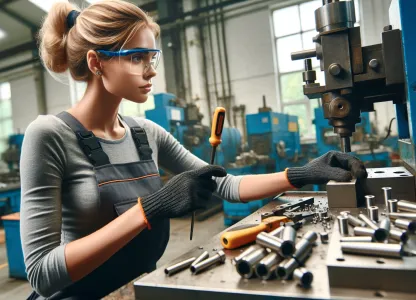
A toolmaker works with manufacturing, repairing, and maintaining advanced tools, molds, and fixtures used in industrial production processes. The profession requires high precision as tolerances are often very small, and work is performed both manually and with the help of modern CNC machines. Toolmakers are responsible for reading technical drawings, preparing work steps, and ensuring that tools meet the high quality standards required by industry. The work environment is characterized by workshops or production facilities where safety routines, order, and precision are crucial for successful results.

Read more ->
Image that illustrates

A toolmaker manufactures, maintains, and repairs precision tools used in industry, such as molds, press tools, and fixtures for production. The work requires precision and technical knowledge since tools are often produced in small series with high demands on accuracy. The work environment is typically workshop-based, utilizing both manual and computer-controlled machines. Toolmakers often work in teams but can also be independently responsible for entire or parts of the manufacturing process.

Read more ->
  • Public Opinion - Opinion Poll Status Novus: Unchanged Support – Social Democrats Largest
    Wed, 19 Nov 2025 - 08:35
  • National Debt - The National Debt – Level, Development, and Significance for Sweden
    Wed, 8 Oct 2025 - 08:00
Image that illustrates What does a ventilation technician do in the HVAC industry? – Tasks and work environment
What does a ventilation technician do in the HVAC industry? – Tasks and work environment

A ventilation technician focusing on service mainly works with installation, troubleshooting, maintenance, and repair of ventilation systems in buildings. Tasks include preventive maintenance and urgent interventions during operational disruptions, often on-site with clients in residential buildings, offices, and industries. The work involves regular contact with clients and property owners, requiring good communication skills and flexibility. The work environment can vary from indoor spaces, confined areas, to working at heights, making safety awareness and physical endurance important qualities.

Read more ->
Image that illustrates What does a ventilation installer do? – tasks and work environment
What does a ventilation installer do? – tasks and work environment

A ventilation installer works with the installation, service, and maintenance of ventilation systems in various types of buildings. Tasks include installing ventilation ducts, units, and diffusers, ensuring systems operate efficiently and energy-effectively. The work often takes place on construction sites, but service assignments in existing properties are also common. The profession requires technical understanding, precision, and teamwork skills, and the work environment can range from confined spaces to working at heights.

Read more ->
Image that illustrates What does a Ventilation Insulator do? – Tasks and Work Environment
What does a Ventilation Insulator do? – Tasks and Work Environment

A ventilation insulator works with insulating ventilation ducts in various types of buildings, from residential houses to larger industrial facilities. The tasks include measuring, cutting, and installing insulation materials around ventilation pipes and units to reduce energy loss and prevent condensation. The work is often performed in teams and requires precision and physical effort, as the environment may involve confined spaces, work at heights, or construction sites with varying temperatures. Safety procedures are central, and proper protective equipment is always used to prevent work-related injuries.

Read more ->
Image that illustrates What does a CEO in the forestry sector do? – Tasks and work environment
What does a CEO in the forestry sector do? – Tasks and work environment

A CEO in the forestry sector is responsible for the overall management of companies or organizations operating within the forestry industry. Tasks include strategic planning, financial management, personnel leadership, as well as developing business relationships and sustainable forestry practices. The role often involves long-term investments, environmental certifications, and negotiations with landowners, authorities, and clients. The work environment is primarily office-based, but field visits in forest environments occur regularly, especially during project follow-ups and inspections.

Read more ->
Image that illustrates What does a shipyard sheet metal worker do? – Tasks and work environment
What does a shipyard sheet metal worker do? – Tasks and work environment

A shipyard sheet metal worker primarily works with manufacturing, assembly, and repair of metal structures at shipyards. Tasks include processing sheet metal, welding, bending, cutting, and joining steel parts used for building or maintaining ship hulls, decks, and other structures. The work is often performed in large workshops or directly on ships, which can involve noisy, humid, and sometimes cramped conditions. Safety regulations are important, and protective gear such as helmets, hearing protection, and safety glasses are often required.

Read more ->
Image that illustrates What does a heat pump installer do? – Tasks and work environment
What does a heat pump installer do? – Tasks and work environment

A heat pump installer works with the installation, maintenance, and repair of heat pumps in both residential and commercial properties. Tasks include planning and installing new systems as well as servicing existing ones to ensure energy-efficient operation. The work is often performed at customer sites, which means the work environment can vary between construction sites, houses, and technical rooms. The profession requires technical knowledge and good problem-solving skills, as situations often arise where systems need to be adapted to the customer's specific conditions.

Read more ->
Image that illustrates What does a heat installer do? – Tasks and work environment
What does a heat installer do? – Tasks and work environment

A heat installer primarily works with the installation, service, and maintenance of heating systems in homes, industrial buildings, and commercial properties. Tasks include assembling pipes, boilers, radiators, and heat pumps, as well as troubleshooting and repairing existing heating systems. The work is often performed both indoors and outdoors, requiring adaptability to different environments and sometimes working under time pressure, especially during urgent repairs. Collaboration with other trades within HVAC, construction, and electrical work is common, and the job demands technical skill and good problem-solving abilities.

Read more ->
Image that illustrates What does an electricity network installer do? – Tasks and work environment
What does an electricity network installer do? – Tasks and work environment

An electricity network installer primarily works with the installation, maintenance, and repair of electrical distribution networks. This involves working on both high- and low-voltage installations, with a focus on ensuring the electrical grid functions safely and efficiently for households and businesses. Common tasks include pulling and connecting wires, installing poles and transformers, as well as troubleshooting and fixing operational disruptions. The work environment is outdoors in varying weather conditions and often at heights, requiring good physical fitness and strict safety awareness. The work is often performed in teams and may sometimes involve standby or on-call duties during power outages.

Read more ->