- Salary statistics
- Forging mechanic salary
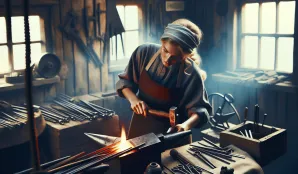
Forging mechanic salary
Latest available salary statistics are for 2025. Compare average pay, salary range and related job listings.
36 800 - 38 800 SEK / month
Hantverksyrken
Related tools
Salary progression Forging mechanic
What does a blacksmith mechanic do? – Tasks and work environment
A blacksmith mechanic works with processing, shaping, and joining metals using various forging techniques. Common tasks include manufacturing steel structures, installing fittings, and repairing or maintaining metal components. The work can be performed with hand tools and machines, often requiring precision, technical understanding, and good physical endurance. The work environment is often workshop-based, but assembly and installation can also take place on construction sites or in industrial settings where safety protocols are essential.
Salary development over time
Salaries for blacksmith mechanics have varied over the past three years. In 2022, the average salary was 32,300 SEK per month. In 2023, the average increased significantly to 36 000 SEK, representing an increase of about 17%. In 2024, the salary has stabilized at 38 800 SEK per month, which is a slight decrease compared to the previous year. This development can partly be explained by market changes and variations in demand for specialized metalworking skills. Factors such as inflation and collective bargaining negotiations have also influenced salary levels, but primarily, a trend is visible where skills and experience are rewarded as technical complexity within the profession increases.
Blacksmith mechanic salary – complete overview
- Average salary: 38 800 SEK/month
- Lowest salary: Data not available
- Highest salary: Data not available
- Hourly wage: 216 SEK
- Gender differences: Men earn 38 800 SEK, data on women is unavailable
- Regional differences: Specific data is lacking, but variations may occur depending on demand in different counties and larger industrial cities
Education and qualifications
To work as a blacksmith mechanic, a vocational upper secondary education in industrial technology or construction and civil engineering is typically required, preferably with specialization in blacksmithing and welding. Many employers also value practical experience and certifications. Further training and courses in welding or CNC technology can be advantageous, and some workplaces offer internal trainee programs to ensure the right competence.
- Vocational education: Industrial technology program (3 years in upper secondary school)
- Certifications: Welding licenses and hot work permits
- Practical training: Common part of the education
- Prerequisites: Technical interest and good physical condition
- Further training: Courses in CNC or specialized welding
Blacksmith mechanics often possess a unique craftsmanship that is in demand in both traditional construction projects and modern industrial initiatives. Many employers also value creative problem-solving skills, as unexpected challenges are common in complex metal structures.
Common benefits and compensations
Blacksmith mechanics are often covered by collective agreements that provide benefits such as occupational pension, insurance, wellness contributions, and compensation for unsociable hours. Extra allowances are also common for work at heights or in particularly demanding environments. Work clothing and protective equipment are usually provided by the employer.
Competition and challenges
The job market for blacksmith mechanics is relatively stable, but competition can vary depending on region and economic conditions. Since the profession requires specialized skills and often involves physical work, continuous further training is necessary to meet technological changes and new industry demands. Due to limited data, precise forecasts are difficult, but the availability of job openings within the profession is good, indicating ongoing demand. Challenges mainly involve staying updated with new materials and methods, as well as working safely in sometimes demanding environments.
Tips for aspiring blacksmith mechanics
To succeed as a blacksmith mechanic, it is beneficial to combine technical interest with practical skills and a willingness to learn new techniques. Attention to detail is important when precision and safety are required, and teamwork skills are crucial for larger projects. Flexibility and resilience help when work environments change quickly or unexpected problems arise. Investing in ongoing education and actively seeking internships to gain experience is advisable. A good eye for details and the ability to read drawings and instructions are also valuable qualities in this profession.
Key facts about blacksmith mechanics
- Education level: Vocational upper secondary education (3 years)
- Work environment: Workshop, construction site, and industry
- Work form: Usually full-time employment, sometimes shift work
- Special skills: Welding, reading drawings, and metal processing
- Demand: 341 job vacancies within the profession
Career paths and future prospects
After gaining some experience, a blacksmith mechanic can advance to roles such as supervisor, production technician, or specialize further in advanced welding and CNC machining. Opportunities also exist for project management or training new employees. Forecasts from the Employment Service are difficult to specify for blacksmith mechanics due to limited data, but the overall demand for blacksmiths indicates stable future prospects. New industrial initiatives and maintenance needs in the construction sector contribute to the profession remaining relevant in the job market.
Frequently asked questions about blacksmith mechanics
- What is the average salary of a blacksmith mechanic?
- The average salary for a blacksmith mechanic is 38 800 SEK/month. - What education is required to become a blacksmith mechanic?
- A vocational upper secondary education in industrial technology with specialization in blacksmithing or welding is most common. - Are there salary differences between men and women?
- Men earn on average 38 800 SEK, but specific statistics for women are unavailable. - What is the job market like for blacksmith mechanics?
- There are 341 job vacancies within the profession, indicating strong demand. - What personal qualities are important in this profession?
- Accuracy, technical interest, and teamwork skills are especially valuable. - How has the salary development been over recent years?
- The salary has varied, with a peak of 36 000 SEK in 2023 and 38 800 SEK in 2024. - Can I further my education in this profession?
- Yes, there are several opportunities for further training in welding, CNC technology, and work management.

Salary distributed by age and sector
| Age | Base salary | Monthly salary | |
|---|---|---|---|
| 25-34 | 36800 kr | 38600 kr | |
| 35-44 | 36800 kr | 38300 kr | |
| Snitt | 36800 kr | 38800 kr |
| Age | Base salary | Monthly salary | |
|---|---|---|---|
| Snitt | 39500 kr | 39500 kr |
| Age | Base salary | Monthly salary | |
|---|---|---|---|
| Snitt | 39500 kr | 39500 kr |
| Age | Base salary | Monthly salary | |
|---|---|---|---|
| 25-34 | 36800 kr | 38700 kr | |
| 35-44 | 36800 kr | 38300 kr | |
| Snitt | 36800 kr | 38800 kr |
| Age | Base salary | Monthly salary | |
|---|---|---|---|
| 25-34 | 36800 kr | 38700 kr | |
| 35-44 | 36800 kr | 38300 kr | |
| Snitt | 36800 kr | 38800 kr |
| Age | Base salary | Monthly salary | |
|---|---|---|---|
| 35-44 | 36800 kr | 38300 kr | |
| Snitt | 36900 kr | 38800 kr |
| Age | Base salary | Monthly salary | |
|---|---|---|---|
| Snitt | 39500 kr | 39500 kr |
| Age | Base salary | Monthly salary | |
|---|---|---|---|
| Snitt | 39500 kr | 39500 kr |
| Age | Base salary | Monthly salary | |
|---|---|---|---|
| 35-44 | 36800 kr | 38300 kr | |
| Snitt | 36900 kr | 38800 kr |
| Age | Base salary | Monthly salary | |
|---|---|---|---|
| 35-44 | 36800 kr | 38300 kr | |
| Snitt | 36900 kr | 38800 kr |

About the data
All information displayed on this page is based on data from the Swedish Central Bureau of Statistics (SCB), the Swedish Tax Agency and the Swedish employment agency. Learn more about our data and data sources here.
All figures are gross salaries, meaning salaries before tax. The average salary, or mean salary, is calculated by adding up the total salary for all individuals within the profession and dividing it by the number of individuals. For specific job categories, we have also considered various criteria such as experience and education.
Profession Forging mechanic has the SSYK code 7221, which we use to match against the SCB database to obtain the latest salary statistics.
-

Experienced Smith/Fitter Needed for Building Ironwork in Gothenburg Area
Blacksmiths
Mon, 6 Jul 2026 - 18:42



Compare salary, work tasks and job outlook in adjacent occupations to find roles with similar skills or pay levels.
-
Upholsterer, seamstress salary
Average salary: 32 200 SEK/month • Hantverksyrken
Upholsterers
Compare with Forging mechanic
Mon, 13 Jul 2026 - 19:41 -

Average salary: 40 900 SEK/month • Hantverksyrken
Precision mechanics
Compare with Forging mechanic
Mon, 13 Jul 2026 - 13:51 -

Average salary: 34 200 SEK/month • Hantverksyrken
Fine, interior and furniture carpenters
Compare with Forging mechanic
Wed, 8 Jul 2026 - 18:06 -

Average salary: 34 000 SEK/month • Hantverksyrken
Musical instrument makers and other artisans
Compare with Forging mechanic
Tue, 14 Jul 2026 - 07:11 -

Average salary: 38 800 SEK/month • Hantverksyrken
Blacksmiths
Compare with Forging mechanic
Tue, 14 Jul 2026 - 07:13 -

Average salary: 34 000 SEK/month • Hantverksyrken
Musical instrument makers and other artisans
Compare with Forging mechanic
Tue, 14 Jul 2026 - 07:16


