- Salary statistics
- Splitter, textile salary
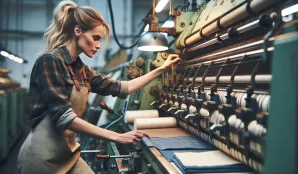
Splitter, textile salary
Latest available salary statistics are for 2025. Compare average pay, salary range and related job listings.
31 300 - 34 400 SEK / month
Women earn 94% of what men do.
Industriell tillverkning
Related tools
Salary progression Splitter, textile
What does a textile splitter do? – Tasks and work environment
A textile splitter primarily works with dividing, processing, and preparing textile materials for further production or refinement. Tasks may include using specialized machines to separate fibers, threads, or textile strips, checking material quality, and ensuring that the work process follows specified standards. The environment is usually industrial, with repetitive tasks but also demands for accuracy and some technical skill. The splitter often works in a team and collaborates closely with other machine operators and supervisors to keep production efficient and safe.
Salary development over time
The salary for textile splitters has steadily increased in recent years. In 2022, the average salary was 27,700 SEK per month. In 2023, the average rose to 30 400 SEK, representing an increase of about 6.9%. In 2024, the average salary has continued to rise to 32 200 SEK, a growth of an additional 2.7% compared to the previous year. This positive salary trend reflects increased demand for skilled labor in the textile industry, as well as industry adaptation to inflation and general wage negotiations. Gender pay gaps persist, with men earning slightly more on average than women, and salary levels can also be influenced by education level and sector.
Textile splitter salary – complete overview
- Average salary: 32 200 SEK/month
- Lowest salary: 29,400 SEK/month (female, private sector, high school education, 3 years)
- Highest salary: 32,200 SEK/month (male, regional sector, high school education, up to 2 years)
- Hourly wage: 183 SEK/hour (based on 166 hours/month)
- Gender differences: Men 33 200 SEK, women 31 300 SEK (women earn 94% of men's salary)
- Regional differences: Highest salaries are found in the regional sector
Education and qualifications
To work as a textile splitter, a high school education with a focus on industry, textiles, or production is generally required. Many employers also prefer candidates with some practical experience from similar industrial roles. Additional courses in machine technology or textile production can be advantageous, and some companies offer internal training to ensure the right skill level. Internships or traineeships are common, providing an important introduction to the tasks and machinery.
- High school education: Industry, production, or textile programs (2–3 years)
- Internships: Common during education or as an introduction at the workplace
- Internal training: Often offered by the employer
- Prerequisites: Basic technical interest and precision
- Courses/certifications: Machinery safety or textile handling can be advantageous
Many textile splitters develop a very good sense for materials and machines over time, enabling them to detect deviations in production long before problems occur. This tactile sense is often crucial for product quality and can help reduce waste and errors.
Common benefits and compensations
Textile splitters are often offered benefits such as collective pension schemes, insurance in case of illness or work injury, and wellness allowances. Shift work may involve overtime pay and extra compensation for inconvenient hours. Many workplaces also provide work clothing and subsidized lunches or cafeterias.
Competition and challenges
The competition for jobs as a textile splitter varies by region and economic conditions. Since the profession is specialized and requires some experience with machinery, it can be difficult for newcomers to get hired without practical experience. Automation in the industry also increases demands for technical understanding and flexibility. At the same time, challenges include noisy and repetitive work environments, requiring endurance and precision. The limited availability of trained personnel can, however, sustain demand in certain areas.
Tips for aspiring textile splitters
To succeed as a textile splitter, it’s important to be meticulous and patient, as many tasks require precision and are performed daily. An interest in technology helps, especially in understanding and handling various machines. Being cooperative is also key, as the work environment is often team-based and requires good communication. Flexibility is another important factor, as production can vary and new tasks may arise. Gaining practical experience through internships or part-time jobs in the industry, and demonstrating responsibility, can improve employment chances. The ability to quickly learn new tasks and maintain quality throughout the process is a significant advantage.
Key facts about Textile Splitters
- Average salary: 32 200 SEK/month
- Salary range: 29,400–32,200 SEK/month
- Education level: High school education (2–3 years) recommended
- Work environment: Industrial, often shift work
- Job openings (profession group): 1,437 listings
Career paths and future outlook
After three to five years as a textile splitter, there are opportunities to advance to roles such as supervisor, production planner, or machine technician, depending on experience and further education. Since the profession is categorized under “other machine operators in the textile, leather, and fur industry,” it is sometimes possible to switch to related roles within the same industry. The employment agency’s forecast for the profession is uncertain due to limited data, but with 1,437 job openings, there are signs of continued demand. The industry’s future is influenced by automation and technological development, which may change job content but also create new opportunities for those willing to further educate themselves.
Common questions about Textile Splitters
- What does a textile splitter earn?
- The average salary is 32 200 SEK per month, with a range between 29,400 and 32,200 SEK depending on experience and sector. - Are there salary differences between men and women?
- Yes, men earn on average 33 200 SEK and women 31 300 SEK, which means women earn 94% of men's salaries. - What education is required to become a textile splitter?
- High school education in industry, production, or textiles is recommended, often supplemented with practical training or internal courses. - What are the future prospects?
- The outlook is uncertain, but there are 1,437 job openings, indicating demand. - What are the working environment conditions?
- Work takes place in an industrial environment, often with shift work and requirements for accuracy and physical stamina. - Can one advance within the profession?
- Yes, it is possible to develop into a supervisor, production planner, or machine technician with experience and further education. - What is the hourly wage?
- The average hourly wage is 183 SEK, based on 166 working hours per month.

Salary distributed by age and sector
| Age | Base salary | Monthly salary | |
|---|---|---|---|
| 25-34 | 29100 kr | 31500 kr | |
| 35-44 | 95% | 29900 kr | 31800 kr |
| 45-54 | 92% | 30900 kr | 32600 kr |
| 55-64 | 93% | 31200 kr | 33000 kr |
| Snitt | 94% | 30300 kr | 32200 kr |
| Age | Base salary | Monthly salary | |
|---|---|---|---|
| 25-34 | 29100 kr | 31500 kr | |
| 35-44 | 95% | 29900 kr | 31800 kr |
| 45-54 | 92% | 30900 kr | 32600 kr |
| 55-64 | 93% | 31200 kr | 33000 kr |
| Snitt | 94% | 30300 kr | 32200 kr |
| Age | Base salary | Monthly salary | |
|---|---|---|---|
| 25-34 | 29100 kr | 31500 kr | |
| 35-44 | 95% | 29900 kr | 31800 kr |
| 45-54 | 92% | 30900 kr | 32600 kr |
| 55-64 | 93% | 31200 kr | 33000 kr |
| Snitt | 94% | 30300 kr | 32200 kr |
| Age | Base salary | Monthly salary | |
|---|---|---|---|
| 25-34 | 29600 kr | 32500 kr | |
| 35-44 | 95% | 29800 kr | 32500 kr |
| 45-54 | 92% | 31800 kr | 34000 kr |
| 55-64 | 93% | 31700 kr | 34500 kr |
| Snitt | 94% | 30500 kr | 33200 kr |
| Age | Base salary | Monthly salary | |
|---|---|---|---|
| 25-34 | 29600 kr | 32500 kr | |
| 35-44 | 95% | 29800 kr | 32500 kr |
| 45-54 | 92% | 31800 kr | 34000 kr |
| 55-64 | 93% | 31700 kr | 34500 kr |
| Snitt | 94% | 30500 kr | 33200 kr |
| Age | Base salary | Monthly salary | |
|---|---|---|---|
| 25-34 | 29600 kr | 32500 kr | |
| 35-44 | 95% | 29800 kr | 32500 kr |
| 45-54 | 92% | 31800 kr | 34000 kr |
| 55-64 | 93% | 31700 kr | 34500 kr |
| Snitt | 94% | 30500 kr | 33200 kr |
| Age | Base salary | Monthly salary | |
|---|---|---|---|
| 35-44 | 95% | 30000 kr | 30900 kr |
| 45-54 | 92% | 30200 kr | 31400 kr |
| 55-64 | 93% | 30900 kr | 32000 kr |
| Snitt | 94% | 30000 kr | 31300 kr |
| Age | Base salary | Monthly salary | |
|---|---|---|---|
| 35-44 | 95% | 30000 kr | 30900 kr |
| 45-54 | 92% | 30200 kr | 31400 kr |
| 55-64 | 93% | 30900 kr | 32000 kr |
| Snitt | 94% | 30000 kr | 31300 kr |
| Age | Base salary | Monthly salary | |
|---|---|---|---|
| 35-44 | 95% | 30000 kr | 30900 kr |
| 45-54 | 92% | 30200 kr | 31400 kr |
| 55-64 | 93% | 30900 kr | 32000 kr |
| Snitt | 94% | 30000 kr | 31300 kr |

About the data
All information displayed on this page is based on data from the Swedish Central Bureau of Statistics (SCB), the Swedish Tax Agency and the Swedish employment agency. Learn more about our data and data sources here.
All figures are gross salaries, meaning salaries before tax. The average salary, or mean salary, is calculated by adding up the total salary for all individuals within the profession and dividing it by the number of individuals. For specific job categories, we have also considered various criteria such as experience and education.
Profession Splitter, textile has the SSYK code 8159, which we use to match against the SCB database to obtain the latest salary statistics.
-

Machine Operator at Nordifa in Halmstad
Other machine operators, textile, leather and leather industry
Wed, 8 Jul 2026 - 06:22 -

Industrial Seamstress for Germa in Kristianstad
Other machine operators, textile, leather and leather industry
Tue, 7 Jul 2026 - 21:42 -

Sewer/Seamstress for NHC in Umeå
Other machine operators, textile, leather and leather industry
Mon, 6 Jul 2026 - 21:26 -
Sewer/Seamstress for NHC in Timrå
Other machine operators, textile, leather and leather industry
Mon, 6 Jul 2026 - 17:06 -
Process Operator at TreeToTextile – Develop the Next Generation of Sustainable Textile Fiber
Other machine operators, textile, leather and leather industry
Thu, 2 Jul 2026 - 00:37
Compare salary, work tasks and job outlook in adjacent occupations to find roles with similar skills or pay levels.
-

Average salary: 31 900 SEK/month • Industriell tillverkning
Hand packers and other factory workers
Compare with Splitter, textile
Tue, 14 Jul 2026 - 09:18 -

Vehicle paint, manufacturing salary
Average salary: 36 400 SEK/month • Industriell tillverkning
Painters and industrial painters
Compare with Splitter, textile
Tue, 14 Jul 2026 - 10:59 -

Average salary: 38 300 SEK/month • Industriell tillverkning
Operators in sawmills, planing mills and plywood etc.
Compare with Splitter, textile
Tue, 14 Jul 2026 - 10:58 -

Average salary: 35 200 SEK/month • Industriell tillverkning
Machine operators, mill, bakery and confectionery industry
Compare with Splitter, textile
Tue, 14 Jul 2026 - 16:13 -

Sheet metal worker, heavy plate salary
Average salary: 39 700 SEK/month • Industriell tillverkning
Steel construction assemblers and heavy plate workers
Compare with Splitter, textile
Tue, 14 Jul 2026 - 16:18 -

Average salary: 33 000 SEK/month • Industriell tillverkning
Machine operators, meat and fish processing industry
Compare with Splitter, textile
Tue, 14 Jul 2026 - 17:25


