- Salary statistics
- Solvare salary
Solvare salary
Latest available salary statistics are for 2025. Compare average pay, salary range and related job listings.
31 300 - 34 400 SEK / month
Women earn 94% of what men do.
Industriell tillverkning
Related tools
Salary progression Solvare
What does a Solvare do? – Tasks and work environment
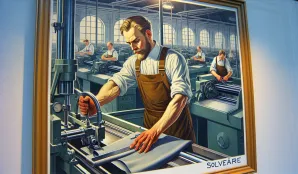
A Solvare works with sewing, repairing, and processing materials made of textiles, leather, or similar in industrial settings. The profession often involves handling specialized sewing machines and other technical equipment to create or repair shoes, bags, straps, and other leather goods. The work is typically performed in factories or small workshops where precision and accuracy are crucial. The work environment is characterized by repetitive movements but also demands quality and efficiency, with ergonomics and safety being important aspects to prevent strain injuries.
Salary development over time
Over the past three years, the salary for Solvare has increased steadily. The average salary was 27,700 SEK in 2022, increased to 30 400 SEK in 2023, and reached 32 200 SEK in 2024. This corresponds to an increase of about 9.8% during this period. The positive trend reflects both a general wage development within the industry sector and a somewhat increased demand for craftsmanship in textile and leather processing. The salary increase has been slightly faster than inflation, which can be explained by the profession's specialized skills still being difficult to automate and by generational changes affecting the availability of experienced Solvare.
Solvare salary – comprehensive overview
- Average salary: 32 200 SEK/month
- Lowest salary: 29,400 SEK/month (female, private sector employee, high school education 3 years)
- Highest salary: 32,200 SEK/month (male, regional sector, high school education up to 2 years)
- Hourly wage: 183 SEK/hour
- Women: 31 300 SEK/month (94% of men's salary)
- Men: 33 200 SEK/month
- Regional differences: The highest salaries are found in the regional sector, while privately employed officials have lower salary levels.
Education and qualifications
To work as a Solvare, a high school education with a focus on textiles, fashion, or craftsmanship is usually required, often supplemented with practical experience with machines and materials. In some cases, internal training at the workplace may occur, especially when introducing specific machines or techniques. The industry values both formal education and practical skills, and it is common to supplement with shorter courses or certificates.
- High school education: Textiles, fashion, or craftsmanship, 2–3 years
- Internal training: Introduction to machines and processes at the workplace
- Internship: Workplace-based internships are common during education
- Experience: Previous work with sewing, repairs, or machine handling is advantageous
- Courses: Opportunities for further training in machine technology or material science
The profession of Solvare has roots that go far back in time and is one of the few craft trades within the industry where traditional techniques are combined with modern machinery. Success requires both an eye for details and the ability to quickly adapt to new work tasks and materials.
Common benefits and compensations
Solvare is often covered by collective agreements and offers benefits such as occupational pension, insurance, and wellness allowances. Paid breaks, work clothing, and sometimes opportunities for skill development through courses or internal training are common. Some employers also provide subsidized lunches or staff discounts on products.
Competition and challenges
Competition for positions as a Solvare is moderate, but job availability varies depending on region and economic conditions in the textile and leather industries. Automation has gradually reduced demand for simpler tasks, but specialized work and repairs still require human expertise. The profession can be monotonous and physically demanding due to repetitive movements, requiring good ergonomics. A shortage of younger workers and generational changes pose challenges for the industry, but those who choose the profession often have good employment prospects due to retirements.
Tips for those who want to become a Solvare
To succeed as a Solvare, it’s good to have a strong interest in craftsmanship and precision, as the work demands accuracy in every step. Patience is important to handle repetitive tasks and ensure high quality. Flexibility and willingness to learn new techniques or machines facilitate development in the profession, especially since technology is constantly evolving. Being practical and having good hand-eye coordination make the workday easier and more efficient. Being cooperative helps in team work, while independence and responsibility are appreciated by employers. Finally, being service-minded is advantageous, especially if contact with customers occurs during repairs or custom orders.
Key facts about Solvare
- Education level: High school education 2–3 years
- Work environment: Industrial setting, workshop, or factory
- Typical employment: Full-time, often covered by collective agreement
- Occupational group: Other machine operators, textile, leather, and skin industry
- Job openings: 1,437 within the occupational group (May 2024)
Career paths and future prospects
Career development for a Solvare often occurs within the same industry, where a few years of experience can lead to more autonomous or technically advanced roles, such as supervisor, quality inspector, or machine manager. Some choose to further their education in related fields like textile production or repair, while others may start their own business in shoemaking or specialized repairs. According to the Employment Service's forecast, no specific assessment is made for the Solvare profession due to limited statistical data, but the large number of job openings indicates continued demand and stable future prospects.
Frequently asked questions about Solvare
- What is the average salary of a Solvare?
- A Solvare earns an average of 32 200 SEK per month. - What are the salary differences between men and women?
- Men earn 33 200 SEK while women earn 31 300 SEK, which means women have approximately 94% of men's salary level. - Are there regional salary differences for Solvare?
- Yes, the highest salaries are found in the regional sector, while privately employed officials have lower salary levels. - What education is required to become a Solvare?
- Usually, a high school education in textiles, fashion, or craftsmanship, sometimes supplemented with internships or internal training. - What are the future prospects for the profession?
- The forecast is uncertain according to the Employment Service, but there are 1437 job openings within the occupational group. - What personal qualities are important for a Solvare?
- Attention to detail, patience, practical skills, and teamwork ability are important qualities. - What is the highest and lowest salary for a Solvare?
- The highest salary is 32,200 SEK (male, regional sector), and the lowest is 29,400 SEK (female, private sector employee).

Salary distributed by age and sector
| Age | Base salary | Monthly salary | |
|---|---|---|---|
| 25-34 | 29100 kr | 31500 kr | |
| 35-44 | 95% | 29900 kr | 31800 kr |
| 45-54 | 92% | 30900 kr | 32600 kr |
| 55-64 | 93% | 31200 kr | 33000 kr |
| Snitt | 94% | 30300 kr | 32200 kr |
| Age | Base salary | Monthly salary | |
|---|---|---|---|
| 25-34 | 29100 kr | 31500 kr | |
| 35-44 | 95% | 29900 kr | 31800 kr |
| 45-54 | 92% | 30900 kr | 32600 kr |
| 55-64 | 93% | 31200 kr | 33000 kr |
| Snitt | 94% | 30300 kr | 32200 kr |
| Age | Base salary | Monthly salary | |
|---|---|---|---|
| 25-34 | 29100 kr | 31500 kr | |
| 35-44 | 95% | 29900 kr | 31800 kr |
| 45-54 | 92% | 30900 kr | 32600 kr |
| 55-64 | 93% | 31200 kr | 33000 kr |
| Snitt | 94% | 30300 kr | 32200 kr |
| Age | Base salary | Monthly salary | |
|---|---|---|---|
| 25-34 | 29600 kr | 32500 kr | |
| 35-44 | 95% | 29800 kr | 32500 kr |
| 45-54 | 92% | 31800 kr | 34000 kr |
| 55-64 | 93% | 31700 kr | 34500 kr |
| Snitt | 94% | 30500 kr | 33200 kr |
| Age | Base salary | Monthly salary | |
|---|---|---|---|
| 25-34 | 29600 kr | 32500 kr | |
| 35-44 | 95% | 29800 kr | 32500 kr |
| 45-54 | 92% | 31800 kr | 34000 kr |
| 55-64 | 93% | 31700 kr | 34500 kr |
| Snitt | 94% | 30500 kr | 33200 kr |
| Age | Base salary | Monthly salary | |
|---|---|---|---|
| 25-34 | 29600 kr | 32500 kr | |
| 35-44 | 95% | 29800 kr | 32500 kr |
| 45-54 | 92% | 31800 kr | 34000 kr |
| 55-64 | 93% | 31700 kr | 34500 kr |
| Snitt | 94% | 30500 kr | 33200 kr |
| Age | Base salary | Monthly salary | |
|---|---|---|---|
| 35-44 | 95% | 30000 kr | 30900 kr |
| 45-54 | 92% | 30200 kr | 31400 kr |
| 55-64 | 93% | 30900 kr | 32000 kr |
| Snitt | 94% | 30000 kr | 31300 kr |
| Age | Base salary | Monthly salary | |
|---|---|---|---|
| 35-44 | 95% | 30000 kr | 30900 kr |
| 45-54 | 92% | 30200 kr | 31400 kr |
| 55-64 | 93% | 30900 kr | 32000 kr |
| Snitt | 94% | 30000 kr | 31300 kr |
| Age | Base salary | Monthly salary | |
|---|---|---|---|
| 35-44 | 95% | 30000 kr | 30900 kr |
| 45-54 | 92% | 30200 kr | 31400 kr |
| 55-64 | 93% | 30900 kr | 32000 kr |
| Snitt | 94% | 30000 kr | 31300 kr |

About the data
All information displayed on this page is based on data from the Swedish Central Bureau of Statistics (SCB), the Swedish Tax Agency and the Swedish employment agency. Learn more about our data and data sources here.
All figures are gross salaries, meaning salaries before tax. The average salary, or mean salary, is calculated by adding up the total salary for all individuals within the profession and dividing it by the number of individuals. For specific job categories, we have also considered various criteria such as experience and education.
Profession Solvare has the SSYK code 8159, which we use to match against the SCB database to obtain the latest salary statistics.
-

Machine Operator at Nordifa in Halmstad
Other machine operators, textile, leather and leather industry
Wed, 8 Jul 2026 - 06:22 -

Industrial Seamstress for Germa in Kristianstad
Other machine operators, textile, leather and leather industry
Tue, 7 Jul 2026 - 21:42 -

Sewer/Seamstress for NHC in Umeå
Other machine operators, textile, leather and leather industry
Mon, 6 Jul 2026 - 21:26 -
Sewer/Seamstress for NHC in Timrå
Other machine operators, textile, leather and leather industry
Mon, 6 Jul 2026 - 17:06 -
Process Operator at TreeToTextile – Develop the Next Generation of Sustainable Textile Fiber
Other machine operators, textile, leather and leather industry
Thu, 2 Jul 2026 - 00:37
Compare salary, work tasks and job outlook in adjacent occupations to find roles with similar skills or pay levels.
-

Average salary: 34 800 SEK/month • Industriell tillverkning
Machine operators, filling, packing and labeling
Compare with Solvare
Tue, 14 Jul 2026 - 15:04 -

Average salary: 32 200 SEK/month • Industriell tillverkning
Other machine operators, textile, leather and leather industry
Compare with Solvare
Tue, 14 Jul 2026 - 09:18 -

Average salary: 35 200 SEK/month • Industriell tillverkning
Machine operators, mill, bakery and confectionery industry
Compare with Solvare
Tue, 14 Jul 2026 - 07:40 -

Machine operator, plasterboard salary
Average salary: 37 800 SEK/month • Industriell tillverkning
Machine operators, cement, stone and concrete products
Compare with Solvare
Tue, 14 Jul 2026 - 11:42 -

Average salary: 39 900 SEK/month • Industriell tillverkning
Stonemasons etc.
Compare with Solvare
Mon, 13 Jul 2026 - 05:37 -

Average salary: 35 700 SEK/month • Industriell tillverkning
Vehicle assemblers
Compare with Solvare
Tue, 14 Jul 2026 - 11:56


