- Salary statistics
- Cutter, welding salary
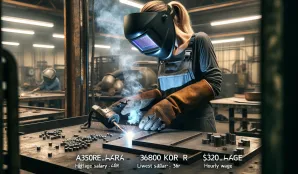
Cutter, welding salary
Latest available salary statistics are for 2025. Compare average pay, salary range and related job listings.
33 900 - 41 500 SEK / month
Women earn 93% of what men do.
Industriell tillverkning
Related tools
Salary progression Cutter, welding
What does a cutter in welding do – tasks and work environment
A cutter in welding works with cutting, shaping, and joining metals using various welding and cutting techniques. The tasks often include preparing workpieces, reading and interpreting drawings, and using equipment such as gas cutters, plasma cutters, or automated welding machines. It is common to work within manufacturing industries, workshops, and construction sectors, where both manual and machine-assisted processes are involved. The work environment can be noisy and sometimes exposed to high temperatures, requiring protective equipment and carefulness to prevent accidents. Safety and precision are central to the profession, along with an eye for detail and technical knowledge.
Salary development over time
Over the past three years, salaries for cutters in welding have steadily increased. In 2022, the average salary was 32,600 SEK per month, which increased to 35 900 SEK in 2023. In 2024, the average salary has continued upward to 36 800 SEK per month, representing a total increase of approximately 10% over the period. This positive trend can be explained by continued high demand for skilled workers in the industry, some skill shortages, and general salary adjustments within the manufacturing sector. The salary development also reflects increased technical specialization and certification requirements, giving experienced and well-educated cutters better chances for salary improvements. Despite the increase, gender pay gaps remain, with women generally earning less than their male colleagues.
Cutters, welding salary – complete overview
- Average salary: 36 800 SEK/month
- Lowest salary: 32,500 SEK/month (male, government sector)
- Highest salary: 38,200 SEK/month (male, private sector employee, under 3 years post-secondary education)
- Highest salary for women: 33,200 SEK/month
- Lowest salary for women: 32,800 SEK/month
- Hourly wage (average): 216 SEK
- Gender pay gap: Women earn 93% of what men do (men 36 900 SEK, women 32,800 SEK)
Many cutters in welding develop a unique sense for materials and technology over time, making them experts at solving complex production problems. This specialist competence is highly sought after in advanced industrial projects and can open doors to roles such as supervisor or technical advisor.
Education and qualifications
To work as a cutter in welding, a vocational education at the high school level is usually required, often with a focus on industrial technology or welding and sheet metal work. Many employers also value certifications and documented experience, especially regarding specialized welding methods. Practical experience through internships or apprenticeships is often an important part of the educational pathway, and many supplement their skills with further training or internal courses.
- High school education: Industrial technology program, specializing in welding (3 years)
- Adult education: Welding courses for adults (about 1 year)
- Certifications: Welding tests/certificates according to SS-EN ISO standards
- Practical training: Commonly included during education or as an apprentice
- Courses: Additional courses in various welding methods, e.g., MIG/MAG or TIG
Common benefits and compensations
Cutters in welding often have access to benefits such as shift allowances, paid workwear, wellness contributions, and in some cases bonuses linked to productivity or safety work. Occupational pension and insurance via the employer are also common, especially within larger industrial companies and collective bargaining workplaces.
Competition and challenges
The competition for jobs as a cutter in welding is paradoxical; while demand is high and many jobs are available, there is also a relatively high unemployment rate within the profession nationally. This is often because employers require specific certifications or experience, making it difficult for some candidates to meet the requirements. The work environment can be physically demanding, and tasks sometimes involve monotonous moments, requiring endurance and precision. Additionally, automation and technological development influence the profession, with new machines and digital tools gradually changing the work content. Keeping up with the latest technology is therefore an important challenge for long-term employability.
Tips for those who want to become a cutter in welding
To succeed as a cutter in welding, it is good to combine technical interest with accuracy and a sense of responsibility. Early internships or summer jobs within the industry provide valuable experience and understanding of the work environment. A positive attitude towards further education and certifications increases chances of employment and salary development, especially since employers often value current knowledge. Being flexible and open to shift work can also be an advantage, as many workplaces have varying working hours. Teamwork skills are important since the work is often done in teams, but independence is also valued as some tasks require personal responsibility. Finally, a solution-oriented attitude is appreciated, especially when troubleshooting or working on advanced welding tasks.
Key facts about Cutter, welding
- Average salary: 36 800 SEK/month
- Education level: High school or vocational training, certification often required
- Work environment: Industry, workshop, sometimes shift work
- Demand: Great opportunities for jobs nationwide
- Gender pay gap: Women earn 93% of what men do
Career paths and future prospects
After three to five years in the profession as a cutter in welding, it is common to move into more specialized roles such as welding inspector, supervisor, or technical specialist in advanced cutting technology. Some choose to further educate themselves in automation or production technology, which can open doors to managerial positions or project management within the industry. According to the Swedish Public Employment Service’s forecast for welders and gas cutters, job opportunities are expected to be plentiful over the next five years, with steady demand despite some unemployment in the profession. There are good chances for employment, especially for those who continuously update their skills and hold current certificates. Currently, approximately 1437 job openings are advertised in the profession, confirming the strong demand on the labor market.
Common questions about Cutter, welding
- What is the average salary for a cutter in welding?
- A cutter in welding has an average salary of 36 800 SEK per month. - Are there gender differences in salary for cutters in welding?
- Yes, women earn on average 93% of what men do in the profession. - What are the future prospects for cutters in welding?
- The job market is considered very good with great opportunities for employment nationwide. - What education is required to become a cutter in welding?
- High school education in industrial technology or welding, along with certification according to standards. - How high can the salary become for a cutter in welding?
- The highest reported salary is 38,200 SEK per month. - What differentiates the tasks at different workplaces?
- Tasks can range from manual welding to advanced machine cutting depending on the workplace and project.

Salary distributed by age and sector
| Age | Base salary | Monthly salary | |
|---|---|---|---|
| 18-24 | 31100 kr | 32300 kr | |
| 25-34 | 88% | 34800 kr | 36600 kr |
| 35-44 | 36100 kr | 37400 kr | |
| 45-54 | 36700 kr | 38000 kr | |
| 55-64 | 36400 kr | 37700 kr | |
| Snitt | 93% | 35400 kr | 36800 kr |
| Age | Base salary | Monthly salary | |
|---|---|---|---|
| 55-64 | 33800 kr | 34200 kr | |
| Snitt | 33700 kr | 33900 kr |
| Age | Base salary | Monthly salary | |
|---|---|---|---|
| 55-64 | 33800 kr | 34200 kr | |
| Snitt | 33700 kr | 33900 kr |
| Age | Base salary | Monthly salary | |
|---|---|---|---|
| 18-24 | 31100 kr | 32300 kr | |
| 25-34 | 88% | 34800 kr | 36600 kr |
| 35-44 | 36100 kr | 37400 kr | |
| 45-54 | 36700 kr | 38000 kr | |
| 55-64 | 36400 kr | 37700 kr | |
| Snitt | 93% | 35400 kr | 36800 kr |
| Age | Base salary | Monthly salary | |
|---|---|---|---|
| 18-24 | 31100 kr | 32300 kr | |
| 25-34 | 88% | 34800 kr | 36600 kr |
| 35-44 | 36100 kr | 37400 kr | |
| 45-54 | 36700 kr | 38000 kr | |
| 55-64 | 36400 kr | 37700 kr | |
| Snitt | 93% | 35400 kr | 36800 kr |
| Age | Base salary | Monthly salary | |
|---|---|---|---|
| 18-24 | 31000 kr | 32100 kr | |
| 25-34 | 88% | 35300 kr | 37100 kr |
| 35-44 | 36100 kr | 37500 kr | |
| 45-54 | 36700 kr | 38100 kr | |
| 55-64 | 36400 kr | 37800 kr | |
| Snitt | 93% | 35500 kr | 36900 kr |
| Age | Base salary | Monthly salary | |
|---|---|---|---|
| 55-64 | 33800 kr | 34200 kr | |
| Snitt | 33700 kr | 33900 kr |
| Age | Base salary | Monthly salary | |
|---|---|---|---|
| 55-64 | 33800 kr | 34200 kr | |
| Snitt | 33700 kr | 33900 kr |
| Age | Base salary | Monthly salary | |
|---|---|---|---|
| 18-24 | 31000 kr | 32100 kr | |
| 25-34 | 88% | 35300 kr | 37100 kr |
| 35-44 | 36100 kr | 37500 kr | |
| 45-54 | 36700 kr | 38100 kr | |
| 55-64 | 36400 kr | 37800 kr | |
| Snitt | 93% | 35500 kr | 36900 kr |
| Age | Base salary | Monthly salary | |
|---|---|---|---|
| 18-24 | 31000 kr | 32100 kr | |
| 25-34 | 88% | 35300 kr | 37100 kr |
| 35-44 | 36100 kr | 37500 kr | |
| 45-54 | 36700 kr | 38100 kr | |
| 55-64 | 36400 kr | 37800 kr | |
| Snitt | 93% | 35500 kr | 36900 kr |
| Age | Base salary | Monthly salary | |
|---|---|---|---|
| 25-34 | 88% | 32000 kr | 32800 kr |
| Snitt | 93% | 33300 kr | 34300 kr |
| Age | Base salary | Monthly salary | |
|---|---|---|---|
| 25-34 | 88% | 32000 kr | 32800 kr |
| Snitt | 93% | 33300 kr | 34300 kr |
| Age | Base salary | Monthly salary | |
|---|---|---|---|
| 25-34 | 88% | 32000 kr | 32800 kr |
| Snitt | 93% | 33300 kr | 34300 kr |

About the data
All information displayed on this page is based on data from the Swedish Central Bureau of Statistics (SCB), the Swedish Tax Agency and the Swedish employment agency. Learn more about our data and data sources here.
All figures are gross salaries, meaning salaries before tax. The average salary, or mean salary, is calculated by adding up the total salary for all individuals within the profession and dividing it by the number of individuals. For specific job categories, we have also considered various criteria such as experience and education.
Profession Cutter, welding has the SSYK code 7212, which we use to match against the SCB database to obtain the latest salary statistics.
-

TIG Welder for Varied Production with Focus on Quality
Welders and gas cutters
Mon, 13 Jul 2026 - 20:43




Compare salary, work tasks and job outlook in adjacent occupations to find roles with similar skills or pay levels.
-

Charcuterie worker, manufacturing salary
Average salary: 33 000 SEK/month • Industriell tillverkning
Machine operators, meat and fish processing industry
Compare with Cutter, welding
Tue, 14 Jul 2026 - 08:18 -
Textile machine adjuster, yarn preparation salary
Average salary: 32 200 SEK/month • Industriell tillverkning
Other machine operators, textile, leather and leather industry
Compare with Cutter, welding
Tue, 14 Jul 2026 - 07:14 -

Average salary: 33 900 SEK/month • Industriell tillverkning
Machine operators, rubber industry
Compare with Cutter, welding
Mon, 13 Jul 2026 - 01:29 -

Average salary: 47 800 SEK/month • Industriell tillverkning
Production supervisors
Compare with Cutter, welding
Thu, 9 Jul 2026 - 13:10 -

Average salary: 40 000 SEK/month • Industriell tillverkning
Rolling mill operators
Compare with Cutter, welding
Mon, 13 Jul 2026 - 09:37 -

Supervisor, confectionery salary
Average salary: 47 800 SEK/month • Industriell tillverkning
Production supervisors
Compare with Cutter, welding
Tue, 14 Jul 2026 - 10:08


