- Salary statistics
- Sawmill worker salary
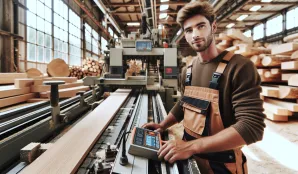
Sawmill worker salary
Latest available salary statistics are for 2025. Compare average pay, salary range and related job listings.
36 700 - 39 200 SEK / month
Women earn 95% of what men do.
Industriell tillverkning
Related tools
Salary progression Sawmill worker
What does a sawmill worker do? – Tasks and work environment
A sawmill worker primarily handles timber products at various stages of processing at sawmills and planing mills. Tasks include monitoring and controlling machines such as saws, planers, and sorting equipment. It also involves checking product quality, performing basic maintenance on machines, and ensuring the workplace is safe and efficient. The work environment is often noisy and physical, with a mix of manual work and machine handling. Protective equipment and a clear safety mindset are a natural part of daily routines.
Salary development over time
Sawmill workers have seen a clear increase in wages over the past three years. In 2022, the average salary was 33,600 SEK per month, rising to 36 800 SEK in 2023 and reaching 38 300 SEK in 2024. This represents a total increase of approximately 9.5% during the period. The wage growth reflects both general industry wage trends and a somewhat increased demand for experienced operators in wood processing. Factors such as technological development, higher quality and efficiency requirements, and difficulties in recruiting staff in certain regions have contributed to this development. Despite these improvements, differences between genders and regional variations still exist.
Sawmill worker salary – complete overview
- Average salary: 38 300 SEK/month
- Lowest salary: 35,400 SEK/month
- Highest salary: 37,400 SEK/month
- Hourly wage: 221 SEK/hour
- Gender differences: Men 38 600 SEK, women 35,400 SEK (95% of men's salary)
- Regional differences: Small variations, highest salaries mainly in regional sectors
Education and qualifications
The path to becoming a sawmill worker often involves completing the industrial or wood technology programs in high school, but there are also opportunities to learn the profession on-site. Practical experience and technical understanding are central qualifications, and some employers may require specific machine certificates. To increase employment chances, being flexible and having an interest in technology and production is advantageous.
- High school education: Industrial or wood technology program (3 years)
- Certifications: Machine operator licenses or internal training
- Internships: Often through high school or as a trainee at the workplace
- Prerequisites: Technical interest and good physical condition
- Tips for choosing: Workplace visits and summer jobs provide valuable insight
Many sawmill workers gain broad technical understanding early on, as tasks often switch between machine monitoring, maintenance, and troubleshooting. This experience can be a strong asset for future career paths within the industry.
Common benefits and compensations
Sawmill workers are often covered by collective agreements that provide occupational pensions, insurance, and overtime pay. Shorter working hours and wellness contributions are common, and some employers also offer work clothing and subsidized meals. Extra compensation may apply during shift work.
Competition and challenges
The profession as a sawmill worker is characterized by some competition, but there is also a shortage of labor in certain regions. Challenges often relate to the physical nature of the work, monotonous tasks, and the need to follow strict safety routines. Automation and technological development are changing the work content and demanding higher machine knowledge. For those who are flexible and willing to further educate themselves, good job opportunities exist. The labor market is also influenced by economic cycles and demand for timber products.
Tips for those who want to become a sawmill worker
To succeed as a sawmill worker, it is good to be meticulous and attentive to details, as the work requires quickly detecting faults or deviations in production. A strong work ethic and reliability are highly valued, especially when it comes to following safety routines and working shifts. Technical interest makes it easier to handle and understand modern machines, increasing chances for employment and advancement. Physical endurance is also important, as the work often involves heavy lifts and long shifts. Flexibility and the ability to collaborate with colleagues contribute to a good work environment and increased job satisfaction. It is wise to seek internships or summer jobs at sawmills to gain insight into the profession and build valuable contacts. Keeping up-to-date with new techniques and machines also provides an advantage in the job market.
Key facts about sawmill workers
- Education level: Most commonly high school vocational training
- Work environment: Physical, machine-intensive, and noisy
- Typical work arrangement: Shift work and permanent employment
- Demand: 1,437 job openings in the profession
- Special skills: Machine operation and maintenance
Career paths and future prospects
After a few years of experience as a sawmill worker, opportunities exist to advance to roles such as machine operator, supervisor, or maintenance technician within the wood industry. Some choose to further their education in production technology or quality assurance to move into more specialized roles. The employment forecasts from the Employment Service are cautious, due to limited data, but the large number of job openings indicates stable demand. Automation and modernization may impose new technical requirements but also open doors for development and specialization in the field.
Frequently asked questions about sawmill workers
- What does a sawmill worker earn?
- The average salary is 38 300 SEK per month, with an hourly wage of 221 SEK. - Are there differences between men and women?
- Yes, women earn 95% of men's salaries (35,400 SEK compared to 38 600 SEK). - What education is required to become a sawmill worker?
- The industrial or wood technology programs in high school are recommended, but it is also possible to learn on the job. - What is the work environment like?
- The environment is noisy and physical, with lots of machine operation and strict safety routines. - What are the future prospects?
- Currently, there are 1437 job openings in the profession, and demand is stable. - What career paths are available after a few years in the profession?
- Advancement to machine operator, supervisor, or further education within the industry is possible. - What benefits are common?
- Occupational pension, insurance, overtime pay, and wellness contributions are common.

Salary distributed by age and sector
| Age | Base salary | Monthly salary | |
|---|---|---|---|
| 18-24 | 96% | 32000 kr | 36600 kr |
| 25-34 | 97% | 33700 kr | 38400 kr |
| 35-44 | 95% | 33900 kr | 38100 kr |
| 45-54 | 34400 kr | 38700 kr | |
| 55-64 | 34800 kr | 39000 kr | |
| Snitt | 95% | 33900 kr | 38300 kr |
| Age | Base salary | Monthly salary | |
|---|---|---|---|
| 18-24 | 96% | 32000 kr | 36600 kr |
| 25-34 | 97% | 33700 kr | 38400 kr |
| 35-44 | 95% | 33900 kr | 38100 kr |
| 45-54 | 34400 kr | 38700 kr | |
| 55-64 | 34800 kr | 39000 kr | |
| Snitt | 95% | 33900 kr | 38300 kr |
| Age | Base salary | Monthly salary | |
|---|---|---|---|
| 18-24 | 96% | 32000 kr | 36600 kr |
| 25-34 | 97% | 33700 kr | 38400 kr |
| 35-44 | 95% | 33900 kr | 38100 kr |
| 45-54 | 34400 kr | 38700 kr | |
| 55-64 | 34800 kr | 39000 kr | |
| Snitt | 95% | 33900 kr | 38300 kr |
| Age | Base salary | Monthly salary | |
|---|---|---|---|
| 18-24 | 96% | 32200 kr | 37000 kr |
| 25-34 | 97% | 33800 kr | 38600 kr |
| 35-44 | 95% | 34100 kr | 38400 kr |
| 45-54 | 34500 kr | 38900 kr | |
| 55-64 | 34900 kr | 39200 kr | |
| Snitt | 95% | 34100 kr | 38600 kr |
| Age | Base salary | Monthly salary | |
|---|---|---|---|
| 18-24 | 96% | 32200 kr | 37000 kr |
| 25-34 | 97% | 33800 kr | 38600 kr |
| 35-44 | 95% | 34100 kr | 38400 kr |
| 45-54 | 34500 kr | 38900 kr | |
| 55-64 | 34900 kr | 39200 kr | |
| Snitt | 95% | 34100 kr | 38600 kr |
| Age | Base salary | Monthly salary | |
|---|---|---|---|
| 18-24 | 96% | 32200 kr | 37000 kr |
| 25-34 | 97% | 33800 kr | 38600 kr |
| 35-44 | 95% | 34100 kr | 38400 kr |
| 45-54 | 34500 kr | 38900 kr | |
| 55-64 | 34900 kr | 39200 kr | |
| Snitt | 95% | 34100 kr | 38600 kr |
| Age | Base salary | Monthly salary | |
|---|---|---|---|
| 18-24 | 96% | 31000 kr | 35600 kr |
| 25-34 | 97% | 33100 kr | 37300 kr |
| 35-44 | 95% | 33300 kr | 36600 kr |
| Snitt | 95% | 32900 kr | 36800 kr |
| Age | Base salary | Monthly salary | |
|---|---|---|---|
| 18-24 | 96% | 31000 kr | 35600 kr |
| 25-34 | 97% | 33100 kr | 37300 kr |
| 35-44 | 95% | 33300 kr | 36600 kr |
| Snitt | 95% | 32900 kr | 36800 kr |
| Age | Base salary | Monthly salary | |
|---|---|---|---|
| 18-24 | 96% | 31000 kr | 35600 kr |
| 25-34 | 97% | 33100 kr | 37300 kr |
| 35-44 | 95% | 33300 kr | 36600 kr |
| Snitt | 95% | 32900 kr | 36800 kr |

About the data
All information displayed on this page is based on data from the Swedish Central Bureau of Statistics (SCB), the Swedish Tax Agency and the Swedish employment agency. Learn more about our data and data sources here.
All figures are gross salaries, meaning salaries before tax. The average salary, or mean salary, is calculated by adding up the total salary for all individuals within the profession and dividing it by the number of individuals. For specific job categories, we have also considered various criteria such as experience and education.
Profession Sawmill worker has the SSYK code 8173, which we use to match against the SCB database to obtain the latest salary statistics.
-

Production Technician in Gnosjö – Start Week 34
Operators in sawmills, planing mills and plywood etc.
Mon, 6 Jul 2026 - 22:52 -

Boiler and Drying Operator at Sävar Sawmill
Operators in sawmills, planing mills and plywood etc.
Thu, 2 Jul 2026 - 09:12 -

Sawmill Operator at Södra Wood in Ivaberg
Operators in sawmills, planing mills and plywood etc.
Tue, 30 Jun 2026 - 21:21 -

Operators in sawmills, planing mills and plywood etc.
Mon, 29 Jun 2026 - 22:30 -

Operator with Maintenance Experience for Pellet Plant in Ruda
Operators in sawmills, planing mills and plywood etc.
Mon, 29 Jun 2026 - 22:29
Compare salary, work tasks and job outlook in adjacent occupations to find roles with similar skills or pay levels.
-

Average salary: 34 800 SEK/month • Industriell tillverkning
Machine operators, filling, packing and labeling
Compare with Sawmill worker
Tue, 14 Jul 2026 - 15:04 -

Average salary: 32 200 SEK/month • Industriell tillverkning
Other machine operators, textile, leather and leather industry
Compare with Sawmill worker
Tue, 14 Jul 2026 - 09:18 -

Average salary: 35 200 SEK/month • Industriell tillverkning
Machine operators, mill, bakery and confectionery industry
Compare with Sawmill worker
Tue, 14 Jul 2026 - 07:40 -

Machine operator, plasterboard salary
Average salary: 37 800 SEK/month • Industriell tillverkning
Machine operators, cement, stone and concrete products
Compare with Sawmill worker
Tue, 14 Jul 2026 - 11:42 -

Average salary: 39 900 SEK/month • Industriell tillverkning
Stonemasons etc.
Compare with Sawmill worker
Mon, 13 Jul 2026 - 05:37 -

Average salary: 35 700 SEK/month • Industriell tillverkning
Vehicle assemblers
Compare with Sawmill worker
Tue, 14 Jul 2026 - 11:56


