- Salary statistics
- Test seamstress salary
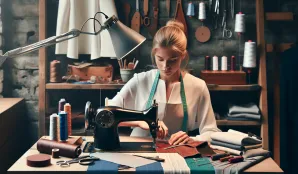
Test seamstress salary
Latest available salary statistics are for 2025. Compare average pay, salary range and related job listings.
31 300 - 34 400 SEK / month
Women earn 94% of what men do.
Industriell tillverkning
Related tools
Salary progression Test seamstress
What does a Provsömmerska do? – Tasks and Work Environment
A Provsömmerska primarily works with sewing sample garments or prototypes based on designer or construction sketches. The work is often performed in close collaboration with pattern makers, product developers, and designers to ensure that the fit, functionality, and appearance of the garments meet expectations for production. The role is central in the textile and fashion industry, where precision and understanding of material properties are crucial. The work environment varies between small studios and larger industrial settings, but almost always takes place indoors, often with access to advanced sewing machines and specialized equipment.
Salary Development Over Time
The salary for a Provsömmerska has shown steady positive growth over the past three years. In 2022, the average salary was 27,700 SEK per month. In 2023, it increased to 30 400 SEK, representing an increase of about 6.9%. In 2024, the average salary has reached 32 200 SEK, which is an additional increase of approximately 2.7% compared to the previous year. This salary trend reflects increased demand for skilled Provsömmerskor, as well as industry development with new technology and higher craftsmanship standards. Education level and specialization within the profession may also have contributed to the positive salary development.
Provsömmerska Salary – Complete Overview
- Average salary: 32 200 SEK/month
- Lowest salary: 29,400 SEK/month (private sector, female, 3-year vocational training)
- Highest salary: 32,200 SEK/month (male, regional sector, up to 2-year vocational training)
- Hourly wage: 183 SEK
- Gender pay gap: Women earn on average 31 300 SEK, men 33 200 SEK (women earn 94% of what men do)
- Regional differences: Regional sector offers higher salaries, especially for men
Education and Qualifications
The path to becoming a Provsömmerska typically involves completing a vocational program at the upper secondary level with a focus on textile design or sewing, followed by internships and experience-based skill development. Additional courses or certifications in textile technology and pattern construction increase employment opportunities. The ability to read and interpret patterns, precision, and a genuine interest in textile materials are essential prerequisites.
- Upper secondary education: Vocational program, textile design, 3 years
- Courses/certifications: Textile technology, pattern construction, CAD for textiles
- Internships: Common during education and as an entry point into the profession
- Prerequisites: Interest in sewing, accuracy, patience
- Further education: Possible via vocational colleges or specialized courses
Many Provsömmerskor get the opportunity to work directly with designers and influence the final design of garments, making the profession both creative and dynamic. For those who enjoy a setting where craftsmanship meets innovation, the role can be highly stimulating. Seeing prototypes turn into finished collections is a particular source of pride for many in the industry.
Common Benefits and Compensation
Benefits for Provsömmerskor often include wellness allowances, subsidized work clothing, and opportunities for skill development through internal or external courses. Some employers also offer flexible working hours, collective insurance schemes, and favorable pension plans, especially within larger companies or the public sector.
Competition and Challenges
The job market for Provsömmerskor is characterized by relatively high competition, as the number of specialized positions is limited and many employers seek experience and high craftsmanship. Technological innovations and automation within the textile industry increase demands for handling both traditional and modern methods. Additionally, salary differences between genders and regional disparities can pose challenges for fair conditions. The industry is also influenced by fashion trends and economic cycles, which can affect job availability over time.
Tips for Aspiring Provsömmerska
To succeed as a Provsömmerska, patience and a keen eye for detail are essential, as accuracy is critical at every stage. Being flexible and able to adapt to new materials or working methods is a valuable asset, especially in an industry that constantly evolves. Creativity helps in solving unexpected problems, and a genuine interest in fashion and textiles motivates further development. It is also important to communicate effectively and collaborate with designers and production teams to ensure the best results. Actively seeking internships and networking within the industry increases chances of employment. Finally, a willingness to continuously upgrade skills and stay updated on new techniques and trends is key to long-term success.
Key Facts About Provsömmerska
- Education level: Upper secondary education, often with a focus on textile design
- Work environment: Indoors, studio or industrial setting
- Typical working hours: Full-time, sometimes shift work
- Demand: 1,437 available jobs within the profession (2024)
- Special skills: Sewing techniques, pattern reading, material knowledge
Career Paths and Future Outlook
After three to five years in the profession, a Provsömmerska can advance to more specialized roles such as pattern maker, studio manager, or product developer within the textile industry. Some choose to start their own business or move into educational roles related to sewing and textiles. According to the Swedish Public Employment Service's forecasts, there is no specific projection for Provsömmerskor, but within the broader group of machine operators in textile, leather, and fur industries, 1,437 jobs are reported (2024), indicating some demand. Since the profession is sensitive to economic cycles and fashion changes, future prospects may vary, but skilled and up-to-date professionals have good opportunities for ongoing development.
Frequently Asked Questions about Provsömmerska
- What does a Provsömmerska earn?
- A Provsömmerska has an average salary of 32 200 SEK per month, with variations between 29,400 SEK and 32,200 SEK depending on experience, gender, and sector. - How does one become a Provsömmerska?
- Most commonly, by completing a craft program at the upper secondary level with a focus on textile design, followed by internships and industry experience. - Are there many job opportunities as a Provsömmerska?
- The profession reports 1,437 available jobs (2024), but competition for specialized positions can be high. - What are the job responsibilities of a Provsömmerska?
- Tasks include sewing prototypes, garment adjustments, material selection, and collaboration with designers. - Are there gender pay gaps?
- Yes, women earn on average 94% of what men do within the profession. - What personal qualities are important?
- Attention to detail, patience, creativity, and teamwork skills are highly valued. - What is the work environment like for a Provsömmerska?
- Work is indoors, often in studios or smaller industrial environments, with modern sewing machines and textile equipment.

Salary distributed by age and sector
| Age | Base salary | Monthly salary | |
|---|---|---|---|
| 25-34 | 29100 kr | 31500 kr | |
| 35-44 | 95% | 29900 kr | 31800 kr |
| 45-54 | 92% | 30900 kr | 32600 kr |
| 55-64 | 93% | 31200 kr | 33000 kr |
| Snitt | 94% | 30300 kr | 32200 kr |
| Age | Base salary | Monthly salary | |
|---|---|---|---|
| 25-34 | 29100 kr | 31500 kr | |
| 35-44 | 95% | 29900 kr | 31800 kr |
| 45-54 | 92% | 30900 kr | 32600 kr |
| 55-64 | 93% | 31200 kr | 33000 kr |
| Snitt | 94% | 30300 kr | 32200 kr |
| Age | Base salary | Monthly salary | |
|---|---|---|---|
| 25-34 | 29100 kr | 31500 kr | |
| 35-44 | 95% | 29900 kr | 31800 kr |
| 45-54 | 92% | 30900 kr | 32600 kr |
| 55-64 | 93% | 31200 kr | 33000 kr |
| Snitt | 94% | 30300 kr | 32200 kr |
| Age | Base salary | Monthly salary | |
|---|---|---|---|
| 25-34 | 29600 kr | 32500 kr | |
| 35-44 | 95% | 29800 kr | 32500 kr |
| 45-54 | 92% | 31800 kr | 34000 kr |
| 55-64 | 93% | 31700 kr | 34500 kr |
| Snitt | 94% | 30500 kr | 33200 kr |
| Age | Base salary | Monthly salary | |
|---|---|---|---|
| 25-34 | 29600 kr | 32500 kr | |
| 35-44 | 95% | 29800 kr | 32500 kr |
| 45-54 | 92% | 31800 kr | 34000 kr |
| 55-64 | 93% | 31700 kr | 34500 kr |
| Snitt | 94% | 30500 kr | 33200 kr |
| Age | Base salary | Monthly salary | |
|---|---|---|---|
| 25-34 | 29600 kr | 32500 kr | |
| 35-44 | 95% | 29800 kr | 32500 kr |
| 45-54 | 92% | 31800 kr | 34000 kr |
| 55-64 | 93% | 31700 kr | 34500 kr |
| Snitt | 94% | 30500 kr | 33200 kr |
| Age | Base salary | Monthly salary | |
|---|---|---|---|
| 35-44 | 95% | 30000 kr | 30900 kr |
| 45-54 | 92% | 30200 kr | 31400 kr |
| 55-64 | 93% | 30900 kr | 32000 kr |
| Snitt | 94% | 30000 kr | 31300 kr |
| Age | Base salary | Monthly salary | |
|---|---|---|---|
| 35-44 | 95% | 30000 kr | 30900 kr |
| 45-54 | 92% | 30200 kr | 31400 kr |
| 55-64 | 93% | 30900 kr | 32000 kr |
| Snitt | 94% | 30000 kr | 31300 kr |
| Age | Base salary | Monthly salary | |
|---|---|---|---|
| 35-44 | 95% | 30000 kr | 30900 kr |
| 45-54 | 92% | 30200 kr | 31400 kr |
| 55-64 | 93% | 30900 kr | 32000 kr |
| Snitt | 94% | 30000 kr | 31300 kr |

About the data
All information displayed on this page is based on data from the Swedish Central Bureau of Statistics (SCB), the Swedish Tax Agency and the Swedish employment agency. Learn more about our data and data sources here.
All figures are gross salaries, meaning salaries before tax. The average salary, or mean salary, is calculated by adding up the total salary for all individuals within the profession and dividing it by the number of individuals. For specific job categories, we have also considered various criteria such as experience and education.
Profession Test seamstress has the SSYK code 8159, which we use to match against the SCB database to obtain the latest salary statistics.
-

Machine Operator at Nordifa in Halmstad
Other machine operators, textile, leather and leather industry
Wed, 8 Jul 2026 - 06:22 -

Industrial Seamstress for Germa in Kristianstad
Other machine operators, textile, leather and leather industry
Tue, 7 Jul 2026 - 21:42 -

Sewer/Seamstress for NHC in Umeå
Other machine operators, textile, leather and leather industry
Mon, 6 Jul 2026 - 21:26 -
Sewer/Seamstress for NHC in Timrå
Other machine operators, textile, leather and leather industry
Mon, 6 Jul 2026 - 17:06 -
Process Operator at TreeToTextile – Develop the Next Generation of Sustainable Textile Fiber
Other machine operators, textile, leather and leather industry
Thu, 2 Jul 2026 - 00:37
Compare salary, work tasks and job outlook in adjacent occupations to find roles with similar skills or pay levels.
-

Artificial stone casters salary
Average salary: 37 800 SEK/month • Industriell tillverkning
Machine operators, cement, stone and concrete products
Compare with Test seamstress
Tue, 14 Jul 2026 - 21:19 -

Average salary: 36 300 SEK/month • Industriell tillverkning
Machine setters and machine operators, metal work
Compare with Test seamstress
Tue, 14 Jul 2026 - 10:55 -

Average salary: 31 900 SEK/month • Industriell tillverkning
Hand packers and other factory workers
Compare with Test seamstress
Tue, 14 Jul 2026 - 20:05 -

Average salary: 35 300 SEK/month • Industriell tillverkning
Prepress technicians
Compare with Test seamstress
Tue, 14 Jul 2026 - 17:14 -

Dragist, pharmaceutical industry salary
Average salary: 39 900 SEK/month • Industriell tillverkning
Machine operators, pharmaceutical products
Compare with Test seamstress
Tue, 14 Jul 2026 - 20:29 -

Average salary: 36 300 SEK/month • Industriell tillverkning
Machine setters and machine operators, metal work
Compare with Test seamstress
Tue, 14 Jul 2026 - 17:13


