- Salary statistics
- Porcelain painter salary
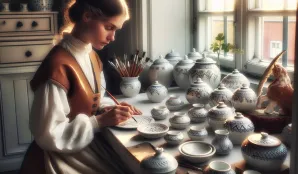
Porcelain painter salary
Latest available salary statistics are for 2024. Compare average pay, salary range and related job listings.
30 400 - 30 900 SEK / month
Hantverksyrken
Related tools
Salary progression Porcelain painter
What does a Porcelain Painter do? – Tasks and work environment
A porcelain painter works with decorating and refining porcelain items through freehand painting, stenciling, or other artistic techniques. Tasks often include preparing the porcelain surface, mixing colors, applying detailed patterns, and firing the items in an oven to fix the decoration. Porcelain painters are typically active in workshops, studios, or small industries where artistic precision and patience are crucial. The profession often involves working in a seated environment with good lighting and high demands for accuracy, color perception, and dexterity.
Salary development over time
The salary development for porcelain painters has varied over the past three years. In 2022, the average salary was 34,382 SEK per month, which increased slightly to 34 662 during 2023. However, there has been a clear decrease to 30 900 in 2024, representing a reduction of about 11% compared to the previous year. This trend can be explained by decreased demand for hand-painted porcelain products, as well as increasing automation and competition from cheaper imported goods. At the same time, the job market for craftspeople has become more specialized, negatively affecting wages for those without niche skills or established customer bases.
Porcelain Painter salary – comprehensive overview
- Average salary: 30 900 SEK/month
- Lowest/Highest salary: Data not available
- Hourly wage (average): 186 SEK/hour
- Gender differences: Data not available
- Regional differences: Data not available
Education and qualifications
To work as a porcelain painter, artistic education or experience in painting and crafts is generally required. Many have completed vocational training in crafts, applied arts, or visual arts, but some are self-taught, building their skills through practice and personal projects. Specialized courses in porcelain painting are sometimes offered at folk high schools, vocational colleges, or by private providers.
- Vocational training in crafts: 1–3 years
- Short courses/certificates in porcelain painting: 6–12 months
- Internship or apprenticeship: Recommended for starting the profession
- Prerequisites: Basic artistic ability and color perception
- Self-study and portfolio work: Common and advantageous
A porcelain painter combines artistic expression with traditional craftsmanship, and many choose to develop a signature style that makes their work sought after by collectors and art enthusiasts. Networking with other craftspeople and participating in exhibitions can open doors for new collaborations and commissions.
Common benefits and compensations
Common benefits for porcelain painters may include flexible working hours, the possibility of remote work for design tasks, and subsidized material costs. Some employers also offer wellness allowances, support for further education, and access to shared studios or equipment. For self-employed individuals, social security contributions and pension are typically managed independently.
Competition and challenges
The competition within the porcelain painting profession is high, especially among freelancers and self-employed artists, where demand can fluctuate significantly. Automated production methods and mass-produced porcelain put pressure on prices and make it harder to justify higher fees for hand-painted works. Additionally, the profession requires continuous development of technical skills and artistic originality to stand out in the market. The industry is characterized by slim margins, and it is common to combine porcelain painting with other assignments or teaching to achieve a stable income.
Tips for aspiring Porcelain Painters
To succeed as a porcelain painter, attention to detail and patience are essential, as the work often involves intricate work and long working periods. Creativity is a key trait, as developing unique patterns and a personal style can make a big difference in the market. Building a strong portfolio and showcasing your work on social media or exhibitions helps increase visibility and attract clients. Collaboration skills are valuable, especially if working in a studio with other artisans. Finally, being business-minded and having basic knowledge of marketing and sales can facilitate running your own business.
Key facts about Porcelain Painters
- Average salary: 30 900 SEK/month
- Hourly wage: 186 SEK
- Education level: Vocational training or artistic courses
- Work environment: Studio, workshop, or small industry
- Number of job openings: 341
Career paths and future prospects
After three to five years in the profession, many porcelain painters have built their own client base and can work more independently, both as employees and entrepreneurs. It is common to combine porcelain painting with other crafts, teaching, or design. According to the Swedish Public Employment Service's forecasts, competition remains high, but opportunities exist for those who specialize or find niche markets, such as unique designs or restoration of older porcelain. The current number of job openings within the profession is 341, indicating a certain demand, especially within small craft businesses and the cultural sector.
Frequently asked questions about Porcelain Painters
- What does a Porcelain Painter earn?
- A porcelain painter has an average salary of 30 900 SEK per month. - What is the work environment like for Porcelain Painters?
- The work environment is often sedentary in a studio or workshop with high demands for accuracy and concentration. - What education is required to become a Porcelain Painter?
- Often, vocational training in art or crafts is required, but shorter courses and self-study are also common. - Are there good future prospects for Porcelain Painters?
- Competition is high, but specialization and niche markets can create opportunities, especially within the cultural sector. - What personal qualities are important for a Porcelain Painter?
- Attention to detail, patience, creativity, and business skills are important qualities in the profession. - What is the difference between a Porcelain Painter and other craftspeople?
- Porcelain painters focus on decoration of porcelain, while other craftspeople work with various materials and techniques. - How many job openings are there for Porcelain Painters?
- There are currently 341 job openings within the profession.

Salary distributed by age and sector
| Age | Base salary | Monthly salary | |
|---|---|---|---|
| Snitt | 30400 kr | 30900 kr |
| Age | Base salary | Monthly salary | |
|---|---|---|---|
| Snitt | 30400 kr | 30900 kr |
| Age | Base salary | Monthly salary | |
|---|---|---|---|
| Snitt | 30400 kr | 30900 kr |

About the data
All information displayed on this page is based on data from the Swedish Central Bureau of Statistics (SCB), the Swedish Tax Agency and the Swedish employment agency. Learn more about our data and data sources here.
All figures are gross salaries, meaning salaries before tax. The average salary, or mean salary, is calculated by adding up the total salary for all individuals within the profession and dividing it by the number of individuals. For specific job categories, we have also considered various criteria such as experience and education.
Profession Porcelain painter has the SSYK code 7319, which we use to match against the SCB database to obtain the latest salary statistics.
-

Machine Operator in Eslöv – 3 Shifts
Musical instrument makers and other artisans
Wed, 27 May 2026 - 01:04 -

Woodwork Teacher for Ekbackens School in Fellingsbro
Musical instrument makers and other artisans
Tue, 26 May 2026 - 00:24 -
Machine Operator in Eslöv – 3 Shifts and Long-Term Position
Musical instrument makers and other artisans
Fri, 22 May 2026 - 20:52 -
Certified Textile Crafts Teacher (Grades 6-9) at Kunskapsskolan Enskede
Musical instrument makers and other artisans
Thu, 21 May 2026 - 22:03 -

Certified Teacher in Wood and Metalwork Needed at Kunskapsskolan Enskede
Musical instrument makers and other artisans
Thu, 21 May 2026 - 22:02
Compare salary, work tasks and job outlook in adjacent occupations to find roles with similar skills or pay levels.
-
String instrument maker salary
Average salary: 30 900 SEK/month • Hantverksyrken
Musical instrument makers and other artisans
Compare with Porcelain painter
Thu, 4 Jun 2026 - 06:03 -
Cutter, fabric ready-made salary
Average salary: 30 900 SEK/month • Hantverksyrken
Tailors and atelier seamstresses etc.
Compare with Porcelain painter
Thu, 4 Jun 2026 - 08:11 -

Repairman, hospital beds salary
Average salary: 34 800 SEK/month • Hantverksyrken
Precision mechanics
Compare with Porcelain painter
Thu, 4 Jun 2026 - 08:50 -

Average salary: 33 300 SEK/month • Hantverksyrken
Leather craftsmen and shoemakers
Compare with Porcelain painter
Thu, 4 Jun 2026 - 08:46 -

Average salary: 30 900 SEK/month • Hantverksyrken
Musical instrument makers and other artisans
Compare with Porcelain painter
Thu, 4 Jun 2026 - 04:27 -

Average salary: 30 900 SEK/month • Hantverksyrken
Musical instrument makers and other artisans
Compare with Porcelain painter
Thu, 4 Jun 2026 - 08:40
-

Demoskop May 28, 2026: Social Democrats Lose, MP and KD Increase
Thu, 28 May 2026 - 19:35 -

Up to 25% off experiences for mom – Celebrate Mother’s Day with Live it
Tue, 26 May 2026 - 12:00


