- Salary statistics
- Candlesticks salary
Candlesticks salary
Latest available salary statistics are for 2025. Compare average pay, salary range and related job listings.
41 400 - 45 700 SEK / month
Women earn 98% of what men do.
Industriell tillverkning
Related tools
Salary progression Candlesticks
What does a candlemaker do? – Tasks and work environment
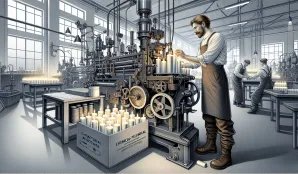
A candlemaker produces candles using various methods, often in an industrial setting with the help of machines for chemical-technical products. Tasks include melting wax or paraffin mixtures, adding colors and fragrances, and monitoring automated processes to shape and cool the candles. The work requires precision and an eye for quality, especially when inspecting finished products. The work environment is usually production facilities with mechanical aids, where safety procedures and good hygiene are important parts of daily routines.
Salary development over time
The salary for candlemakers has shown a clear upward trend in recent years. In 2022, the average salary was 32,600 SEK per month, increasing to 38 100 SEK in 2023, and further to 42 600 SEK in 2024. This corresponds to a salary increase of about 17% over three years, with the largest increase between 2023 and 2024. The development is driven by higher demand for specialized labor in chemical-technical production and a general wage increase in the job market. Salaries are also influenced by skill level and the ability to work with more advanced machines or processes.
Candlemaker salary – comprehensive overview
- Average salary: 42 600 SEK/month
- Lowest salary: 36,000 SEK/month
- Highest salary: 39,800 SEK/month
- Hourly wage: 229 SEK
- Gender differences: Women earn 98% of what men do (women: 36,900 SEK, men: 38,500 SEK)
- Regional differences: No available data
Education and qualifications
The path to becoming a candlemaker usually involves a high school education in industry, chemistry, or technology, often complemented by practical training or vocational courses. Some roles require post-secondary education, especially where more advanced machinery handling or quality control is involved. Practical skills and understanding of chemical processes are central, and many employers value documented experience in related occupational roles.
- High school education: Industry or technology programs, 3 years
- Post-secondary education: Vocational courses or short training in chemical technology (up to 3 years)
- Practical training: Usually internships or traineeships in production
- Courses: Specialized courses in machine operation or safety
- Prerequisites: Interest in technology and precision
Many candlemakers develop a unique craft over time, where traditional techniques meet modern automation. The profession is especially suitable for those who enjoy combining practical work with technical thinking and an eye for detail.
Common benefits and compensations
Candlemakers are often offered collective agreement benefits such as occupational pension, compensation for unsocial hours, and wellness allowances. In some cases, bonuses linked to production targets and subsidized lunch or work clothing are also included. Irregular working hours may entitle additional compensation depending on the employer and agreements.
Competition and challenges
Competition for jobs as a candlemaker can vary depending on region and the number of manufacturing companies in the industry. Since the profession belongs to a broader group of machine operators within chemical-technical production, there is some flexibility for those open to related roles. Challenges mainly arise when transitioning to new machines or technologies, as well as demands for high production speed and quality. Limited recruitment and few training places can also affect the opportunities for recent graduates to quickly establish themselves in the job market.
Tips for those who want to become a candlemaker
To succeed as a candlemaker, it is good to develop a precise and quality-conscious working style, as small details can significantly affect the final result. An interest in technology facilitates learning about machines and processes, which is important for quickly entering production. Flexibility is a valuable trait, as tasks often vary depending on season and demand. Good teamwork skills are essential in production teams, where collaboration and communication are central to safety and efficiency. Being proactive and eager to learn new things also increases opportunities for advancement or specialization within the profession.
Key facts about candlemakers
- Education level: High school or post-secondary short courses
- Work environment: Industrial production, often with machines
- Work schedule: Shift work and daytime shifts occur
- Occupational group: Machine operators, chemical-technical products
- Number of available jobs (2024): 1,437 within the occupational group
Career paths and future outlooks
After a few years of experience, a candlemaker can take on more advanced roles such as production supervisor, quality technician, or trainer within the company. Specialization in machine maintenance or process optimization is also possible for those with a technical interest. Forecasts from the Employment Service show no exact future assessment for the profession, but the entire occupational group reports a large number of available positions. Those willing to further educate themselves or change focus within production have good opportunities for continued employment and development.
Frequently asked questions about candlemakers
- What does a candlemaker earn?
- The average salary is 42 600 SEK per month. - What education is required to become a candlemaker?
- Usually high school in industry or technology, sometimes post-secondary courses. - Are there gender differences in salary?
- Yes, women earn 98% of what men do within the profession. - What does the job market look like for candlemakers?
- There are 1,437 available jobs within the occupational group, but no separate forecast for the profession. - What personal qualities are important?
- Attention to detail, technical interest, and teamwork skills are central. - What are the highest and lowest salaries for a candlemaker?
- The highest salary is 39,800 SEK, and the lowest is 36,000 SEK.

Salary distributed by age and sector
| Age | Base salary | Monthly salary | |
|---|---|---|---|
| 25-34 | 36100 kr | 41900 kr | |
| 35-44 | 37300 kr | 42900 kr | |
| 45-54 | 37800 kr | 43400 kr | |
| 55-64 | 37900 kr | 44000 kr | |
| Snitt | 98% | 36900 kr | 42600 kr |
| Age | Base salary | Monthly salary | |
|---|---|---|---|
| 25-34 | 36100 kr | 41900 kr | |
| 35-44 | 37300 kr | 42900 kr | |
| 45-54 | 37800 kr | 43400 kr | |
| 55-64 | 37900 kr | 44000 kr | |
| Snitt | 98% | 36900 kr | 42600 kr |
| Age | Base salary | Monthly salary | |
|---|---|---|---|
| 25-34 | 36100 kr | 41900 kr | |
| 35-44 | 37300 kr | 42900 kr | |
| 45-54 | 37800 kr | 43400 kr | |
| 55-64 | 37900 kr | 44000 kr | |
| Snitt | 98% | 36900 kr | 42600 kr |
| Age | Base salary | Monthly salary | |
|---|---|---|---|
| 25-34 | 36300 kr | 42300 kr | |
| 35-44 | 37400 kr | 42800 kr | |
| 45-54 | 38000 kr | 43500 kr | |
| 55-64 | 38000 kr | 44300 kr | |
| Snitt | 98% | 37100 kr | 42700 kr |
| Age | Base salary | Monthly salary | |
|---|---|---|---|
| 25-34 | 36300 kr | 42300 kr | |
| 35-44 | 37400 kr | 42800 kr | |
| 45-54 | 38000 kr | 43500 kr | |
| 55-64 | 38000 kr | 44300 kr | |
| Snitt | 98% | 37100 kr | 42700 kr |
| Age | Base salary | Monthly salary | |
|---|---|---|---|
| 25-34 | 36300 kr | 42300 kr | |
| 35-44 | 37400 kr | 42800 kr | |
| 45-54 | 38000 kr | 43500 kr | |
| 55-64 | 38000 kr | 44300 kr | |
| Snitt | 98% | 37100 kr | 42700 kr |
| Age | Base salary | Monthly salary | |
|---|---|---|---|
| Snitt | 98% | 36200 kr | 42000 kr |
| Age | Base salary | Monthly salary | |
|---|---|---|---|
| Snitt | 98% | 36200 kr | 42000 kr |
| Age | Base salary | Monthly salary | |
|---|---|---|---|
| Snitt | 98% | 36200 kr | 42000 kr |

About the data
All information displayed on this page is based on data from the Swedish Central Bureau of Statistics (SCB), the Swedish Tax Agency and the Swedish employment agency. Learn more about our data and data sources here.
All figures are gross salaries, meaning salaries before tax. The average salary, or mean salary, is calculated by adding up the total salary for all individuals within the profession and dividing it by the number of individuals. For specific job categories, we have also considered various criteria such as experience and education.
Profession Candlesticks has the SSYK code 8132, which we use to match against the SCB database to obtain the latest salary statistics.
-
Production Operator at Vanadis Energy in Rosersberg
Machine operators, chemical technology and photographic products
Fri, 10 Jul 2026 - 22:01 -

Operator – Optical Thin Film Coatings
Machine operators, chemical technology and photographic products
Wed, 1 Jul 2026 - 09:04 -
Operator – Optical Thin Film Coatings
Machine operators, chemical technology and photographic products
Wed, 1 Jul 2026 - 06:29 -

Summer Production and Packing Job in Höganäs
Machine operators, chemical technology and photographic products
Tue, 23 Jun 2026 - 22:06 -

Production Technician for Shift Work in Järfalla – 30h/week with Full-Time Pay
Machine operators, chemical technology and photographic products
Fri, 19 Jun 2026 - 00:27
Compare salary, work tasks and job outlook in adjacent occupations to find roles with similar skills or pay levels.
-
Textile printers, stencil prints salary
Average salary: 34 600 SEK/month • Industriell tillverkning
Printers
Compare with Candlesticks
Tue, 14 Jul 2026 - 08:14 -

Average salary: 42 600 SEK/month • Industriell tillverkning
Machine operators, chemical technology and photographic products
Compare with Candlesticks
Thu, 9 Jul 2026 - 21:13 -

Average salary: 37 800 SEK/month • Industriell tillverkning
Machine operators, cement, stone and concrete products
Compare with Candlesticks
Tue, 14 Jul 2026 - 02:59 -

Average salary: 44 700 SEK/month • Industriell tillverkning
Process operators, pulp
Compare with Candlesticks
Mon, 13 Jul 2026 - 04:48 -

Average salary: 34 800 SEK/month • Industriell tillverkning
Machine operators, filling, packing and labeling
Compare with Candlesticks
Tue, 14 Jul 2026 - 08:17 -

Average salary: 38 300 SEK/month • Industriell tillverkning
Operators in sawmills, planing mills and plywood etc.
Compare with Candlesticks
Tue, 14 Jul 2026 - 03:41


