- Salary statistics
- Clay workers salary
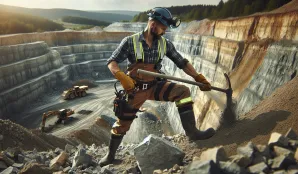
Clay workers salary
Latest available salary statistics are for 2025. Compare average pay, salary range and related job listings.
38 800 - 52 500 SEK / month
Women earn 84% of what men do.
Bygg & anläggning
Related tools
Salary progression Clay workers
What does a Lertagsarbetare do? – Tasks and work environment
Lertagsarbetare primarily work with extracting clay in mining and quarry environments. The profession involves handling machines and tools to break, transport, and refine clay used in construction and ceramic industries. Tasks include monitoring processes, performing quality controls, and maintaining and repairing equipment. The work environment is often physical and outdoor-based, with varying weather conditions and requirements for protective gear to minimize risks. Safety routines and precision are central parts of the daily work.
Salary development over time
Over the past three years, Lertagsarbetare have experienced fluctuating salary development. In 2022, the average salary was 42,900 SEK per month. In 2023, the salary increased significantly to 47 500 SEK, representing an increase of about 18%. Between 2023 and 2024, there was a decrease to 45 800 SEK, a drop of approximately 6%. This variation may be due to changes in demand, labor supply, and adjustments within the industry related to project volume and investment levels. Despite fluctuations, the profession’s salary remains high compared to many other manual trades, reflecting both responsibility and the skills required.
Lertagsarbetare salary – comprehensive overview
- Average salary: 45 800 SEK/month
- Lowest/Highest salary: Data unavailable
- Hourly wage: 286 SEK/hour
- Gender differences: Men earn 46 200 SEK, data about women is unavailable
- Regional differences: No specific data available
Education and qualifications
To work as a Lertagsarbetare, a high school education in industry, construction, or similar fields is generally required. Practical experience is highly valuable, and many employers offer in-house training to ensure the right skills. Machine operation skills and basic knowledge of work environment and safety are advantageous. Certifications for machine operation and work in mining environments are often requested, especially at larger workplaces.
- High school education: Construction and civil engineering programs or similar (3 years)
- Machine operation training: Certificates for excavators, loaders, or other relevant vehicles
- Internship: Work placement during training is recommended
- Experience: Previous work in industry or mining environments is advantageous
- Work environment knowledge: Basic training in safety and protection
Lertagsarbetare often get the opportunity to work close to nature and follow the material’s journey from raw material to finished product. This provides a unique insight into the construction and industry cycle, while also contributing to local and national development.
Common benefits and compensations
Lertagsarbetare are often covered by collective agreements providing access to holiday pay, overtime pay, and pension. Other common benefits include wellness allowances, work clothing, additional insurance, and opportunities for further training and skill development within the profession.
Challenges and competition
The labor market for Lertagsarbetare is characterized by limited but stable demand, as clay is a niche raw material with specific applications. One of the main challenges is that the profession requires both physical endurance and technical skills, making it difficult to find suitable candidates. Industry cyclicality means demand can vary depending on the development of the construction and industrial sectors. Safety requirements and regulations demand high accuracy, making ongoing training and certification essential to remain attractive on the job market.
Tips for those wanting to become a Lertagsarbetare
To succeed as a Lertagsarbetare, it’s good to combine technical interest with practical problem-solving skills. Being precise and responsible helps maintain high safety standards, while good physical condition facilitates daily tasks. Flexibility and teamwork skills are important, especially when tasks vary. Continuously furthering education in machine handling and work environment safety increases development opportunities. Gaining experience through internships or summer jobs in the industry is also valuable for building skills and networks. A positive attitude towards outdoor work and readiness to handle different weather conditions are also beneficial for long-term satisfaction in the profession.
Key facts about Lertagsarbetare
- Education level: High school education, often with machine operation certification
- Work environment: Physical, outdoor, and in industry or mining environments
- Demand: 379 job openings within the profession (May 2024)
- Typical employment: Full-time with collective agreement
- Special skills: Machine operation certificates and safety training
Career paths and future prospects
After a few years in the profession, a Lertagsarbetare can advance to roles such as supervisor, machine responsible, or specialize in quality control and process optimization. There are also opportunities to further train as a machine operator in other industries or take roles within health and safety. Projections from the Employment Service do not provide an exact assessment due to limited data, but the number of job openings is currently relatively high. This indicates stable demand, especially for those with the right education and certifications. The industry is expected to remain important for construction and civil engineering sectors, although economic fluctuations can influence volumes and needs.
Common questions about Lertagsarbetare
- What is the average salary of a Lertagsarbetare?
- A Lertagsarbetare has an average salary of 45 800 SEK per month. - How does the salary difference between men and women look?
- Men earn an average of 46 200 SEK; specific data about women is unavailable. - What education is required to become a Lertagsarbetare?
- High school education in construction, industry, or machine operation is recommended, often supplemented with certifications. - What is the work environment like for a Lertagsarbetare?
- The work environment is physical and outdoor-based, often in mining or quarry environments with safety gear requirements. - Are there good future prospects in the profession?
- There are 379 job openings according to recent data, but no exact forecast from the Employment Service. - What benefits are common?
- Collective agreements, holiday pay, overtime pay, wellness allowance, and work clothing are typical benefits. - What is the hourly wage?
- The average hourly wage for a Lertagsarbetare is 286 SEK.

Salary distributed by age and sector
| Age | Base salary | Monthly salary | |
|---|---|---|---|
| 18-24 | 36900 kr | 41600 kr | |
| 25-34 | 39200 kr | 44900 kr | |
| 35-44 | 43000 kr | 50000 kr | |
| 45-54 | 42900 kr | 47500 kr | |
| 55-64 | 42400 kr | 44200 kr | |
| Snitt | 84% | 40600 kr | 45800 kr |
| Age | Base salary | Monthly salary | |
|---|---|---|---|
| 18-24 | 36900 kr | 41600 kr | |
| 25-34 | 39200 kr | 44900 kr | |
| 35-44 | 43000 kr | 50000 kr | |
| 45-54 | 42900 kr | 47500 kr | |
| 55-64 | 42400 kr | 44200 kr | |
| Snitt | 84% | 40600 kr | 45800 kr |
| Age | Base salary | Monthly salary | |
|---|---|---|---|
| 18-24 | 36900 kr | 41600 kr | |
| 25-34 | 39200 kr | 44900 kr | |
| 35-44 | 43000 kr | 50000 kr | |
| 45-54 | 42900 kr | 47500 kr | |
| 55-64 | 42400 kr | 44200 kr | |
| Snitt | 84% | 40600 kr | 45800 kr |
| Age | Base salary | Monthly salary | |
|---|---|---|---|
| 18-24 | 36900 kr | 41800 kr | |
| 25-34 | 39600 kr | 45700 kr | |
| 35-44 | 43200 kr | 50300 kr | |
| 45-54 | 42900 kr | 47500 kr | |
| 55-64 | 42300 kr | 44100 kr | |
| Snitt | 84% | 40900 kr | 46200 kr |
| Age | Base salary | Monthly salary | |
|---|---|---|---|
| 18-24 | 36900 kr | 41800 kr | |
| 25-34 | 39600 kr | 45700 kr | |
| 35-44 | 43200 kr | 50300 kr | |
| 45-54 | 42900 kr | 47500 kr | |
| 55-64 | 42300 kr | 44100 kr | |
| Snitt | 84% | 40900 kr | 46200 kr |
| Age | Base salary | Monthly salary | |
|---|---|---|---|
| 18-24 | 36900 kr | 41800 kr | |
| 25-34 | 39600 kr | 45700 kr | |
| 35-44 | 43200 kr | 50300 kr | |
| 45-54 | 42900 kr | 47500 kr | |
| 55-64 | 42300 kr | 44100 kr | |
| Snitt | 84% | 40900 kr | 46200 kr |
| Age | Base salary | Monthly salary | |
|---|---|---|---|
| Snitt | 84% | 36400 kr | 38800 kr |
| Age | Base salary | Monthly salary | |
|---|---|---|---|
| Snitt | 84% | 36400 kr | 38800 kr |
| Age | Base salary | Monthly salary | |
|---|---|---|---|
| Snitt | 84% | 36400 kr | 38800 kr |

About the data
All information displayed on this page is based on data from the Swedish Central Bureau of Statistics (SCB), the Swedish Tax Agency and the Swedish employment agency. Learn more about our data and data sources here.
All figures are gross salaries, meaning salaries before tax. The average salary, or mean salary, is calculated by adding up the total salary for all individuals within the profession and dividing it by the number of individuals. For specific job categories, we have also considered various criteria such as experience and education.
Profession Clay workers has the SSYK code 8111, which we use to match against the SCB database to obtain the latest salary statistics.
-
Heat Treatment Operator – Rock Drilling Tools, Fagersta
Miners and quarry workers
Fri, 10 Jul 2026 - 20:53 -
Seeking Young and Driven Person for Rock Technology and Climbing in Dalsland
Miners and quarry workers
Sat, 4 Jul 2026 - 01:36


Compare salary, work tasks and job outlook in adjacent occupations to find roles with similar skills or pay levels.
-

Average salary: 46 800 SEK/month • Bygg & anläggning
Well drillers etc.
Compare with Clay workers
Tue, 14 Jul 2026 - 07:15 -

Control technician, construction salary
Average salary: 50 800 SEK/month • Bygg & anläggning
Engineers and technicians in construction and engineering
Compare with Clay workers
Tue, 14 Jul 2026 - 07:14 -

Calculation engineer (construction), civil engineer salary
Average salary: 54 900 SEK/month • Bygg & anläggning
Civil engineering professions in construction and engineering
Compare with Clay workers
Mon, 13 Jul 2026 - 03:18 -

Average salary: 42 300 SEK/month • Bygg & anläggning
Bricklayers etc.
Compare with Clay workers
Mon, 13 Jul 2026 - 20:21 -

Average salary: 45 800 SEK/month • Bygg & anläggning
Miners and quarry workers
Compare with Clay workers
Mon, 13 Jul 2026 - 18:39 -

Average salary: 50 800 SEK/month • Bygg & anläggning
Engineers and technicians in construction and engineering
Compare with Clay workers
Sun, 12 Jul 2026 - 03:22


