- Salary statistics
- Art casters salary
Art casters salary
Latest available salary statistics are for 2025. Compare average pay, salary range and related job listings.
31 500 - 32 100 SEK / month
Industriell tillverkning
Related tools
Salary progression Art casters
What does a foundry worker do? – Tasks and work environment
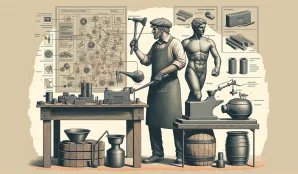
A foundry worker is involved in creating artworks and decorative objects from materials such as bronze, aluminum, or other metals through casting processes. Tasks include modeling, shaping, melting, and casting, as well as post-processing such as grinding, polishing, and surface treatment to achieve the desired character of the pieces. The work environment is often workshop-based with elements of heavy physical work and detailed craftsmanship. Protective gear is often used when working near molten metal and hot furnaces, and the environment can be noisy and dusty. At the same time, precision and artistic sense are required to ensure the final result aligns with the artist's intentions.
Salary development over time
Over the past three years, the salary for foundry workers has shown a relatively stable trend. In 2022, the average salary was 30,700 SEK per month, which decreased slightly to 31 600 SEK in 2023. Subsequently, there was a clear increase to 32 100 SEK in 2024, corresponding to an increase of about 3.6% compared to the previous year. This development can be explained by increased interest in traditional craftsmanship and continued demand for specialized skills within the arts and culture sector. Market conditions are also influenced by the supply of experienced foundry workers, where retirements and limited inflow of new workers can help keep wages high. Despite minor variations over time, the trend indicates a slowly increasing valuation of foundry workers' skills in the labor market.
Foundry worker salary – comprehensive overview
- Average salary: 32 100 SEK/month
- Lowest/highest salary: Data unavailable, but variation exists depending on experience and workplace
- Hourly wage: 190 SEK/hour (based on 166 hours/month)
- Gender differences: Men earn 32 400 SEK/month; no specific data for women
- Regional differences: Current statistics unavailable, but possible variation between urban and rural areas
Education and qualifications
To become a foundry worker, a combination of craft training and practical experience is typically required. Many attend vocational programs in metalwork or artisan crafts at high school or folk high schools, but specialized courses in casting and apprenticeship periods are also common. Higher education in art or metal design can be advantageous, especially for those working on advanced art projects. Regardless of the educational path, practical training and developed craftsmanship are essential.
- Vocational training: High school programs focused on metal or artisan crafts (3 years)
- Folk high school/courses: Specialized training in casting (1–2 years)
- Internship/apprenticeship: Practical experience via apprenticeship or trainee programs
- Prerequisites: Interest in art, material knowledge, and good physical condition
- Tips for choosing: Combine education with practical experience to build a strong professional network
Many foundry workers collaborate closely with artists and have the opportunity to participate in creating unique public artworks, making the profession both varied and social. The partnership between artist and foundry worker is often crucial for the final result.
Common benefits and compensations
Foundry workers are often covered by collective agreements that provide access to occupational pension, sick pay, and insurance. Other common benefits may include wellness allowances, work clothing, and extra vacation days. In some cases, training support or opportunities for further education within the profession are offered.
Competition and challenges
The profession of foundry worker is relatively niche, and competition for permanent positions can be high, especially at larger foundries. Challenges include dependence on public and private commissions, which can lead to periods of low demand. The work environment demands good physical fitness and endurance, as tasks can be heavy and sometimes monotonous. Additionally, precision and the ability to work under time pressure during larger projects are required. Since the industry is tradition-bound and many experienced workers are approaching retirement, recruiting new personnel can be a challenge for employers. At the same time, the opportunity to work on unique and creative projects is attractive to many.
Tips for aspiring foundry workers
To succeed as a foundry worker, it is beneficial to combine a strong attention to detail with patience and perseverance. Building practical skills through internships and learning from experienced colleagues is crucial. Creativity and problem-solving skills help when unexpected challenges arise during the casting process. An interest in material science and technical knowledge provides an advantage both in craftsmanship and in maintaining tools and machinery. Being flexible and open to new methods aids adaptation to various projects. Collaboration skills are also important, as much of the work is done together with artists and other craftsmen. Finally, a high work ethic and accuracy are valued, as the quality of the finished work is often judged in great detail.
Key facts about a foundry worker
- Educational level: High school or specialized courses in metal/artisan crafts
- Work environment: Workshop setting with heavy lifting and heat
- Employment type: Often project-based or self-employment
- Demand: Limited statistics, but approximately 1,437 job openings in the profession
Career paths and future prospects
After three to five years in the profession, foundry workers have opportunities to take responsibility for larger projects, mentor new employees, or specialize in specific materials and techniques. Some choose to start their own business, while others develop roles in project management or collaborate with artists on public art projects. According to the Swedish Public Employment Service, there is limited data on future outlooks, but the profession of foundry workers had 1,437 available jobs at the latest measurement. This indicates ongoing demand, although competition for more specialized roles can be high. Retirement of experienced workers is expected to create a need for new practitioners in the long term.
Frequently asked questions about foundry workers
- What is the average salary of a foundry worker?
- The average salary for a foundry worker is 32 100 SEK per month. - How does the salary development look for foundry workers?
- Salaries have increased from 30,700 SEK in 2022 to 32 100 SEK in 2024. - Are there gender differences in salary for foundry workers?
- Men earn an average of 32 400 SEK per month; specific data for women is unavailable. - What education is required to become a foundry worker?
- High school education in metalwork or artisan crafts, or specialized courses plus practical experience are recommended. - How does the job market look for foundry workers?
- Limited statistics are available, but recently 1,437 job openings in the foundry profession were noted. - What workplace risks do foundry workers face?
- Risks include heat, heavy lifting, and exposure to dust and noise. - Can foundry workers work internationally?
- Yes, especially within larger art projects or for entrepreneurs starting their own business.

Salary distributed by age and sector
| Age | Base salary | Monthly salary | |
|---|---|---|---|
| Snitt | 31500 kr | 32100 kr |
| Age | Base salary | Monthly salary | |
|---|---|---|---|
| Snitt | 31500 kr | 32100 kr |
| Age | Base salary | Monthly salary | |
|---|---|---|---|
| Snitt | 31500 kr | 32100 kr |
| Age | Base salary | Monthly salary | |
|---|---|---|---|
| Snitt | 31700 kr | 32400 kr |
| Age | Base salary | Monthly salary | |
|---|---|---|---|
| Snitt | 31700 kr | 32400 kr |
| Age | Base salary | Monthly salary | |
|---|---|---|---|
| Snitt | 31700 kr | 32400 kr |

About the data
All information displayed on this page is based on data from the Swedish Central Bureau of Statistics (SCB), the Swedish Tax Agency and the Swedish employment agency. Learn more about our data and data sources here.
All figures are gross salaries, meaning salaries before tax. The average salary, or mean salary, is calculated by adding up the total salary for all individuals within the profession and dividing it by the number of individuals. For specific job categories, we have also considered various criteria such as experience and education.
Profession Art casters has the SSYK code 7211, which we use to match against the SCB database to obtain the latest salary statistics.
-

Concrete Worker for Thomas Betong in Magra – Consultancy Role with Employment Opportunity
Casters
Thu, 11 Jun 2026 - 09:17



Compare salary, work tasks and job outlook in adjacent occupations to find roles with similar skills or pay levels.
-
Textile printers, stencil prints salary
Average salary: 34 600 SEK/month • Industriell tillverkning
Printers
Compare with Art casters
Tue, 14 Jul 2026 - 08:14 -

Average salary: 42 600 SEK/month • Industriell tillverkning
Machine operators, chemical technology and photographic products
Compare with Art casters
Thu, 9 Jul 2026 - 21:13 -

Average salary: 37 800 SEK/month • Industriell tillverkning
Machine operators, cement, stone and concrete products
Compare with Art casters
Tue, 14 Jul 2026 - 02:59 -

Average salary: 44 700 SEK/month • Industriell tillverkning
Process operators, pulp
Compare with Art casters
Mon, 13 Jul 2026 - 04:48 -

Average salary: 34 800 SEK/month • Industriell tillverkning
Machine operators, filling, packing and labeling
Compare with Art casters
Tue, 14 Jul 2026 - 08:17 -

Average salary: 38 300 SEK/month • Industriell tillverkning
Operators in sawmills, planing mills and plywood etc.
Compare with Art casters
Tue, 14 Jul 2026 - 03:41


