- Salary statistics
- Garment seamstress salary
Garment seamstress salary
Latest available salary statistics are for 2025. Compare average pay, salary range and related job listings.
31 300 - 34 400 SEK / month
Women earn 94% of what men do.
Industriell tillverkning
Related tools
Salary progression Garment seamstress
What does a konfektionssömmerska do? – Tasks and work environment
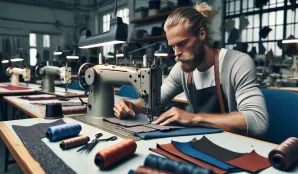
A konfektionssömmerska is responsible for sewing and assembling clothing or other textile products within the textile industry. Tasks include everything from cutting and sewing to detailed work with decorations and adjustments. The work often involves industrial sewing machines and other specialized tools, requiring precision and good hand-eye coordination. The work environment can vary between small ateliers and larger factories, where pace and automation levels differ. The profession often involves both independent tasks and collaboration within production teams, with quality and efficiency being central to daily work.
Salary development over time
The salary for a konfektionssömmerska has shown stable and positive growth over the past three years. In 2022, the average salary was 27,700 SEK, increasing to 30 400 SEK in 2023 and further to 32 200 SEK in 2024. This represents a salary increase of approximately 9.8% over the three-year period. The development reflects a combination of increased demand for skilled seamstresses and general wage adjustments within the industry. The salary increase can also be explained by the sector’s need for specialized skills, despite competition from automated production methods and foreign manufacturing. The trend indicates that the profession’s value on the labor market has strengthened somewhat, although salary differences between genders and regions still exist.
Konfektionssömmerska salary – comprehensive overview
- Average salary: 32 200 SEK/month
- Lowest salary: 29,400 SEK/month (female, private sector, upper secondary education 3 years)
- Highest salary: 32,200 SEK/month (male, regional sector, upper secondary education up to 2 years)
- Hourly wage: 183 SEK (based on 166 working hours/month)
- Gender differences: Men earn on average 33 200 SEK/month, women 31 300 SEK/month (women earn 94% of men's salary)
- Regional differences: Salaries vary depending on employment sector and region; highest salaries are found in the regional sector.
Education and qualifications
To work as a konfektionssömmerska, a typical requirement is upper secondary education in textiles and fashion, often supplemented with practical training or vocational courses. Many employers value experience with industrial sewing machines and understanding of production techniques. Educational paths can vary between formal programs and on-the-job learning, depending on specialization and employer preferences.
- Upper secondary education: Textiles and design, 3 years
- Vocational courses: Specialized courses in sewing and pattern construction
- Internships: Often included during education or as apprenticeships
- Prerequisites: Interest and some experience in sewing
- Self-study: Opportunities through online courses and independent learning
Many konfektionssömmerskor develop a unique sense for materials and construction, making them invaluable resources for custom orders and product development within the fashion industry. This expertise is hard to replace with machines and allows for creativity even in industrial environments.
Common benefits and compensations
A konfektionssömmerska is often offered collective agreement benefits such as occupational pension, holiday pay, and sometimes wellness allowances. Some workplaces also provide work clothing, subsidized lunches, and opportunities for further training within the company.
Challenges and competition
The profession is characterized by competition from automated production processes and offshoring to low-cost countries. At the same time, there is a growing niche for craftsmanship skills, especially within smaller fashion houses and specialized ateliers. The challenges include maintaining high quality and efficiency despite tight margins, and continuously developing skills to meet changing demands for design and materials. For those seeking career advancement, flexibility and specialization are increasingly important.
Tips for aspiring konfektionssömmerskor
To succeed as a konfektionssömmerska, it’s beneficial to combine precision with a passion for textile craftsmanship. Developing patience is crucial, as the work often requires attention to detail and repetitive tasks. A strong interest in fashion and design can be advantageous when developing new products or working on custom orders. Being flexible and willing to learn new techniques facilitates adaptation to industry changes. Collaboration skills are important in team environments, while independence is needed for individual projects. For those looking to enhance their job prospects, ongoing training and building a broad experience base are recommended.
Key facts about konfektionssömmerska
- Education level: Upper secondary education (Textiles and design)
- Occupational group: Other machine operators, textile, leather, and fur industry
- Work environment: Varies between factory and atelier
- Demand: 1,437 available jobs in the profession
- Special skills: Industrial sewing and material knowledge
Career paths and future outlook
After three to five years in the profession, a konfektionssömmerska can move into more advanced roles such as supervisor, pattern maker, or quality manager within textile manufacturing. Specialization in technical sewing, product development, or design opens additional career avenues both within the industry and in smaller ateliers. According to the Swedish Public Employment Service, there is no specific forecast for the profession due to limited data, but indications suggest a continued need for skilled seamstresses, especially in niche segments and custom production. With 1,437 available jobs, the labor market shows some mobility and opportunities for those with the right skills.
Common questions about konfektionssömmerska
- What does a konfektionssömmerska earn?
- The average salary is 32 200 SEK per month, with variations depending on gender, employment type, and region. - What education is required to become a konfektionssömmerska?
- Upper secondary education in textiles and design is recommended, often supplemented with internships or vocational courses. - Are there many job opportunities for konfektionssömmerskor?
- There are 1,437 available jobs, but competition varies depending on specialization and region. - What is the work environment like for konfektionssömmerskor?
- The environment varies between factories and smaller ateliers, often emphasizing accuracy and efficient production. - What are the most common benefits?
- Benefits include occupational pension, holiday pay, and sometimes wellness allowances and work clothing. - How do gender differences affect salaries?
- Men earn on average 33 200 SEK, women 31 300 SEK, which means women earn 94% of men's salaries. - What career opportunities are available after a few years?
- You can progress to roles like supervisor, pattern maker, or quality manager.

Salary distributed by age and sector
| Age | Base salary | Monthly salary | |
|---|---|---|---|
| 25-34 | 29100 kr | 31500 kr | |
| 35-44 | 95% | 29900 kr | 31800 kr |
| 45-54 | 92% | 30900 kr | 32600 kr |
| 55-64 | 93% | 31200 kr | 33000 kr |
| Snitt | 94% | 30300 kr | 32200 kr |
| Age | Base salary | Monthly salary | |
|---|---|---|---|
| 25-34 | 29100 kr | 31500 kr | |
| 35-44 | 95% | 29900 kr | 31800 kr |
| 45-54 | 92% | 30900 kr | 32600 kr |
| 55-64 | 93% | 31200 kr | 33000 kr |
| Snitt | 94% | 30300 kr | 32200 kr |
| Age | Base salary | Monthly salary | |
|---|---|---|---|
| 25-34 | 29100 kr | 31500 kr | |
| 35-44 | 95% | 29900 kr | 31800 kr |
| 45-54 | 92% | 30900 kr | 32600 kr |
| 55-64 | 93% | 31200 kr | 33000 kr |
| Snitt | 94% | 30300 kr | 32200 kr |
| Age | Base salary | Monthly salary | |
|---|---|---|---|
| 25-34 | 29600 kr | 32500 kr | |
| 35-44 | 95% | 29800 kr | 32500 kr |
| 45-54 | 92% | 31800 kr | 34000 kr |
| 55-64 | 93% | 31700 kr | 34500 kr |
| Snitt | 94% | 30500 kr | 33200 kr |
| Age | Base salary | Monthly salary | |
|---|---|---|---|
| 25-34 | 29600 kr | 32500 kr | |
| 35-44 | 95% | 29800 kr | 32500 kr |
| 45-54 | 92% | 31800 kr | 34000 kr |
| 55-64 | 93% | 31700 kr | 34500 kr |
| Snitt | 94% | 30500 kr | 33200 kr |
| Age | Base salary | Monthly salary | |
|---|---|---|---|
| 25-34 | 29600 kr | 32500 kr | |
| 35-44 | 95% | 29800 kr | 32500 kr |
| 45-54 | 92% | 31800 kr | 34000 kr |
| 55-64 | 93% | 31700 kr | 34500 kr |
| Snitt | 94% | 30500 kr | 33200 kr |
| Age | Base salary | Monthly salary | |
|---|---|---|---|
| 35-44 | 95% | 30000 kr | 30900 kr |
| 45-54 | 92% | 30200 kr | 31400 kr |
| 55-64 | 93% | 30900 kr | 32000 kr |
| Snitt | 94% | 30000 kr | 31300 kr |
| Age | Base salary | Monthly salary | |
|---|---|---|---|
| 35-44 | 95% | 30000 kr | 30900 kr |
| 45-54 | 92% | 30200 kr | 31400 kr |
| 55-64 | 93% | 30900 kr | 32000 kr |
| Snitt | 94% | 30000 kr | 31300 kr |
| Age | Base salary | Monthly salary | |
|---|---|---|---|
| 35-44 | 95% | 30000 kr | 30900 kr |
| 45-54 | 92% | 30200 kr | 31400 kr |
| 55-64 | 93% | 30900 kr | 32000 kr |
| Snitt | 94% | 30000 kr | 31300 kr |

About the data
All information displayed on this page is based on data from the Swedish Central Bureau of Statistics (SCB), the Swedish Tax Agency and the Swedish employment agency. Learn more about our data and data sources here.
All figures are gross salaries, meaning salaries before tax. The average salary, or mean salary, is calculated by adding up the total salary for all individuals within the profession and dividing it by the number of individuals. For specific job categories, we have also considered various criteria such as experience and education.
Profession Garment seamstress has the SSYK code 8159, which we use to match against the SCB database to obtain the latest salary statistics.
-

Machine Operator at Nordifa in Halmstad
Other machine operators, textile, leather and leather industry
Wed, 8 Jul 2026 - 06:22 -
Industrial Seamstress for Germa in Kristianstad
Other machine operators, textile, leather and leather industry
Tue, 7 Jul 2026 - 21:42 -

Sewer/Seamstress for NHC in Umeå
Other machine operators, textile, leather and leather industry
Mon, 6 Jul 2026 - 21:26 -
Sewer/Seamstress for NHC in Timrå
Other machine operators, textile, leather and leather industry
Mon, 6 Jul 2026 - 17:06 -
Process Operator at TreeToTextile – Develop the Next Generation of Sustainable Textile Fiber
Other machine operators, textile, leather and leather industry
Thu, 2 Jul 2026 - 00:37
Compare salary, work tasks and job outlook in adjacent occupations to find roles with similar skills or pay levels.
-

Charcuterie worker, manufacturing salary
Average salary: 33 000 SEK/month • Industriell tillverkning
Machine operators, meat and fish processing industry
Compare with Garment seamstress
Tue, 14 Jul 2026 - 08:18 -
Textile machine adjuster, yarn preparation salary
Average salary: 32 200 SEK/month • Industriell tillverkning
Other machine operators, textile, leather and leather industry
Compare with Garment seamstress
Tue, 14 Jul 2026 - 07:14 -

Average salary: 33 900 SEK/month • Industriell tillverkning
Machine operators, rubber industry
Compare with Garment seamstress
Mon, 13 Jul 2026 - 01:29 -

Average salary: 47 800 SEK/month • Industriell tillverkning
Production supervisors
Compare with Garment seamstress
Thu, 9 Jul 2026 - 13:10 -

Average salary: 40 000 SEK/month • Industriell tillverkning
Rolling mill operators
Compare with Garment seamstress
Mon, 13 Jul 2026 - 09:37 -

Supervisor, confectionery salary
Average salary: 47 800 SEK/month • Industriell tillverkning
Production supervisors
Compare with Garment seamstress
Tue, 14 Jul 2026 - 10:08


