- Salary statistics
- Splitting saws salary
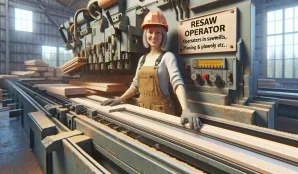
Splitting saws salary
Latest available salary statistics are for 2025. Compare average pay, salary range and related job listings.
36 700 - 39 200 SEK / month
Women earn 95% of what men do.
Industriell tillverkning
Related tools
Salary progression Splitting saws
What does a Klyvsågare do? – Tasks and work environment
A Klyvsågare primarily works within the wood industry and is responsible for splitting logs or larger pieces of wood into boards and planks using specialized saws and machines. Tasks include starting, monitoring, and adjusting the splitter, checking material quality, and ensuring that production meets specified dimensions and requirements. Precision is crucial since incorrect cuts can lead to significant material loss. The work environment often features noise, dust, and heavy lifting, requiring the use of protective equipment and a strong focus on safety. Klyvsågare usually work in teams at sawmills or woodworking industries and collaborate closely with other machine operators and production staff.
Salary development over time
The profession of Klyvsågare has shown steady and positive salary growth over the past three years. In 2022, the average salary was 33,600 SEK per month, which increased to 36 800 SEK in 2023. By 2024, the average salary further rose to 38 300 SEK, representing a total increase of approximately 9.5% over the period. This growth can be linked to increased demand for skilled operators in the wood industry, as well as adjustments for inflation and the industry’s general wage development. Salary increases have also been influenced by the labor market’s need for experienced personnel and a greater focus on safety and technical skills in sawmill operations. Despite some regional variation, the trend is clearly upward, making the profession attractive for those seeking stability and development opportunities.
Klyvsågare salary – comprehensive overview
- Average salary: 38 300 SEK/month
- Lowest salary: 35,400 SEK/month
- Highest salary: 37,400 SEK/month
- Hourly wage (average): 221 SEK/hour
- Women's average salary: 35,400 SEK/month (95% of men's salary)
- Men's average salary: 38 600 SEK/month
- Regional differences: Salary variations occur depending on geographic location and sector.
Education and qualifications
To work as a Klyvsågare, a high school education in industry, wood technology, or equivalent is generally required. Many employers value practical experience and internal training highly, especially when it comes to handling modern machines and safety routines. Some companies also offer trainee programs or internal training for new employees. Basic technical understanding and good physical condition are important for success in the profession.
- High school education: Industrial technology program, wood technology specialization (3 years)
- Certifications: Specific machine or safety certificates may be required
- Internship/trainee: Common with internships or internal training
- Prerequisites: Basic technical interest and good physical condition
- Tips: Experience with machines and production increases employability
Working as a Klyvsågare often offers opportunities to advance to more qualified machine operator roles or supervisory positions. Many sawmills also invest in internal skills development, which broadens technical knowledge and opens new tasks.
Common benefits and compensations
Employment as a Klyvsågare often includes benefits such as collectively negotiated overtime pay, access to work clothing and protective gear, and wellness allowances. Some employers also offer subsidized lunches or employee discounts. Training in work environment and safety is usually included as part of the employment.
Competition and challenges
Competition for positions as a Klyvsågare varies depending on region and economic conditions in the wood industry. Technological changes and automation demand continuous skills development, while the work environment can be physically demanding. The shortage of experienced personnel in some areas can lead to good job opportunities, but also increased demands for flexibility and adaptability. Safety risks and a high work pace are challenges that require attention and teamwork. For those looking to develop, there are often opportunities for further training or specialization in production technology and machine handling.
Tips for those wanting to become a Klyvsågare
To succeed as a Klyvsågare, it’s good to combine technical interest with a practical approach and good physical condition. A careful and responsible attitude is important since the tasks require precision and safety awareness. Being cooperative and communicative facilitates teamwork, especially in larger sawmills. It’s also valuable to show initiative and quickly learn new machines and routines. Flexibility and the ability to handle changing tasks are qualities appreciated by employers. Taking the initiative to participate in internal training or certification courses can increase chances of advancement. Finally, patience and perseverance are important, as the work can sometimes be monotonous but requires constant attention.
Key facts about Klyvsågare
- Education level: High school education in industry or wood technology
- Work environment: Industrial setting with noise and heavy work
- Typical work pattern: Shift work at sawmills
- Demand: 1,437 available jobs within the profession (2024)
- Special skills: Handling of splitters and safety routines
Career paths and future prospects
After three to five years in the profession, there are good opportunities to advance to more qualified roles, such as supervisor, production technician, or machine maintenance specialist. Many Klyvsågare choose to further educate themselves in production technology or machine operation, creating broader career opportunities within the wood industry. The Employment Service does not provide a specific forecast for Klyvsågare due to limited data, but with 1,437 available jobs, the market indicates a continued demand for skilled workers. Those with technical interest and willingness to develop their knowledge in automation and production have good prospects for ongoing employment and career growth.
Frequently asked questions about Klyvsågare
- What is the average salary of a Klyvsågare?
- The average salary for a Klyvsågare is 38 300 SEK per month. - Are there differences between men and women?
- Yes, men earn an average of 38 600 SEK and women 35,400 SEK, which means women earn 95% of men's salaries. - How does the salary development look?
- The salary has increased from 33,600 SEK (2022) to 38 300 SEK (2024), an increase of approximately 9.5%. - What education is required to become a Klyvsågare?
- Typically, a high school education in industry, wood technology, or equivalent, along with practical experience, is required. - What does the job market look like?
- There are 1,437 available jobs within the profession according to the latest statistics. - What is the highest and lowest salary for the profession?
- The highest salary is 37,400 SEK, and the lowest is 35,400 SEK. - Which personal qualities are important?
- Precision, technical interest, and teamwork skills are central qualities.

Salary distributed by age and sector
| Age | Base salary | Monthly salary | |
|---|---|---|---|
| 18-24 | 96% | 32000 kr | 36600 kr |
| 25-34 | 97% | 33700 kr | 38400 kr |
| 35-44 | 95% | 33900 kr | 38100 kr |
| 45-54 | 34400 kr | 38700 kr | |
| 55-64 | 34800 kr | 39000 kr | |
| Snitt | 95% | 33900 kr | 38300 kr |
| Age | Base salary | Monthly salary | |
|---|---|---|---|
| 18-24 | 96% | 32000 kr | 36600 kr |
| 25-34 | 97% | 33700 kr | 38400 kr |
| 35-44 | 95% | 33900 kr | 38100 kr |
| 45-54 | 34400 kr | 38700 kr | |
| 55-64 | 34800 kr | 39000 kr | |
| Snitt | 95% | 33900 kr | 38300 kr |
| Age | Base salary | Monthly salary | |
|---|---|---|---|
| 18-24 | 96% | 32000 kr | 36600 kr |
| 25-34 | 97% | 33700 kr | 38400 kr |
| 35-44 | 95% | 33900 kr | 38100 kr |
| 45-54 | 34400 kr | 38700 kr | |
| 55-64 | 34800 kr | 39000 kr | |
| Snitt | 95% | 33900 kr | 38300 kr |
| Age | Base salary | Monthly salary | |
|---|---|---|---|
| 18-24 | 96% | 32200 kr | 37000 kr |
| 25-34 | 97% | 33800 kr | 38600 kr |
| 35-44 | 95% | 34100 kr | 38400 kr |
| 45-54 | 34500 kr | 38900 kr | |
| 55-64 | 34900 kr | 39200 kr | |
| Snitt | 95% | 34100 kr | 38600 kr |
| Age | Base salary | Monthly salary | |
|---|---|---|---|
| 18-24 | 96% | 32200 kr | 37000 kr |
| 25-34 | 97% | 33800 kr | 38600 kr |
| 35-44 | 95% | 34100 kr | 38400 kr |
| 45-54 | 34500 kr | 38900 kr | |
| 55-64 | 34900 kr | 39200 kr | |
| Snitt | 95% | 34100 kr | 38600 kr |
| Age | Base salary | Monthly salary | |
|---|---|---|---|
| 18-24 | 96% | 32200 kr | 37000 kr |
| 25-34 | 97% | 33800 kr | 38600 kr |
| 35-44 | 95% | 34100 kr | 38400 kr |
| 45-54 | 34500 kr | 38900 kr | |
| 55-64 | 34900 kr | 39200 kr | |
| Snitt | 95% | 34100 kr | 38600 kr |
| Age | Base salary | Monthly salary | |
|---|---|---|---|
| 18-24 | 96% | 31000 kr | 35600 kr |
| 25-34 | 97% | 33100 kr | 37300 kr |
| 35-44 | 95% | 33300 kr | 36600 kr |
| Snitt | 95% | 32900 kr | 36800 kr |
| Age | Base salary | Monthly salary | |
|---|---|---|---|
| 18-24 | 96% | 31000 kr | 35600 kr |
| 25-34 | 97% | 33100 kr | 37300 kr |
| 35-44 | 95% | 33300 kr | 36600 kr |
| Snitt | 95% | 32900 kr | 36800 kr |
| Age | Base salary | Monthly salary | |
|---|---|---|---|
| 18-24 | 96% | 31000 kr | 35600 kr |
| 25-34 | 97% | 33100 kr | 37300 kr |
| 35-44 | 95% | 33300 kr | 36600 kr |
| Snitt | 95% | 32900 kr | 36800 kr |

About the data
All information displayed on this page is based on data from the Swedish Central Bureau of Statistics (SCB), the Swedish Tax Agency and the Swedish employment agency. Learn more about our data and data sources here.
All figures are gross salaries, meaning salaries before tax. The average salary, or mean salary, is calculated by adding up the total salary for all individuals within the profession and dividing it by the number of individuals. For specific job categories, we have also considered various criteria such as experience and education.
Profession Splitting saws has the SSYK code 8173, which we use to match against the SCB database to obtain the latest salary statistics.
-

Production Technician in Gnosjö – Start Week 34
Operators in sawmills, planing mills and plywood etc.
Mon, 6 Jul 2026 - 22:52 -

Boiler and Drying Operator at Sävar Sawmill
Operators in sawmills, planing mills and plywood etc.
Thu, 2 Jul 2026 - 09:12 -

Sawmill Operator at Södra Wood in Ivaberg
Operators in sawmills, planing mills and plywood etc.
Tue, 30 Jun 2026 - 21:21 -

Operators in sawmills, planing mills and plywood etc.
Mon, 29 Jun 2026 - 22:30 -

Operator with Maintenance Experience for Pellet Plant in Ruda
Operators in sawmills, planing mills and plywood etc.
Mon, 29 Jun 2026 - 22:29
Compare salary, work tasks and job outlook in adjacent occupations to find roles with similar skills or pay levels.
-

Window fitter, manufacturing salary
Average salary: 34 400 SEK/month • Industriell tillverkning
Assemblers, wood products
Compare with Splitting saws
Mon, 13 Jul 2026 - 20:16 -

Average salary: 39 900 SEK/month • Industriell tillverkning
Machine operators, pharmaceutical products
Compare with Splitting saws
Mon, 13 Jul 2026 - 13:46 -

Average salary: 40 300 SEK/month • Industriell tillverkning
Machine operators, paper goods industry
Compare with Splitting saws
Sat, 11 Jul 2026 - 17:51 -

Machine operator, food industry, tea, coffee, cocoa salary
Average salary: 33 700 SEK/month • Industriell tillverkning
Other machine operators, food industry etc.
Compare with Splitting saws
Tue, 14 Jul 2026 - 04:42 -

Average salary: 32 200 SEK/month • Industriell tillverkning
Other machine operators, textile, leather and leather industry
Compare with Splitting saws
Mon, 6 Jul 2026 - 15:34 -

Average salary: 34 700 SEK/month • Industriell tillverkning
Machine carpenters and machine operators, wood industry
Compare with Splitting saws
Tue, 14 Jul 2026 - 01:43


