- Salary statistics
- Cartoonist salary
Cartoonist salary
Latest available salary statistics are for 2025. Compare average pay, salary range and related job listings.
43 692 - 41 986 SEK / month
Kultur, media, design
Related tools
Salary progression Cartoonist
What does a caricature artist do? – Tasks and work environment
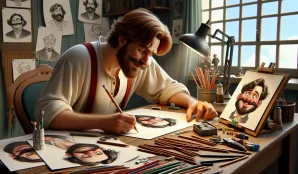
A caricature artist creates humorous, exaggerated portraits of people, often to entertain or comment on current events. The work involves quickly capturing character traits and expressions, from real people and imagination, and delivering images that entertain and evoke recognition. Caricature artists operate in various fields, from newspapers and magazines to events, amusement parks, and digital platforms. The work environment is often flexible, with opportunities for both freelancing and employment. Many work from home or on-site with clients, which requires self-discipline and the ability to manage varying workflows.
Salary development over time
Caricature artists have experienced steady positive salary growth over the past three years. In 2022, the average salary was 36,200 SEK per month, increasing to 39 779 SEK in 2023. During 2024, the average salary has risen further to 41 986 SEK per month, representing a total increase of about 10 percent over the three-year period. This development reflects an increased demand for visual content, both in print and digital media, as well as a growing market for personal portraits and event entertainment. Salary increases can also be linked to higher demands for technical skills and adaptation to new media. Despite this, salary levels remain heavily dependent on clients, experience, and geographic location.
Caricature artist salary – comprehensive overview
- Average salary: 41 986 SEK/month
- Lowest/Highest salary: Data unavailable
- Hourly wage: 239 SEK
- Gender differences: Data unavailable
- Regional differences: Data unavailable
Education and qualifications
The path to becoming a caricature artist varies, and there is no strict formal education route. Many have backgrounds in art, visual arts, or graphic design, but it is common to combine formal education with self-study and practical experience. Creativity, technical skill, and the ability to quickly capture expressions are central qualifications, along with a good sense of humor and communication skills.
- Formal education: Art school, visual arts, or graphic design (1–3 years)
- Courses/certifications: Illustration, digital image processing, caricature drawing
- Internships/traineeships: Opportunities to intern with established artists or in the media industry
- Self-study: Developing a portfolio and personal style through practice and online resources
- Prerequisites: Good drawing skills and artistic sense
Many caricature artists get their first assignments by appearing at markets, festivals, and corporate events. Being able to quickly create a lively and entertaining atmosphere around their work is often just as important as the drawing itself and can open doors to new collaborations.
Common benefits and compensations
Among the most common benefits for caricature artists are flexible working hours and opportunities for remote work. Some clients also offer compensation for materials, travel, and exhibition participation. Freelance caricature artists can sometimes negotiate royalties or usage fees for reused works, especially in media and publishing.
Competition and challenges
The profession of caricature artist is characterized by high competition, especially in markets where digital and international actors are present. The ability to stand out with a unique style and build a strong personal brand is crucial for success. A challenge is finding stable clients and managing periods of uneven workload. Rapid technological development and changing media habits require continuous skill development, both in traditional and digital expressions. Since the profession is often project-based, good business skills and networking are also essential.
Tips for aspiring caricature artists
To succeed as a caricature artist, it’s good to combine strong creativity with perseverance and curiosity. Regular practice in quickly capturing facial features and expressions improves both technique and confidence. Building a portfolio that showcases your personal style and versatility, along with openness to feedback, helps development. A good sense of humor and social skills facilitate interactions with clients and audiences, especially during live assignments. Being flexible and adaptable makes it easier to meet different clients’ wishes and find new opportunities. Finally, it’s important to be business-minded and actively promote your services online and at events.
Key facts about caricature artists
- Occupational group: Visual artists, etc.
- Average salary: 41 986 SEK/month
- Work environment: Often freelance, flexible workplaces
- Educational level: Usually art or visual arts education
- Available jobs in the profession: 620
Career paths and future prospects
After three to five years as a caricature artist, there are opportunities to specialize in digital illustration, animation, or graphic design. Some choose to become illustrators for larger media companies or work with publishing houses. It is also common to combine caricature drawing with teaching or workshops. According to the Employment Service, no specific forecast exists for caricature artists, but within the visual artists group, there are 620 available jobs, indicating some demand. The future of the profession will be influenced by digitalization and new media channels, which can create more opportunities for those who are adaptable and technologically skilled.
Frequently asked questions about caricature artists
- What does a caricature artist earn?
- A caricature artist has an average salary of 41 986 SEK per month according to the latest statistics. - What education is required to become a caricature artist?
- There is no strict educational route, but art or visual arts education is common. - What is the job market like for caricature artists?
- There are 620 available jobs within the profession, but competition is high and assignments are often project-based. - What work environments are common for caricature artists?
- Many work as freelancers, from home or on-site at events and in the media industry. - How much does a caricature artist earn per hour?
- The average hourly wage is 239 SEK. - Are there regional salary differences?
- There is no specific statistics on regional differences for caricature artists. - What personal qualities are important for the profession?
- Creativity, flexibility, and social skills are particularly valuable qualities for caricature artists.

Salary distributed by age and sector

About the data
All information displayed on this page is based on data from the Swedish Central Bureau of Statistics (SCB), the Swedish Tax Agency and the Swedish employment agency. Learn more about our data and data sources here.
All figures are gross salaries, meaning salaries before tax. The average salary, or mean salary, is calculated by adding up the total salary for all individuals within the profession and dividing it by the number of individuals. For specific job categories, we have also considered various criteria such as experience and education.
Profession Cartoonist has the SSYK code 2651, which we use to match against the SCB database to obtain the latest salary statistics.


Compare salary, work tasks and job outlook in adjacent occupations to find roles with similar skills or pay levels.
-

Average salary: 51 000 SEK/month • Kultur, media, design
Directors and producers of film, theater etc.
Compare with Cartoonist
Tue, 14 Jul 2026 - 10:06 -

Average salary: 42 800 SEK/month • Kultur, media, design
Authors etc.
Compare with Cartoonist
Sat, 11 Jul 2026 - 15:07 -

Average salary: 42 800 SEK/month • Kultur, media, design
Authors etc.
Compare with Cartoonist
Tue, 14 Jul 2026 - 10:58 -

Average salary: 41 986 SEK/month • Kultur, media, design
Visual artists etc.
Compare with Cartoonist
Tue, 14 Jul 2026 - 13:04 -

Average salary: 35 600 SEK/month • Kultur, media, design
Other professions in culture and entertainment
Compare with Cartoonist
Mon, 13 Jul 2026 - 20:39 -

Average salary: 36 700 SEK/month • Kultur, media, design
Stage managers and script supervisors etc.
Compare with Cartoonist
Mon, 13 Jul 2026 - 20:01


