- Salary statistics
- Comb machine operator salary
Comb machine operator salary
Latest available salary statistics are for 2025. Compare average pay, salary range and related job listings.
31 300 - 34 400 SEK / month
Women earn 94% of what men do.
Industriell tillverkning
Related tools
Salary progression Comb machine operator
What does a kammaskinskötare do? – Tasks and work environment
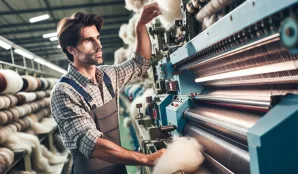
A kammaskinskötare primarily works within the textile industry and is responsible for operating and monitoring carding machines. These machines are used to process and refine textile fibers, mainly by carding and separating the fibers for further production. Tasks include starting, stopping, and adjusting machines, continuous quality control, as well as basic maintenance and troubleshooting. The work is usually performed in a factory or industrial setting with clear safety routines and may involve day or shift work depending on the employer’s needs. Precision, technical interest, and good overview are crucial in this profession.
Salary development over time
The salary for a kammaskinskötare has shown stable and positive growth in recent years. In 2022, the average salary was 27,700 SEK per month, increasing to 30 400 SEK in 2023. The latest measurement from 2024 indicates a further increase to 32 200 SEK, representing a total salary increase of about 9.7% over the period. The trend reflects a general rise in industrial operator roles, linked to increased demand for technically skilled personnel and gradual modernization of the textile sector. Salary development has also been influenced by a focus on work environment and skills development, leading employers to compete for qualified workers.
Kammaskinskötare salary – complete overview
- Average salary: 32 200 SEK/month
- Lowest salary: 29,400 SEK/month (female, private sector, high school education 3 years)
- Highest salary: 32,200 SEK/month (male, regional sector, high school education up to 2 years)
- Hourly wage: 183 SEK
- Gender pay gap: Women earn 94% of men's salary (men: 33 200 SEK, women: 31 300 SEK)
- Regional differences: Data not available for this profession
Education and qualifications
To work as a kammaskinskötare, a high school education with a focus on industry, technology, or textiles is usually required. Many employers also offer in-house training and introductory programs to strengthen machine skills and safety routines. Practical experience from an industrial environment is often advantageous and can sometimes replace formal educational requirements.
- High school education: Industry, technology, or textile programs (3 years)
- In-house training: Often provided by the employer
- Internship: Common during education or as a trainee
- Prerequisites: Good technical understanding and precision
- Certifications: Not mandatory, but some courses in machine safety may be available
A kammaskinskötare often works in a team where cooperation and quick problem-solving are essential, especially during production stops. The ability to quickly identify and fix machine faults is highly valued by employers and contributes to smoother production.
Common benefits and compensation
Kammaskinskötare are generally covered by collective agreements that grant rights to overtime pay, holiday pay, and occupational pension. Other common benefits include wellness allowances, subsidized lunches, and work clothing and personal protective equipment. Some employers also offer additional training opportunities and bonus programs linked to production targets.
Competition and challenges
The market for kammaskinskötare is characterized by limited competition but is strongly affected by industry cycles and automation. Demand varies depending on region and economic climate, and employers often seek candidates with technical skills and experience from similar machine operator roles. Automation and digitalization mean that technical understanding requirements are increasing, which can be a challenge for recent graduates without practical experience. At the same time, the shift towards more advanced production environments offers opportunities for those willing to develop within the profession. Another challenge is that the profession has some gender segregation, with men earning more on average than women.
Tips for those wanting to become a kammaskinskötare
To succeed as a kammaskinskötare, it is beneficial to have a genuine interest in technology and machines, as well as an analytical ability to quickly identify and solve problems. Being precise and methodical facilitates quality control and minimizes the risk of production stoppages. Practical experience, such as internships or summer jobs in industry, is a big advantage and can increase employment opportunities. Showing initiative and willingness to learn new tasks is appreciated by employers, especially in a field where technology develops rapidly. Cooperation skills are also important since the work is often team-based, where communication and flexibility are crucial. Prioritizing safety and following routines contributes to a safe work environment and demonstrates responsibility. Finally, being able to handle stress is a plus, as production sometimes demands quick decisions and high pace.
Key facts about kammaskinskötare
- Education level: High school, industry/technology/textile (3 years)
- Work environment: Factory/production environment, often shift work
- Demand: 1,437 available jobs in the profession
- Gender differences: Women earn 94% of men's salary
Career paths and future prospects
After a few years of experience, opportunities may exist to advance to supervisory roles, such as team leader or production manager within the textile industry. Further education in automation, maintenance, or quality assurance also opens additional career paths. The Employment Service's statistics show that there are 1,437 available jobs in the profession, but no specific forecast for kammaskinskötare due to limited data. Overall, future prospects are influenced by industry development, with companies investing in automation and efficiency. For those open to new technology and further training, there are good chances of remaining attractive in the job market.
Frequently asked questions about kammaskinskötare
- What does a kammaskinskötare earn?
- The average salary is 32 200 SEK per month. - Are there salary differences between women and men?
- Yes, women earn 94% of what men do in the profession. - What education is required to become a kammaskinskötare?
- High school education with a focus on industry, technology, or textiles is recommended. - What are the future prospects?
- There are 1,437 available jobs in the profession, but no specific forecast for the role. - What is the work environment like?
- Work takes place in a production environment, often with shift work and clear safety routines. - What are the most common benefits?
- Overtime pay, wellness allowance, and occupational pension are typical benefits. - Are there regional salary differences?
- Specific regional differences for kammaskinskötare are not available.

Salary distributed by age and sector
| Age | Base salary | Monthly salary | |
|---|---|---|---|
| 25-34 | 29100 kr | 31500 kr | |
| 35-44 | 95% | 29900 kr | 31800 kr |
| 45-54 | 92% | 30900 kr | 32600 kr |
| 55-64 | 93% | 31200 kr | 33000 kr |
| Snitt | 94% | 30300 kr | 32200 kr |
| Age | Base salary | Monthly salary | |
|---|---|---|---|
| 25-34 | 29100 kr | 31500 kr | |
| 35-44 | 95% | 29900 kr | 31800 kr |
| 45-54 | 92% | 30900 kr | 32600 kr |
| 55-64 | 93% | 31200 kr | 33000 kr |
| Snitt | 94% | 30300 kr | 32200 kr |
| Age | Base salary | Monthly salary | |
|---|---|---|---|
| 25-34 | 29100 kr | 31500 kr | |
| 35-44 | 95% | 29900 kr | 31800 kr |
| 45-54 | 92% | 30900 kr | 32600 kr |
| 55-64 | 93% | 31200 kr | 33000 kr |
| Snitt | 94% | 30300 kr | 32200 kr |
| Age | Base salary | Monthly salary | |
|---|---|---|---|
| 25-34 | 29600 kr | 32500 kr | |
| 35-44 | 95% | 29800 kr | 32500 kr |
| 45-54 | 92% | 31800 kr | 34000 kr |
| 55-64 | 93% | 31700 kr | 34500 kr |
| Snitt | 94% | 30500 kr | 33200 kr |
| Age | Base salary | Monthly salary | |
|---|---|---|---|
| 25-34 | 29600 kr | 32500 kr | |
| 35-44 | 95% | 29800 kr | 32500 kr |
| 45-54 | 92% | 31800 kr | 34000 kr |
| 55-64 | 93% | 31700 kr | 34500 kr |
| Snitt | 94% | 30500 kr | 33200 kr |
| Age | Base salary | Monthly salary | |
|---|---|---|---|
| 25-34 | 29600 kr | 32500 kr | |
| 35-44 | 95% | 29800 kr | 32500 kr |
| 45-54 | 92% | 31800 kr | 34000 kr |
| 55-64 | 93% | 31700 kr | 34500 kr |
| Snitt | 94% | 30500 kr | 33200 kr |
| Age | Base salary | Monthly salary | |
|---|---|---|---|
| 35-44 | 95% | 30000 kr | 30900 kr |
| 45-54 | 92% | 30200 kr | 31400 kr |
| 55-64 | 93% | 30900 kr | 32000 kr |
| Snitt | 94% | 30000 kr | 31300 kr |
| Age | Base salary | Monthly salary | |
|---|---|---|---|
| 35-44 | 95% | 30000 kr | 30900 kr |
| 45-54 | 92% | 30200 kr | 31400 kr |
| 55-64 | 93% | 30900 kr | 32000 kr |
| Snitt | 94% | 30000 kr | 31300 kr |
| Age | Base salary | Monthly salary | |
|---|---|---|---|
| 35-44 | 95% | 30000 kr | 30900 kr |
| 45-54 | 92% | 30200 kr | 31400 kr |
| 55-64 | 93% | 30900 kr | 32000 kr |
| Snitt | 94% | 30000 kr | 31300 kr |

About the data
All information displayed on this page is based on data from the Swedish Central Bureau of Statistics (SCB), the Swedish Tax Agency and the Swedish employment agency. Learn more about our data and data sources here.
All figures are gross salaries, meaning salaries before tax. The average salary, or mean salary, is calculated by adding up the total salary for all individuals within the profession and dividing it by the number of individuals. For specific job categories, we have also considered various criteria such as experience and education.
Profession Comb machine operator has the SSYK code 8159, which we use to match against the SCB database to obtain the latest salary statistics.
-

Machine Operator at Nordifa in Halmstad
Other machine operators, textile, leather and leather industry
Wed, 8 Jul 2026 - 06:22 -

Industrial Seamstress for Germa in Kristianstad
Other machine operators, textile, leather and leather industry
Tue, 7 Jul 2026 - 21:42 -

Sewer/Seamstress for NHC in Umeå
Other machine operators, textile, leather and leather industry
Mon, 6 Jul 2026 - 21:26 -
Sewer/Seamstress for NHC in Timrå
Other machine operators, textile, leather and leather industry
Mon, 6 Jul 2026 - 17:06 -
Process Operator at TreeToTextile – Develop the Next Generation of Sustainable Textile Fiber
Other machine operators, textile, leather and leather industry
Thu, 2 Jul 2026 - 00:37
Compare salary, work tasks and job outlook in adjacent occupations to find roles with similar skills or pay levels.
-

Metal construction fitter salary
Average salary: 39 700 SEK/month • Industriell tillverkning
Steel construction assemblers and heavy plate workers
Compare with Comb machine operator
Mon, 13 Jul 2026 - 10:41 -

Wood industry worker, wood fiber salary
Average salary: 38 300 SEK/month • Industriell tillverkning
Operators in sawmills, planing mills and plywood etc.
Compare with Comb machine operator
Tue, 14 Jul 2026 - 07:16 -

Average salary: 36 300 SEK/month • Industriell tillverkning
Machine setters and machine operators, metal work
Compare with Comb machine operator
Mon, 13 Jul 2026 - 05:38 -

Average salary: 32 200 SEK/month • Industriell tillverkning
Other machine operators, textile, leather and leather industry
Compare with Comb machine operator
Sun, 12 Jul 2026 - 21:48 -

Average salary: 42 500 SEK/month • Industriell tillverkning
Process operators, paper
Compare with Comb machine operator
Tue, 14 Jul 2026 - 07:14 -

Machine operator, food industry, fruit and vegetables salary
Average salary: 33 700 SEK/month • Industriell tillverkning
Other machine operators, food industry etc.
Compare with Comb machine operator
Sun, 12 Jul 2026 - 19:00


