- Salary statistics
- Smoother, paper salary
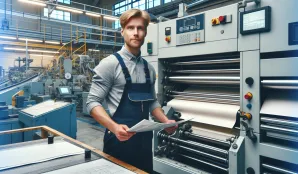
Smoother, paper salary
Latest available salary statistics are for 2025. Compare average pay, salary range and related job listings.
39 400 - 43 900 SEK / month
Women earn 94% of what men do.
Industriell tillverkning
Related tools
Salary progression Smoother, paper
What does a glättare in paper manufacturing do? – Tasks and work environment
A glättare in paper manufacturing works on improving the surface of paper through a process where the paper web is pressed and polished to achieve desired gloss, smoothness, and thickness. Tasks include monitoring calendering machines, adjusting machine settings, and quality checks of the finished paper. The work environment involves operating large, often automated machines in industrial settings, where precision and technical interest are important qualities. Safety routines are central as work is done near moving machine parts, and collaboration with other operators and technicians is a natural part of daily work.
Salary development over time
The salary for a glättare in paper manufacturing has shown steady and positive growth over the past three years. In 2022, the average salary was 38,400 SEK per month, increasing to 41 000 SEK in 2023. The latest measured average salary for 2024 is 42 500 SEK, representing a total increase of about 7% during this period. A contributing factor to the salary increase is the technological development within the paper industry, where demand for qualified process operators has risen. Collective agreements and increased awareness of the importance of specialized skills have also influenced salary development. The trend indicates that the profession remains attractive, although the pace of salary growth has somewhat plateaued recently.
Glättare, paper salary – comprehensive overview
- Average salary: 42 500 SEK/month
- Lowest salary: 37,600 SEK/month (female), 40,700 SEK/month (male)
- Highest salary: 42,000 SEK/month (female), 42,200 SEK/month (male)
- Hourly wage: 246 SEK
- Gender differences: Women earn 40 400 SEK (94% of men's salary of 43 000 SEK)
- Regional differences: Highest salaries are often found within the regional sector
Education and qualifications
A glättare in paper manufacturing generally has a high school education with a focus on industry or technology, often supplemented with internal training at the workplace. Some employers also require specific courses in machine technology or automation. Practical experience in process industries is a significant advantage, and introductory programs with mentors are common upon employment.
- High school education: Industrial technology program, 3 years
- Certifications: Courses in machine safety and automation may be required
- Internship: Work-based learning is common
- Prerequisites: Basic technical interest and some machine handling experience
- Tips: Apply for trainee positions or internships within the paper industry to increase employability
The work of a glättare requires both technical knowledge and a sense of quality, as small adjustments in the process can have significant effects on the finished paper. Many who enjoy the profession appreciate the combination of automated systems and manual finesse, where each workday offers new challenges and problem-solving opportunities.
Common benefits and compensations
A glättare in paper manufacturing is often covered by collective agreements that provide access to occupational pension, health insurance, and extra vacation. Shift work is common, which can include overtime and other shift allowances. Some employers also offer wellness contributions and opportunities for skill development through internal courses.
Competitions and challenges
Competition for jobs as a glättare in paper manufacturing is moderate, but the industry is affected by technological development and automation. Demands for technical competence and machine handling experience have increased, leading employers to seek staff with specific experience from similar process environments. Challenges in the profession include high safety focus, working under time pressure, and the need to quickly solve technical problems. Changes in global demand for paper products may also impact the job market long-term. Despite this, there are currently many available positions in the profession, indicating relatively good employment opportunities.
Tips for those wanting to become a glättare in paper manufacturing
To succeed as a glättare in paper manufacturing, it’s good to have a genuine interest in technology and the ability to quickly learn new machine systems. Precision and organizational skills are crucial, especially when monitoring processes and detecting deviations. Flexibility and stress resistance are needed to handle shift work and rapid adjustments during machine stops. Being solution-oriented and able to collaborate with colleagues eases troubleshooting and improvement work. Engagement in work environment issues and an eye for details are appreciated by employers, as is the willingness to continuously develop skills through education and practice. Finally, good communication skills are important, as the work often involves coordination with other departments and technicians.
Key facts about Glättare, paper
- Educational level: High school education, often industrial technology program
- Work environment: Industrial setting with shift work and high safety requirements
- Typical work form: Full-time, often shift work
- Demand: 1,437 available jobs within the profession of process operators, paper
- Special skills: Machine handling and quality assurance
Career paths and future prospects
After three to five years in the profession, a glättare in paper manufacturing can advance to senior roles such as process manager or team leader within production. It is also possible to further educate oneself as a technician or production engineer in the paper industry. According to the Swedish Public Employment Service’s forecasts, no specific assessment is made for glättare, but within the broader group of process operators, paper, there are many available positions, indicating continued demand. The future of the profession is influenced by technological innovations and automation, as well as market developments for paper products. Opportunities for internal training and specialization exist with larger employers, which can lead to new career paths both within and outside the paper industry.
Frequently asked questions about Glättare, paper
- What does a glättare in paper manufacturing earn?
- A glättare in paper manufacturing has an average salary of 42 500 SEK per month. - Are there salary differences between men and women?
- Yes, men earn 43 000 SEK while women earn 40 400 SEK, which corresponds to 94% of men's salary. - How has the salary development looked for glättare, paper?
- Salaries increased from 38,400 SEK in 2022 to 42 500 SEK in 2024, a rise of about 7% over three years. - What education is required to become a glättare, paper?
- High school education with an industrial technology focus is most common, often supplemented with internal training. - What is the job market like for glättare, paper?
- Currently, there are 1,437 available jobs within the profession of process operators, paper. - What tasks does a glättare in paper manufacturing perform?
- Tasks include monitoring calendering machines, quality control, and adjustment of process parameters. - What benefits are common for the profession?
- Collective agreements, occupational pension, shift and overtime allowances, and wellness contributions are common benefits.

Salary distributed by age and sector
| Age | Base salary | Monthly salary | |
|---|---|---|---|
| 18-24 | 100% | 31600 kr | 39200 kr |
| 25-34 | 96% | 33700 kr | 41400 kr |
| 35-44 | 99% | 35500 kr | 43400 kr |
| 45-54 | 92% | 35900 kr | 43700 kr |
| 55-64 | 90% | 35300 kr | 43100 kr |
| Snitt | 94% | 34700 kr | 42500 kr |
| Age | Base salary | Monthly salary | |
|---|---|---|---|
| 18-24 | 100% | 31600 kr | 39200 kr |
| 25-34 | 96% | 33700 kr | 41400 kr |
| 35-44 | 99% | 35500 kr | 43400 kr |
| 45-54 | 92% | 35900 kr | 43700 kr |
| 55-64 | 90% | 35300 kr | 43100 kr |
| Snitt | 94% | 34700 kr | 42500 kr |
| Age | Base salary | Monthly salary | |
|---|---|---|---|
| 18-24 | 100% | 31600 kr | 39200 kr |
| 25-34 | 96% | 33700 kr | 41400 kr |
| 35-44 | 99% | 35500 kr | 43400 kr |
| 45-54 | 92% | 35900 kr | 43700 kr |
| 55-64 | 90% | 35300 kr | 43100 kr |
| Snitt | 94% | 34700 kr | 42500 kr |
| Age | Base salary | Monthly salary | |
|---|---|---|---|
| 18-24 | 100% | 31800 kr | 39200 kr |
| 25-34 | 96% | 33900 kr | 41900 kr |
| 35-44 | 99% | 35700 kr | 43500 kr |
| 45-54 | 92% | 36400 kr | 44200 kr |
| 55-64 | 90% | 35800 kr | 43800 kr |
| Snitt | 94% | 35100 kr | 43000 kr |
| Age | Base salary | Monthly salary | |
|---|---|---|---|
| 18-24 | 100% | 31800 kr | 39200 kr |
| 25-34 | 96% | 33900 kr | 41900 kr |
| 35-44 | 99% | 35700 kr | 43500 kr |
| 45-54 | 92% | 36400 kr | 44200 kr |
| 55-64 | 90% | 35800 kr | 43800 kr |
| Snitt | 94% | 35100 kr | 43000 kr |
| Age | Base salary | Monthly salary | |
|---|---|---|---|
| 18-24 | 100% | 31800 kr | 39200 kr |
| 25-34 | 96% | 33900 kr | 41900 kr |
| 35-44 | 99% | 35700 kr | 43500 kr |
| 45-54 | 92% | 36400 kr | 44200 kr |
| 55-64 | 90% | 35800 kr | 43800 kr |
| Snitt | 94% | 35100 kr | 43000 kr |
| Age | Base salary | Monthly salary | |
|---|---|---|---|
| 18-24 | 100% | 31100 kr | 39100 kr |
| 25-34 | 96% | 33000 kr | 40100 kr |
| 35-44 | 99% | 34700 kr | 42900 kr |
| 45-54 | 92% | 33500 kr | 40800 kr |
| 55-64 | 90% | 32700 kr | 39300 kr |
| Snitt | 94% | 33000 kr | 40400 kr |
| Age | Base salary | Monthly salary | |
|---|---|---|---|
| 18-24 | 100% | 31100 kr | 39100 kr |
| 25-34 | 96% | 33000 kr | 40100 kr |
| 35-44 | 99% | 34700 kr | 42900 kr |
| 45-54 | 92% | 33500 kr | 40800 kr |
| 55-64 | 90% | 32700 kr | 39300 kr |
| Snitt | 94% | 33000 kr | 40400 kr |
| Age | Base salary | Monthly salary | |
|---|---|---|---|
| 18-24 | 100% | 31100 kr | 39100 kr |
| 25-34 | 96% | 33000 kr | 40100 kr |
| 35-44 | 99% | 34700 kr | 42900 kr |
| 45-54 | 92% | 33500 kr | 40800 kr |
| 55-64 | 90% | 32700 kr | 39300 kr |
| Snitt | 94% | 33000 kr | 40400 kr |

About the data
All information displayed on this page is based on data from the Swedish Central Bureau of Statistics (SCB), the Swedish Tax Agency and the Swedish employment agency. Learn more about our data and data sources here.
All figures are gross salaries, meaning salaries before tax. The average salary, or mean salary, is calculated by adding up the total salary for all individuals within the profession and dividing it by the number of individuals. For specific job categories, we have also considered various criteria such as experience and education.
Profession Smoother, paper has the SSYK code 8172, which we use to match against the SCB database to obtain the latest salary statistics.
-

Process Operator – Consultancy Assignment (Shift Work)
Process operators, paper
Wed, 24 Jun 2026 - 21:29 -

Machine Operator for Rewinding Machine – Forklift License Required
Process operators, paper
Sat, 30 May 2026 - 00:24 -

Paper Machine Operator – Temporary Position with Opportunity for Permanent Employment
Process operators, paper
Fri, 15 May 2026 - 21:20


Compare salary, work tasks and job outlook in adjacent occupations to find roles with similar skills or pay levels.
-

Average salary: 34 200 SEK/month • Industriell tillverkning
Machine operators, plastics industry
Compare with Smoother, paper
Tue, 14 Jul 2026 - 11:56 -

Average salary: 48 700 SEK/month • Industriell tillverkning
Process operators, stone crushing and ore processing
Compare with Smoother, paper
Tue, 14 Jul 2026 - 03:32 -

Steel engravers, print media salary
Average salary: 35 300 SEK/month • Industriell tillverkning
Prepress technicians
Compare with Smoother, paper
Tue, 14 Jul 2026 - 13:14 -

Average salary: 32 200 SEK/month • Industriell tillverkning
Other machine operators, textile, leather and leather industry
Compare with Smoother, paper
Mon, 13 Jul 2026 - 11:22 -

Average salary: 28 600 SEK/month • Industriell tillverkning
Machine operators, bleaching, dyeing and washing
Compare with Smoother, paper
Tue, 14 Jul 2026 - 13:55 -

Average salary: 33 800 SEK/month • Industriell tillverkning
Bookbinders etc.
Compare with Smoother, paper
Tue, 14 Jul 2026 - 13:55


