- Salary statistics
- Round knitting needles salary
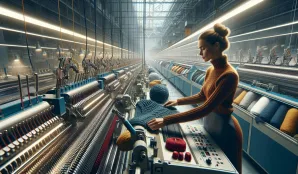
Round knitting needles salary
Latest available salary statistics are for 2025. Compare average pay, salary range and related job listings.
31 300 - 34 400 SEK / month
Women earn 94% of what men do.
Industriell tillverkning
Related tools
Salary progression Round knitting needles
What does a circular knitter do? – Tasks and work environment
A circular knitter primarily works with monitoring and operating circular knitting machines within the textile industry. Tasks include starting, stopping, and adjusting machines, overseeing production, and checking that knitted textiles meet quality standards. Troubleshooting and basic maintenance of the machines are often part of the daily work. The work environment is industrial, often in larger premises where noise levels can be high and the pace sometimes intense. Collaboration with other machine operators and supervisors is common, and safety routines are an important part of the job.
Salary development over time
The salary for a circular knitter has steadily increased over the past three years. In 2022, the average salary was 27,700 SEK per month, rising to 30 400 SEK in 2023, and further to the current level of 32 200 SEK in 2024. This represents a total salary increase of approximately 9.8% during the period, which is slightly faster growth than many similar industrial occupations. The salary increase can partly be explained by higher demand for experienced machine operators and a general trend towards higher wages in the textile industry driven by technological advancements. Although the profession still exhibits relatively small gender pay gaps, some variation exists between different employers and regions.
Circular knitter salary – comprehensive overview
- Average salary: 32 200 SEK/month
- Lowest salary: 29,400 SEK/month
- Highest salary: 32,200 SEK/month
- Hourly wage: 183 SEK/hour
- Gender differences: Women earn 31 300 SEK (94 % of men's salary), men earn 33 200 SEK
- Regional differences: The highest salary (32,200 SEK) is in the regional sector, the lowest (29,400 SEK) among private employees
Education and qualifications
To work as a circular knitter, a high school education with a focus on textiles or industry is typically required, combined with practical experience with machinery. Many employers offer internal training, but basic technical knowledge and understanding of textile production are advantageous. Certification or specialized courses in textile machinery can improve employment prospects and salary development.
- High school education: Industry or textile programs (2–3 years)
- Internships: Practical components are often part of the education
- Internal training: Common at workplaces for new machines
- Courses/certificates: Possible in machine maintenance and textile technology
- Prerequisites: Technical interest and precision are appreciated
An interesting aspect of the profession is that circular knitters often work with advanced machinery that is constantly evolving. This means the role can change rapidly, providing opportunities for those interested in technology to continually learn new skills and stay at the forefront of textile industry innovations.
Common benefits and compensations
Circular knitters often have access to collective agreement benefits such as occupational pension, insurance, and wellness subsidies. Overtime pay and additional allowances are common, especially for work during inconvenient hours. Work clothes and protective equipment are normally provided by the employer.
Competition and challenges
The competition for positions as a circular knitter is influenced by the overall development of the Swedish textile industry. The profession is relatively niche, which can mean fewer job opportunities in some areas but good prospects in regions with established textile production. Challenges include staying updated on new machinery and digital systems, working efficiently during periods of high production, and physical strain or monotonous tasks that require endurance and precision. Limited future forecasts make it difficult to predict exactly how demand will evolve, but the number of available jobs indicates ongoing need for skilled workers.
Tips for aspiring circular knitters
To succeed as a circular knitter, it’s good to combine technical interest with practical problem-solving skills and precision. Being attentive and quick to spot errors is important, and patience along with a methodical approach even under stress is beneficial. It’s recommended to seek internships during training to gain insight into the daily work and network within the industry. Flexibility and curiosity about new machines or methods make it easier to develop professionally, especially as the textile industry evolves rapidly. Good communication skills are valuable for effective collaboration with colleagues and supervisors. Finally, showing engagement in work environment and safety matters is highly valued by employers.
Key facts about Circular Knitter
- Salary range: 29,400–32,200 SEK/month
- Average salary: 32 200 SEK/month
- Educational level: High school (2–3 years)
- Work environment: Industrial, machine-intensive, often shift-based
- Available jobs in the profession: 1,437 (May 2024)
Career paths and future prospects
After a few years of experience, opportunities exist to advance to more specialized roles such as machine technician, supervisor, or production planner within the textile industry. Some choose to further their education in automation or quality assurance to broaden career options. The Swedish Employment Service’s forecasts for machine operators in the textile, leather, and fur industries are limited, but indications suggest ongoing demand, especially in regions with established textile production. The 1,437 available jobs in 2024 point to good employment opportunities, although competition and local conditions vary.
Frequently asked questions about Circular Knitter
- What is the average salary of a circular knitter?
- A circular knitter has an average salary of 32 200 SEK per month. - How much do men and women earn as circular knitters?
- Men earn an average of 33 200 SEK, while women earn 31 300 SEK, which is 94 % of men's salaries. - What is required to become a circular knitter?
- High school education with a focus on textiles or industry, along with practical experience with machinery, is usually required. - What is the highest salary for a circular knitter?
- The highest salary is 32,200 SEK and belongs to a man in the regional sector with a two-year high school education. - What does the work environment look like for a circular knitter?
- The work environment is industrial, with machine-intensive production, often in shifts and sometimes at a high pace. - Are there many job openings for circular knitters?
- There are 1,437 available positions in the occupational group of machine operators for the textile, leather, and fur industries. - What career options are available after a few years as a circular knitter?
- Further development can lead to roles such as supervisor, machine technician, or production planner.

Salary distributed by age and sector
| Age | Base salary | Monthly salary | |
|---|---|---|---|
| 25-34 | 29100 kr | 31500 kr | |
| 35-44 | 95% | 29900 kr | 31800 kr |
| 45-54 | 92% | 30900 kr | 32600 kr |
| 55-64 | 93% | 31200 kr | 33000 kr |
| Snitt | 94% | 30300 kr | 32200 kr |
| Age | Base salary | Monthly salary | |
|---|---|---|---|
| 25-34 | 29100 kr | 31500 kr | |
| 35-44 | 95% | 29900 kr | 31800 kr |
| 45-54 | 92% | 30900 kr | 32600 kr |
| 55-64 | 93% | 31200 kr | 33000 kr |
| Snitt | 94% | 30300 kr | 32200 kr |
| Age | Base salary | Monthly salary | |
|---|---|---|---|
| 25-34 | 29100 kr | 31500 kr | |
| 35-44 | 95% | 29900 kr | 31800 kr |
| 45-54 | 92% | 30900 kr | 32600 kr |
| 55-64 | 93% | 31200 kr | 33000 kr |
| Snitt | 94% | 30300 kr | 32200 kr |
| Age | Base salary | Monthly salary | |
|---|---|---|---|
| 25-34 | 29600 kr | 32500 kr | |
| 35-44 | 95% | 29800 kr | 32500 kr |
| 45-54 | 92% | 31800 kr | 34000 kr |
| 55-64 | 93% | 31700 kr | 34500 kr |
| Snitt | 94% | 30500 kr | 33200 kr |
| Age | Base salary | Monthly salary | |
|---|---|---|---|
| 25-34 | 29600 kr | 32500 kr | |
| 35-44 | 95% | 29800 kr | 32500 kr |
| 45-54 | 92% | 31800 kr | 34000 kr |
| 55-64 | 93% | 31700 kr | 34500 kr |
| Snitt | 94% | 30500 kr | 33200 kr |
| Age | Base salary | Monthly salary | |
|---|---|---|---|
| 25-34 | 29600 kr | 32500 kr | |
| 35-44 | 95% | 29800 kr | 32500 kr |
| 45-54 | 92% | 31800 kr | 34000 kr |
| 55-64 | 93% | 31700 kr | 34500 kr |
| Snitt | 94% | 30500 kr | 33200 kr |
| Age | Base salary | Monthly salary | |
|---|---|---|---|
| 35-44 | 95% | 30000 kr | 30900 kr |
| 45-54 | 92% | 30200 kr | 31400 kr |
| 55-64 | 93% | 30900 kr | 32000 kr |
| Snitt | 94% | 30000 kr | 31300 kr |
| Age | Base salary | Monthly salary | |
|---|---|---|---|
| 35-44 | 95% | 30000 kr | 30900 kr |
| 45-54 | 92% | 30200 kr | 31400 kr |
| 55-64 | 93% | 30900 kr | 32000 kr |
| Snitt | 94% | 30000 kr | 31300 kr |
| Age | Base salary | Monthly salary | |
|---|---|---|---|
| 35-44 | 95% | 30000 kr | 30900 kr |
| 45-54 | 92% | 30200 kr | 31400 kr |
| 55-64 | 93% | 30900 kr | 32000 kr |
| Snitt | 94% | 30000 kr | 31300 kr |

About the data
All information displayed on this page is based on data from the Swedish Central Bureau of Statistics (SCB), the Swedish Tax Agency and the Swedish employment agency. Learn more about our data and data sources here.
All figures are gross salaries, meaning salaries before tax. The average salary, or mean salary, is calculated by adding up the total salary for all individuals within the profession and dividing it by the number of individuals. For specific job categories, we have also considered various criteria such as experience and education.
Profession Round knitting needles has the SSYK code 8159, which we use to match against the SCB database to obtain the latest salary statistics.
-

Machine Operator at Nordifa in Halmstad
Other machine operators, textile, leather and leather industry
Wed, 8 Jul 2026 - 06:22 -
Industrial Seamstress for Germa in Kristianstad
Other machine operators, textile, leather and leather industry
Tue, 7 Jul 2026 - 21:42 -

Sewer/Seamstress for NHC in Umeå
Other machine operators, textile, leather and leather industry
Mon, 6 Jul 2026 - 21:26 -
Sewer/Seamstress for NHC in Timrå
Other machine operators, textile, leather and leather industry
Mon, 6 Jul 2026 - 17:06 -
Process Operator at TreeToTextile – Develop the Next Generation of Sustainable Textile Fiber
Other machine operators, textile, leather and leather industry
Thu, 2 Jul 2026 - 00:37
Compare salary, work tasks and job outlook in adjacent occupations to find roles with similar skills or pay levels.
-

Artificial stone casters salary
Average salary: 37 800 SEK/month • Industriell tillverkning
Machine operators, cement, stone and concrete products
Compare with Round knitting needles
Tue, 14 Jul 2026 - 21:19 -

Average salary: 36 300 SEK/month • Industriell tillverkning
Machine setters and machine operators, metal work
Compare with Round knitting needles
Tue, 14 Jul 2026 - 10:55 -

Average salary: 31 900 SEK/month • Industriell tillverkning
Hand packers and other factory workers
Compare with Round knitting needles
Tue, 14 Jul 2026 - 20:05 -

Average salary: 35 300 SEK/month • Industriell tillverkning
Prepress technicians
Compare with Round knitting needles
Tue, 14 Jul 2026 - 17:14 -

Dragist, pharmaceutical industry salary
Average salary: 39 900 SEK/month • Industriell tillverkning
Machine operators, pharmaceutical products
Compare with Round knitting needles
Tue, 14 Jul 2026 - 20:29 -

Average salary: 36 300 SEK/month • Industriell tillverkning
Machine setters and machine operators, metal work
Compare with Round knitting needles
Tue, 14 Jul 2026 - 17:13


