- Salary statistics
- Loader, glass machine salary
Loader, glass machine salary
Latest available salary statistics are for 2025. Compare average pay, salary range and related job listings.
30 800 - 36 500 SEK / month
Women earn 97% of what men do.
Industriell tillverkning
Related tools
Salary progression Loader, glass machine
What does an inserter in a glass machine do? – Tasks and work environment
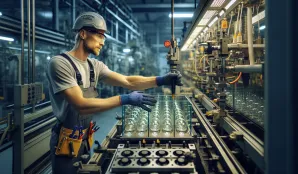
An inserter in a glass machine mainly works within industrial manufacturing, where tasks revolve around feeding or placing glass details into automated machines for further processing or packaging. The profession often involves routine work focused on precision and efficiency, as it is important that the machines receive the correct material at the right time. The work environment is typically in production facilities with a high pace, where collaboration with colleagues and machine operators is part of everyday life. Safety and ergonomics are central aspects, as the work can involve standing positions and handling heavy or fragile materials.
Salary development over time
Inserters in glass machines have seen salary increases over the past three years. In 2022, the average salary was 28,200 SEK per month, which increased to 31 400 SEK in 2023 and further to 31 900 SEK in 2024. This corresponds to a total salary increase of approximately 11.3% over the period, with a particularly noticeable rise between 2022 and 2023. Salaries have strengthened as the labor market has generally become more competitive and influenced by inflation, although the profession is still considered one of the lower-paid within the industry. Gender differences remain, but salary gaps have decreased somewhat. Increased demands for quality and productivity in industry have also affected salary development.
Inserter in glass machine salary – complete overview
- Average salary: 31 900 SEK/month
- Lowest salary: 30,100 SEK (female, regional sector, high school education max 2 years)
- Highest salary: 35,800 SEK (male, public sector, high school education 3 years)
- Hourly wage (average): 189 SEK
- Gender differences: Men earn 32 300 SEK, women earn 31 200 SEK (97% of men's salary)
- Regional differences: Salary ranges vary between sectors and regions, with clear differences between the public and regional sectors.
Education and qualifications
To work as an inserter in a glass machine, high school education is generally required, preferably with a focus on industry, technology, or production. Many employers also offer internal training, where practical skills are prioritized over formal education. Some machines require special safety training or certificates, and experience from similar industrial work is often advantageous.
- High school education: Industry, production, or technology (2–3 years)
- Internal training: Common upon employment
- Certifications: Safety training for machines if needed
- Internship: Meritorious for employment
- Prerequisites: Precision and good physical condition
An inserter in a glass machine often plays a central role in the production chain and can quickly develop a broad understanding of industrial processes. Many who start in the profession gain insight into how automation and human labor work together, opening pathways to further careers in production technology or quality control.
Common benefits and compensations
Employers in industry often offer benefits such as shift premium for night shifts, wellness allowances, staff discounts, and opportunities for further training. Occupational pensions and insurance are usually included, and some workplaces also have bonus systems linked to production targets.
Competition and challenges
The market for inserters in glass machines is characterized by high competition and an oversupply of labor, according to the Employment Service forecasts. Job opportunities are limited, and demand is expected to remain unchanged over the next five years. Automation and digitalization in industry affect the profession, which may lead to fewer manual tasks and increased requirements for technical understanding. At the same time, there is some turnover due to the physical and monotonous nature of the work. To stand out, it can be crucial to show engagement and willingness to develop within production.
Tips for those wanting to become an inserter in glass machine
To succeed as an inserter in a glass machine, it is good to be precise, as the work requires accuracy when handling glass and machine equipment. Flexibility is also an important trait, since tasks can vary depending on production volume and machine needs. Good physical condition facilitates the sometimes monotonous and physically demanding moments in the work, and a positive attitude towards shift work is often necessary. Showing interest in technology and machines is also valuable, as this can open doors to more advanced roles within production. Taking initiative for internal training or taking on extra responsibilities can provide advantages in salary negotiations or career advancement. Finally, teamwork skills are central, as the work is done in teams where smooth collaboration contributes to safety and efficiency.
Key facts about inserters in glass machines
- Education level: High school education, often industry or technology programs
- Work environment: Industrial production, often shift work
- Demand: Small opportunities for new jobs, oversupply of labor
- Number of vacancies: 1437 within the job group of manual packers
- Special skills: Precision and machine experience are advantageous
Career paths and future prospects
After three to five years as an inserter in a glass machine, there may be opportunities to advance to roles such as machine operator, team leader, or quality technician within production, especially for those interested in technology and process development. However, the Employment Service forecasts indicate that opportunities for new jobs are limited nationally and that there is an oversupply of labor. Demand is expected to remain unchanged over the next five years, making competition for available positions high. Those who invest in further education, certifications, or broaden their skills within production technology can create better conditions for long-term career development.
Frequently asked questions about inserters in glass machines
- What does an inserter in a glass machine earn?
- The average salary is 31 900 SEK per month, with variation depending on experience, sector, and region. - Are there differences between men's and women's salaries?
- Yes, men earn an average of 32 300 SEK and women 31 200 SEK, which means women earn approximately 97% of men's salaries. - What education is required to work as an inserter in a glass machine?
- High school education in industry, technology, or production is recommended, but many employers also offer internal training. - What are the future prospects for the profession?
- Job opportunities are limited according to the Employment Service, and competition is high due to an oversupply of labor. - What personal qualities are important?
- Accuracy, teamwork skills, and good physical condition are important for thriving and developing in the profession. - Are there regional salary differences?
- Yes, salaries vary somewhat between sectors and regions. - What are the career opportunities in the long term?
- Experience can lead to advancement within production, such as to machine operator or team leader.

Salary distributed by age and sector
| Age | Base salary | Monthly salary | |
|---|---|---|---|
| 18-24 | 98% | 28700 kr | 30600 kr |
| 25-34 | 97% | 30100 kr | 31800 kr |
| 35-44 | 97% | 31600 kr | 32900 kr |
| 45-54 | 98% | 31100 kr | 32100 kr |
| 55-64 | 93% | 31100 kr | 32000 kr |
| Snitt | 97% | 30500 kr | 31900 kr |
| Age | Base salary | Monthly salary | |
|---|---|---|---|
| 18-24 | 28700 kr | 30000 kr | |
| 25-34 | 96% | 33100 kr | 33500 kr |
| 35-44 | 99% | 33400 kr | 34100 kr |
| 45-54 | 97% | 34600 kr | 35300 kr |
| 55-64 | 93% | 34700 kr | 35100 kr |
| 65-68 | 33500 kr | 33500 kr | |
| Snitt | 96% | 34000 kr | 34600 kr |
| Age | Base salary | Monthly salary | |
|---|---|---|---|
| 18-24 | 28700 kr | 30000 kr | |
| 25-34 | 96% | 33100 kr | 33500 kr |
| 35-44 | 99% | 33400 kr | 34100 kr |
| 45-54 | 97% | 34600 kr | 35300 kr |
| 55-64 | 93% | 34700 kr | 35100 kr |
| 65-68 | 33500 kr | 33500 kr | |
| Snitt | 96% | 34000 kr | 34600 kr |
| Age | Base salary | Monthly salary | |
|---|---|---|---|
| 18-24 | 98% | 28700 kr | 30700 kr |
| 25-34 | 97% | 30000 kr | 31800 kr |
| 35-44 | 97% | 31500 kr | 32900 kr |
| 45-54 | 98% | 31000 kr | 31900 kr |
| 55-64 | 93% | 30900 kr | 31800 kr |
| Snitt | 97% | 30400 kr | 31800 kr |
| Age | Base salary | Monthly salary | |
|---|---|---|---|
| 18-24 | 98% | 28700 kr | 30700 kr |
| 25-34 | 97% | 30000 kr | 31800 kr |
| 35-44 | 97% | 31500 kr | 32900 kr |
| 45-54 | 98% | 31000 kr | 31900 kr |
| 55-64 | 93% | 30900 kr | 31800 kr |
| Snitt | 97% | 30400 kr | 31800 kr |
| Age | Base salary | Monthly salary | |
|---|---|---|---|
| 18-24 | 98% | 28800 kr | 30800 kr |
| 25-34 | 97% | 30200 kr | 32000 kr |
| 35-44 | 97% | 31700 kr | 33200 kr |
| 45-54 | 98% | 31400 kr | 32400 kr |
| 55-64 | 93% | 32400 kr | 33200 kr |
| Snitt | 97% | 30700 kr | 32300 kr |
| Age | Base salary | Monthly salary | |
|---|---|---|---|
| 18-24 | 27300 kr | 29000 kr | |
| 25-34 | 96% | 33900 kr | 34200 kr |
| 35-44 | 99% | 33300 kr | 34300 kr |
| 45-54 | 97% | 35000 kr | 35600 kr |
| 55-64 | 93% | 35400 kr | 36000 kr |
| 65-68 | 33100 kr | 33100 kr | |
| Snitt | 96% | 34400 kr | 35100 kr |
| Age | Base salary | Monthly salary | |
|---|---|---|---|
| 18-24 | 27300 kr | 29000 kr | |
| 25-34 | 96% | 33900 kr | 34200 kr |
| 35-44 | 99% | 33300 kr | 34300 kr |
| 45-54 | 97% | 35000 kr | 35600 kr |
| 55-64 | 93% | 35400 kr | 36000 kr |
| 65-68 | 33100 kr | 33100 kr | |
| Snitt | 96% | 34400 kr | 35100 kr |
| Age | Base salary | Monthly salary | |
|---|---|---|---|
| 18-24 | 98% | 28900 kr | 30900 kr |
| 25-34 | 97% | 30100 kr | 32000 kr |
| 35-44 | 97% | 31700 kr | 33200 kr |
| 45-54 | 98% | 31200 kr | 32200 kr |
| 55-64 | 93% | 32100 kr | 33000 kr |
| Snitt | 97% | 30600 kr | 32200 kr |
| Age | Base salary | Monthly salary | |
|---|---|---|---|
| 18-24 | 98% | 28900 kr | 30900 kr |
| 25-34 | 97% | 30100 kr | 32000 kr |
| 35-44 | 97% | 31700 kr | 33200 kr |
| 45-54 | 98% | 31200 kr | 32200 kr |
| 55-64 | 93% | 32100 kr | 33000 kr |
| Snitt | 97% | 30600 kr | 32200 kr |
| Age | Base salary | Monthly salary | |
|---|---|---|---|
| 18-24 | 98% | 28300 kr | 30200 kr |
| 25-34 | 97% | 29700 kr | 31100 kr |
| 35-44 | 97% | 31200 kr | 32300 kr |
| 45-54 | 98% | 30800 kr | 31700 kr |
| 55-64 | 93% | 30000 kr | 30800 kr |
| Snitt | 97% | 30100 kr | 31200 kr |
| Age | Base salary | Monthly salary | |
|---|---|---|---|
| 25-34 | 96% | 32300 kr | 32700 kr |
| 35-44 | 99% | 33600 kr | 33900 kr |
| 45-54 | 97% | 33800 kr | 34500 kr |
| 55-64 | 93% | 33500 kr | 33500 kr |
| Snitt | 96% | 33400 kr | 33700 kr |
| Age | Base salary | Monthly salary | |
|---|---|---|---|
| 25-34 | 96% | 32300 kr | 32700 kr |
| 35-44 | 99% | 33600 kr | 33900 kr |
| 45-54 | 97% | 33800 kr | 34500 kr |
| 55-64 | 93% | 33500 kr | 33500 kr |
| Snitt | 96% | 33400 kr | 33700 kr |
| Age | Base salary | Monthly salary | |
|---|---|---|---|
| 18-24 | 98% | 28300 kr | 30200 kr |
| 25-34 | 97% | 29600 kr | 31100 kr |
| 35-44 | 97% | 31100 kr | 32300 kr |
| 45-54 | 98% | 30700 kr | 31600 kr |
| 55-64 | 93% | 29900 kr | 30700 kr |
| Snitt | 97% | 30000 kr | 31200 kr |
| Age | Base salary | Monthly salary | |
|---|---|---|---|
| 18-24 | 98% | 28300 kr | 30200 kr |
| 25-34 | 97% | 29600 kr | 31100 kr |
| 35-44 | 97% | 31100 kr | 32300 kr |
| 45-54 | 98% | 30700 kr | 31600 kr |
| 55-64 | 93% | 29900 kr | 30700 kr |
| Snitt | 97% | 30000 kr | 31200 kr |

About the data
All information displayed on this page is based on data from the Swedish Central Bureau of Statistics (SCB), the Swedish Tax Agency and the Swedish employment agency. Learn more about our data and data sources here.
All figures are gross salaries, meaning salaries before tax. The average salary, or mean salary, is calculated by adding up the total salary for all individuals within the profession and dividing it by the number of individuals. For specific job categories, we have also considered various criteria such as experience and education.
Profession Loader, glass machine has the SSYK code 9320, which we use to match against the SCB database to obtain the latest salary statistics.
-

Warehouse Worker for Industry – Immediate Start
Hand packers and other factory workers
Sun, 5 Jul 2026 - 20:29 -

Packer Needed at Pronomic AB in Sollentuna
Hand packers and other factory workers
Fri, 3 Jul 2026 - 23:07 -

Summer Replacement for Production Employee – Sweden Seafood Västervik
Hand packers and other factory workers
Tue, 30 Jun 2026 - 23:05 -

Packaging Associate in Helsingborg – Start Your Career in Logistics!
Hand packers and other factory workers
Mon, 29 Jun 2026 - 21:09 -

Production Staff Needed at Famora Foods AB in Onslunda
Hand packers and other factory workers
Sat, 27 Jun 2026 - 01:01
Compare salary, work tasks and job outlook in adjacent occupations to find roles with similar skills or pay levels.
-

Average salary: 36 800 SEK/month • Industriell tillverkning
Welders and gas cutters
Compare with Loader, glass machine
Tue, 14 Jul 2026 - 17:55 -

Average salary: 36 000 SEK/month • Industriell tillverkning
Machine operators, surface treatment
Compare with Loader, glass machine
Tue, 14 Jul 2026 - 13:54 -

Machine operator, textile industry, sewing salary
Average salary: 32 200 SEK/month • Industriell tillverkning
Other machine operators, textile, leather and leather industry
Compare with Loader, glass machine
Tue, 14 Jul 2026 - 17:57 -

Average salary: 36 900 SEK/month • Industriell tillverkning
Machine operators, dairy
Compare with Loader, glass machine
Tue, 14 Jul 2026 - 13:55 -

Charcuterie worker, manufacturing salary
Average salary: 33 000 SEK/month • Industriell tillverkning
Machine operators, meat and fish processing industry
Compare with Loader, glass machine
Tue, 14 Jul 2026 - 13:08 -

Average salary: 35 700 SEK/month • Industriell tillverkning
Grinders etc.
Compare with Loader, glass machine
Tue, 14 Jul 2026 - 18:51


