- Salary statistics
- Burners, glass, ceramics, bricks salary
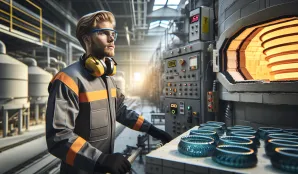
Burners, glass, ceramics, bricks salary
Latest available salary statistics are for 2025. Compare average pay, salary range and related job listings.
35 200 - 37 600 SEK / month
Women earn 95% of what men do.
Industriell tillverkning
Related tools
Salary progression Burners, glass, ceramics, bricks
What does a burner in glass, ceramics, and brickwork do? – Tasks and working environment
A burner in glass, ceramics, and brickwork is responsible for monitoring and controlling firing processes in industrial manufacturing. Tasks include loading ovens with raw materials, regulating temperature and firing time, and inspecting the quality of finished products. The burner also maintains and adjusts machinery and ovens to ensure consistent and safe production. The work environment is often characterized by high temperatures, noise, and sometimes dust, requiring protective gear and careful safety procedures. Work is typically performed in shifts and may involve both physical labor and technical supervision.
Salary development over time
The salary for burners in glass, ceramics, and brickwork has shown a clear increase over the past three years. In 2022, the average salary was 34,400 SEK per month, which decreased slightly in 2023 to 37 100 SEK. However, in 2024, the salary has risen sharply to 36 900 SEK, representing an increase of about 10% from the previous year. This positive trend can be linked to increased demand for skilled labor in the industry and a greater focus on technical knowledge in production. At the same time, inflation and wage adjustments within the industry have contributed to the rise. Wage differences between genders remain, with women earning on average 95% of men's salaries.
Burner – glass, ceramics, brickwork salary – comprehensive overview
- Average salary: 36 900 SEK/month
- Lowest salary: 35,400 SEK/month
- Highest salary: 39,000 SEK/month
- Hourly wage (average): 223 SEK
- Women earn: 35,700 SEK/month (95% of men's salary)
- Men earn: 37 300 SEK/month
- Regional differences: Salary levels may vary depending on region and employer, but detailed data is unavailable.
Education and qualifications
To work as a burner in glass, ceramics, and brickwork, a high school education in industry, technology, or crafts is usually required, often with a focus on process and machine technology. Many employers seek experience from industrial production, and supplementary training in process technology can be advantageous. Practical experience and technical understanding are highly valued, as well as the ability to work carefully and follow safety routines.
- High school education: Industrial technology programs, 3 years
- Internship/training: Often requires on-site practical training
- Additional courses: Process technology, machine safety
- Prerequisites: Basic industrial experience
- Tips for choosing: Seek internships at companies within the glass and ceramics industry to strengthen your skills
Many burners develop a special sense for material properties and changes during firing – a unique combination of craftsmanship and technology that is often passed down through mentorship at the workplace.
Common benefits and compensations
Employers in the glass, ceramics, and brick industries often offer benefits such as shift allowances, wellness contributions, and work clothing. In some cases, additional compensation for unsociable hours is provided, along with opportunities for skills development and further training. Union agreements often regulate conditions related to vacation, pensions, and insurance.
Competition and challenges
Burners in glass, ceramics, and brickwork face a job market with a relatively limited number of positions, which can increase competition for available jobs. Many employers seek individuals with specific experience in industrial firing and technical equipment, which can be a challenge for recent graduates. The working environment also demands high safety standards and precision, especially when handling hot ovens and heavy materials. Digitalization and automation are impacting the profession, requiring ongoing skills development. An additional challenge is that the job often involves shift work, which can affect work-life balance.
Tips for those interested in becoming a burner in glass, ceramics, and brickwork
To succeed as a burner in glass, ceramics, and brickwork, it is important to have good technical understanding and an interest in industrial processes. Precision is a crucial trait, as small deviations in temperature or timing can affect the final product. A positive attitude towards shift work and the ability to follow safety routines increase employment prospects. Being flexible and willing to learn new techniques is also important, as firing technology is continuously evolving. Practical experience in industrial environments provides a clear advantage, and a problem-solving mindset helps in unforeseen situations. Finally, teamwork and communication skills are highly valued, as the work is often performed in teams.
Key facts about Burners, glass, ceramics, brickwork
- Education level: High school education, often with an industrial focus
- Working environment: Industrial, often with high temperatures and shift work
- Typical employment: Permanent or temporary positions within industry
- Demand: Approximately 1,437 job openings in the profession
- Special skills: Process technology and machine supervision
Career paths and future prospects
After three to five years in the profession, a burner in glass, ceramics, and brickwork can advance to supervisory roles or specialize in process development and quality control. Opportunities also exist to pursue further education as a process engineer or take responsibility for training new employees. Forecasts from the Employment Service indicate that detailed assessments are unavailable due to limited data, but the large number of job openings suggests continued demand. The industry's technological development may open new career paths for those interested in automation and digitalization of production processes.
Frequently asked questions about Burners, glass, ceramics, brickwork
- What does a burner in glass, ceramics, and brickwork earn?
- The average salary is 36 900 SEK per month, but it varies based on experience, gender, and education. - What education is required to become a burner?
- High school education with an industrial focus and practical training is usually required. - Are there salary differences between men and women?
- Yes, women earn on average 95% of men's salaries within the profession. - What is the working environment like for a burner?
- The working environment is industrial, often with high temperatures and noise, requiring protective gear. - What career opportunities are there within the profession?
- After a few years, you can advance to supervisor, process developer, or pursue further education in the industry. - How many job openings are there in the profession?
- There are a total of 1437 job openings within the process and machine operator profession.

Salary distributed by age and sector
| Age | Base salary | Monthly salary | |
|---|---|---|---|
| 18-24 | 30300 kr | 35200 kr | |
| 25-34 | 32000 kr | 36100 kr | |
| 35-44 | 33100 kr | 37300 kr | |
| 45-54 | 33600 kr | 37400 kr | |
| 55-64 | 34300 kr | 38100 kr | |
| Snitt | 95% | 32900 kr | 36900 kr |
| Age | Base salary | Monthly salary | |
|---|---|---|---|
| 18-24 | 30300 kr | 35200 kr | |
| 25-34 | 32000 kr | 36100 kr | |
| 35-44 | 33100 kr | 37300 kr | |
| 45-54 | 33600 kr | 37400 kr | |
| 55-64 | 34300 kr | 38100 kr | |
| Snitt | 95% | 32900 kr | 36900 kr |
| Age | Base salary | Monthly salary | |
|---|---|---|---|
| 18-24 | 30300 kr | 35200 kr | |
| 25-34 | 32000 kr | 36100 kr | |
| 35-44 | 33100 kr | 37300 kr | |
| 45-54 | 33600 kr | 37400 kr | |
| 55-64 | 34300 kr | 38100 kr | |
| Snitt | 95% | 32900 kr | 36900 kr |
| Age | Base salary | Monthly salary | |
|---|---|---|---|
| 18-24 | 30400 kr | 35700 kr | |
| 25-34 | 31900 kr | 36200 kr | |
| 35-44 | 33400 kr | 38000 kr | |
| 45-54 | 33800 kr | 37800 kr | |
| 55-64 | 34500 kr | 38300 kr | |
| Snitt | 95% | 33000 kr | 37300 kr |
| Age | Base salary | Monthly salary | |
|---|---|---|---|
| 18-24 | 30400 kr | 35700 kr | |
| 25-34 | 31900 kr | 36200 kr | |
| 35-44 | 33400 kr | 38000 kr | |
| 45-54 | 33800 kr | 37800 kr | |
| 55-64 | 34500 kr | 38300 kr | |
| Snitt | 95% | 33000 kr | 37300 kr |
| Age | Base salary | Monthly salary | |
|---|---|---|---|
| 18-24 | 30400 kr | 35700 kr | |
| 25-34 | 31900 kr | 36200 kr | |
| 35-44 | 33400 kr | 38000 kr | |
| 45-54 | 33800 kr | 37800 kr | |
| 55-64 | 34500 kr | 38300 kr | |
| Snitt | 95% | 33000 kr | 37300 kr |
| Age | Base salary | Monthly salary | |
|---|---|---|---|
| Snitt | 95% | 32400 kr | 35600 kr |
| Age | Base salary | Monthly salary | |
|---|---|---|---|
| Snitt | 95% | 32400 kr | 35600 kr |
| Age | Base salary | Monthly salary | |
|---|---|---|---|
| Snitt | 95% | 32400 kr | 35600 kr |

About the data
All information displayed on this page is based on data from the Swedish Central Bureau of Statistics (SCB), the Swedish Tax Agency and the Swedish employment agency. Learn more about our data and data sources here.
All figures are gross salaries, meaning salaries before tax. The average salary, or mean salary, is calculated by adding up the total salary for all individuals within the profession and dividing it by the number of individuals. For specific job categories, we have also considered various criteria such as experience and education.
Profession Burners, glass, ceramics, bricks has the SSYK code 8189, which we use to match against the SCB database to obtain the latest salary statistics.
-

Operator in Storfors – Starting in August
Other process and machine operators
Fri, 10 Jul 2026 - 21:19 -

Machine Operator for Grinding Disc Production in Västervik
Other process and machine operators
Thu, 9 Jul 2026 - 21:15 -

Production Staff for EB Glas & Fasad AB in Halmstad
Other process and machine operators
Fri, 3 Jul 2026 - 21:31 -

Machine Operator in Skurup – Fixed-term with potential for permanent role
Other process and machine operators
Mon, 15 Jun 2026 - 20:58 -
Machine Operator for Grinding Disc Production in Västervik
Other process and machine operators
Fri, 22 May 2026 - 22:05
Compare salary, work tasks and job outlook in adjacent occupations to find roles with similar skills or pay levels.
-

Average salary: 35 700 SEK/month • Industriell tillverkning
Grinders etc.
Compare with Burners, glass, ceramics, bricks
Tue, 14 Jul 2026 - 10:55 -

Sheet metal straightener salary
Average salary: 40 100 SEK/month • Industriell tillverkning
Other machine and process operators, steel and metal
Compare with Burners, glass, ceramics, bricks
Tue, 14 Jul 2026 - 07:11 -

Machine fitters, wood industry salary
Average salary: 34 700 SEK/month • Industriell tillverkning
Machine carpenters and machine operators, wood industry
Compare with Burners, glass, ceramics, bricks
Tue, 14 Jul 2026 - 10:28 -

Average salary: 36 800 SEK/month • Industriell tillverkning
Welders and gas cutters
Compare with Burners, glass, ceramics, bricks
Mon, 13 Jul 2026 - 19:09 -

Average salary: 38 300 SEK/month • Industriell tillverkning
Operators in sawmills, planing mills and plywood etc.
Compare with Burners, glass, ceramics, bricks
Tue, 14 Jul 2026 - 11:56 -

Veneer presses, veneer manufacturing salary
Average salary: 38 300 SEK/month • Industriell tillverkning
Operators in sawmills, planing mills and plywood etc.
Compare with Burners, glass, ceramics, bricks
Tue, 14 Jul 2026 - 11:57


