- Salary statistics
- Trustees, agricultural beekeepers and silk growers salary
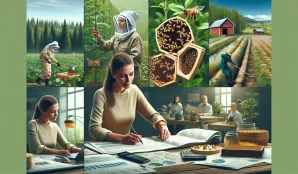
Trustees, agricultural beekeepers and silk growers salary
Latest available salary statistics are for 2025. Compare average pay, salary range and related job listings.
43 800 - 68 200 SEK / month
Chefer & ledare
Related tools
Jump to
Salary progression Trustees, agricultural beekeepers and silk growers
What does a manager within agriculture, beekeeping, and silkworm farming do? – Tasks and work environment
A manager within agriculture, beekeeping, and silkworm farming is responsible for leading and developing operations related to farming, animal husbandry, and specialized production such as honey or silk. Tasks include planning and optimizing cultivation and animal husbandry processes, personnel management, budget responsibility, and often direct contact with clients and partners. The role often involves making strategic decisions regarding plant breeding, animal health, and sustainability, as well as implementing new techniques and methods to improve production and profitability. The work environment is varied and can include administrative tasks at an office, practical work in the field, greenhouse, or production facilities.
Salary development over time
Managers within agriculture, beekeeping, and silkworm farming have experienced steady salary increases over the past three years. In 2022, the average salary was 54,500 SEK per month, increasing to 56 100 SEK in 2023 and reaching 58 000 SEK in 2024. This development represents an increase of approximately 2.9% over the period, reflecting a cautious but clear trend towards higher compensation within the profession. Salary increases are linked to rising demand for qualified managers, especially in sustainable agriculture and specialized niches such as beekeeping and silkworm farming. Technological advances and the need for more efficient production have also contributed to increased demand for competent leaders, positively affecting salary levels.
Complete overview of salaries for managers within agriculture, beekeeping, and silkworm farming
- Average salary: 58 000 SEK/month
- Lowest salary: 43,100 SEK/month (female, public sector, secondary education)
- Highest salary: 64,000 SEK/month (male, private sector, post-secondary education)
- Hourly wage (average): 337 SEK
- Gender differences: Men earn an average of 57 600 SEK. The highest salary for women is 53,000 SEK/month. Salary data for women in general is unavailable.
- Regional differences: Information not available
Education and qualifications
The path to becoming a manager within agriculture, beekeeping, and silkworm farming usually involves post-secondary education in natural resources, agriculture, agronomy, or similar fields. Many also supplement their education with courses in leadership, economics, and specialized areas such as beekeeping or silkworm farming. Practical experience in the industry is often crucial for reaching a leadership position, as well as the ability to stay updated on new techniques and regulations.
- Formal education: Post-secondary degree in agriculture, agronomy, or natural resources (2–4 years)
- Specialized courses: Beekeeping, silkworm farming, production economics
- Internship: Industry internships or trainee programs are recommended
- Certifications: Opportunities for professional certification in beekeeping or organic farming
- Prerequisites: High school diploma, preferably with a science or technical focus
Beekeeping and silkworm farming require not only technical knowledge and planning skills but also a genuine interest in ecology and the interaction between animals and plants. The profession often offers the opportunity to work close to nature and follow seasonal changes in a unique way.
Common benefits and compensations
Managers within agriculture, beekeeping, and silkworm farming often have access to company vehicles, wellness allowances, further training, and sometimes staff housing. In some cases, bonuses linked to production or results are offered, along with insurance and pension contributions as part of the employment package.
Competition and challenges
The competition for positions as managers within agriculture, beekeeping, and silkworm farming is moderate but increasing as more seek careers in sustainable and specialized farming niches. The industry is characterized by seasonal variation, which demands flexibility and long-term planning skills. Technological innovations and an increasing focus on environmental sustainability present both opportunities and challenges, especially for those aiming to stay at the forefront. Additionally, continuous updates on legislation and subsidy systems are necessary, which can be time-consuming but essential for running profitable operations.
Tips for those aiming to become managers within agriculture, beekeeping, and silkworm farming
To succeed as a manager in agriculture, beekeeping, and silkworm farming, it is beneficial to be both analytical and practically inclined. A structured approach helps in planning cultivation and production across seasons, while curiosity facilitates quick adoption of new techniques and methods. Good communication skills are crucial for leading staff and collaborating with suppliers and clients. Demonstrating resilience and patience is also important, as results often take time to materialize. Finally, having a genuine interest in nature and sustainability is valuable, as these issues influence the entire profession.
Key facts about managers within agriculture, beekeeping, and silkworm farming
- Educational level: Post-secondary degree in agriculture or natural resources (2–4 years)
- Work environment: Varied between office, field, and production facility
- Job market: 175 current job openings according to recent statistics
- Special skills: Beekeeping, silkworm farming, leadership, and production economics
Career paths and future prospects
After three to five years in the profession, a manager within agriculture, beekeeping, and silkworm farming can advance to senior management roles, such as operations manager or regional manager, especially within larger companies or organizations. Many also choose to specialize further in areas like organic farming, product development, or consulting. The labor market forecasts indicate that demand for qualified managers remains stable, with 175 current job openings in the field. The shift towards more sustainable and technology-driven production methods is expected to drive the need for competent leaders in the coming years.
Frequently asked questions about managers within agriculture, beekeeping, and silkworm farming
- What does a manager within agriculture, beekeeping, and silkworm farming earn?
- The average salary is 58 000 SEK per month. The hourly wage is 337 SEK. - What education is required for the profession?
- Post-secondary education in agriculture, natural resource management, or agronomy is recommended. - Are there salary differences between men and women?
- Yes, men earn an average of 57 600 SEK. The highest salary for women is 53,000 SEK/month, but average salary data for women is unavailable. - What does the job market look like?
- There are approximately 175 job openings according to current statistics. - What are the main challenges in the profession?
- Seasonal variation, technological development, and sustainability requirements are the main challenges. - What benefits are common?
- Company cars, wellness allowances, further training, and sometimes staff housing are often provided. - What are the career paths?
- Opportunities exist to advance to managerial roles or specialize within different areas.

Salary distributed by age and sector
| Age | Base salary | Monthly salary | |
|---|---|---|---|
| 35-44 | 54700 kr | 57700 kr | |
| 45-54 | 55800 kr | 57300 kr | |
| Snitt | 55700 kr | 58000 kr |
| Age | Base salary | Monthly salary | |
|---|---|---|---|
| 35-44 | 49500 kr | 49800 kr | |
| 45-54 | 81% | 56300 kr | 57500 kr |
| 55-64 | 94% | 63700 kr | 64400 kr |
| Snitt | 92% | 56100 kr | 56900 kr |
| Age | Base salary | Monthly salary | |
|---|---|---|---|
| 35-44 | 49500 kr | 49800 kr | |
| 45-54 | 81% | 56300 kr | 57500 kr |
| 55-64 | 94% | 63700 kr | 64400 kr |
| Snitt | 92% | 56100 kr | 56900 kr |
| Age | Base salary | Monthly salary | |
|---|---|---|---|
| 45-54 | 55800 kr | 57300 kr | |
| Snitt | 55700 kr | 58000 kr |
| Age | Base salary | Monthly salary | |
|---|---|---|---|
| 45-54 | 55800 kr | 57300 kr | |
| Snitt | 55700 kr | 58000 kr |
| Age | Base salary | Monthly salary | |
|---|---|---|---|
| Snitt | 55500 kr | 57600 kr |
| Age | Base salary | Monthly salary | |
|---|---|---|---|
| 35-44 | 48900 kr | 48900 kr | |
| 45-54 | 81% | 63000 kr | 64800 kr |
| 55-64 | 94% | 65400 kr | 65900 kr |
| Snitt | 92% | 58400 kr | 59200 kr |
| Age | Base salary | Monthly salary | |
|---|---|---|---|
| 35-44 | 48900 kr | 48900 kr | |
| 45-54 | 81% | 63000 kr | 64800 kr |
| 55-64 | 94% | 65400 kr | 65900 kr |
| Snitt | 92% | 58400 kr | 59200 kr |
| Age | Base salary | Monthly salary | |
|---|---|---|---|
| Snitt | 55500 kr | 57600 kr |
| Age | Base salary | Monthly salary | |
|---|---|---|---|
| Snitt | 55500 kr | 57600 kr |
| Age | Base salary | Monthly salary | |
|---|---|---|---|
| 45-54 | 81% | 51500 kr | 52300 kr |
| 55-64 | 94% | 60900 kr | 61800 kr |
| Snitt | 92% | 53700 kr | 54500 kr |
| Age | Base salary | Monthly salary | |
|---|---|---|---|
| 45-54 | 81% | 51500 kr | 52300 kr |
| 55-64 | 94% | 60900 kr | 61800 kr |
| Snitt | 92% | 53700 kr | 54500 kr |

About the data
All information displayed on this page is based on data from the Swedish Central Bureau of Statistics (SCB), the Swedish Tax Agency and the Swedish employment agency. Learn more about our data and data sources here.
All figures are gross salaries, meaning salaries before tax. The average salary, or mean salary, is calculated by adding up the total salary for all individuals within the profession and dividing it by the number of individuals. For specific job categories, we have also considered various criteria such as experience and education.
Profession Trustees, agricultural beekeepers and silk growers has the SSYK code 1380, which we use to match against the SCB database to obtain the latest salary statistics.
-
Lease Administrator at Fortifikationsverket – Land Management and Societal Mission
Managers in forestry and agriculture etc.
Thu, 18 Jun 2026 - 23:34 -
Lease Administrator at the Fortification Agency – Skövde, Karlsborg, or Linköping
Managers in forestry and agriculture etc.
Thu, 18 Jun 2026 - 23:19 -
Lease Administrator for Land Management – Skövde, Karlsborg, or Linköping
Managers in forestry and agriculture etc.
Thu, 18 Jun 2026 - 23:18 -

Gardener for the Park Unit in Vetlanda
Managers in forestry and agriculture etc.
Wed, 10 Jun 2026 - 09:21
Compare salary, work tasks and job outlook in adjacent occupations to find roles with similar skills or pay levels.
-

Estate manager, agriculture other animal breeders salary
Average salary: 58 000 SEK/month • Chefer & ledare
Managers in forestry and agriculture etc.
Compare with Trustees, agricultural beekeepers and silk growers
Fri, 10 Jul 2026 - 18:55 -

Average salary: 119 600 SEK/month • Chefer & ledare
General, county and municipal directors etc.
Compare with Trustees, agricultural beekeepers and silk growers
Tue, 14 Jul 2026 - 07:12 -

Average salary: 91 800 SEK/month • Chefer & ledare
Chief executive officers etc.
Compare with Trustees, agricultural beekeepers and silk growers
Mon, 13 Jul 2026 - 11:01 -

Average salary: 58 000 SEK/month • Chefer & ledare
Managers in forestry and agriculture etc.
Compare with Trustees, agricultural beekeepers and silk growers
Mon, 13 Jul 2026 - 14:58 -

Average salary: 119 600 SEK/month • Chefer & ledare
General, county and municipal directors etc.
Compare with Trustees, agricultural beekeepers and silk growers
Tue, 14 Jul 2026 - 07:13 -

Director General, Enterprise salary
Average salary: 91 800 SEK/month • Chefer & ledare
Chief executive officers etc.
Compare with Trustees, agricultural beekeepers and silk growers
Mon, 13 Jul 2026 - 23:44


