- Salary statistics
- Fish farm workers salary
Fish farm workers salary
Latest available salary statistics are for 2025. Compare average pay, salary range and related job listings.
Naturbruk
Related tools
What does a fish farm worker do? – Tasks and work environment
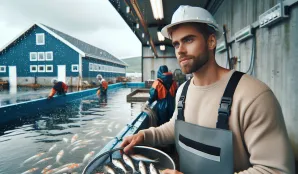
A fish farm worker specializes in managing the daily operations of fish farms, where various fish species are raised for food production or release into the wild. Tasks include feeding fish, monitoring water quality, cleaning tanks and nets, and overseeing fish health and growth. The work environment varies between indoor recirculation systems and outdoor ponds or sea cages, often under changing weather conditions. The job can be physically demanding and requires precision to ensure proper animal care and product quality.
Salary development over time
The salary development for fish farm workers in Sweden is difficult to analyze in detail due to the lack of official salary data for recent years. Available information indicates that the profession has long been a niche industry with limited statistics, making it hard to track exact trends. Generally, salaries in similar natural resource occupations have been relatively stable with minor percentage changes. Market developments and demand for sustainably produced fish could, however, influence wages over time. The absence of formal educational requirements and high competition for positions may also contribute to slow salary growth. Overall, the trend is that the profession still lacks comprehensive salary data, reflecting its specialized and limited labor market.
Fish farm worker salary – complete overview
- Average salary: 0 SEK/month
- Lowest/Highest salary: Data unavailable
- Hourly wage: 0 SEK
- Gender differences: Data unavailable
- Regional differences: Data unavailable
Education and qualifications
To work as a fish farm worker, a high school education in natural resource management, preferably with a focus on animals or aquaculture, is usually required. Practical experience and an interest in animal husbandry and the environment are valuable assets. Formal requirements vary between employers, but many value education combined with hands-on training on site.
- High school education: Natural resource management program, specialization in animals/aquaculture (3 years)
- Internships: Work-based learning is common and often advantageous
- Courses/certificates: Hygiene, environmental, and animal welfare courses can be beneficial
- Prerequisites: Basic high school eligibility
- Tips for choosing: Practical experience from summer jobs or internships is highly valued
Many fish farm workers have the opportunity to specialize in certain fish species or techniques, which can lead to unique tasks and a more varied workday than many expect.
Common benefits and compensations
Fish farm workers are often offered benefits such as work clothing, wellness allowances, and sometimes collective insurance schemes. Opportunities for further training in areas like environmental work or machinery technology are available, as well as access to occupational health services at larger workplaces.
Competition and challenges
The profession of fish farm worker is characterized by a relatively small labor market with limited number of positions, creating some competition for available jobs. Seasonal variations affect demand, especially in outdoor farms where work can be more intensive during certain periods. Physically demanding tasks and exposure to weather conditions are everyday challenges. The lack of official salary data and clear career paths can make long-term planning difficult. At the same time, there are opportunities to specialize through further education or skill development, which can improve employment prospects. Digitalization and increased automation in the industry also impose new requirements for technical knowledge and adaptability.
Tips for aspiring fish farm workers
To succeed as a fish farm worker, attention to detail and a keen eye for water quality and fish health are essential, as constant monitoring is required. A genuine interest in animals and nature facilitates daily work and fosters a positive attitude in various environments. Flexibility is important, as tasks can vary greatly between seasons and facilities. Physical endurance is needed to handle heavy lifting and outdoor work in all weather conditions. Responsibility and the ability to work independently are crucial, as many tasks are performed without direct supervision. Good teamwork skills are also appreciated, especially in larger farms where collaboration is vital. Finally, curiosity and a willingness to learn about new techniques and environmental requirements are valuable for keeping up with industry developments.
Key facts about fish farm workers
- Education level: High school diploma, natural resource management with specialization in animals/aquaculture
- Work environment: Varies between indoor and outdoor, often physically demanding
- Work form: Seasonal variations common, both full-time and temporary employment
- Job openings: About 360 within the profession of fish farmers
- Demand: Limited data for forecast according to the Employment Service
Career paths and future prospects
After a few years of experience, a fish farm worker can advance to supervisory roles such as operations manager or production supervisor at fish farms. Specializations in areas like water chemistry, recirculation technology, or environmental certification can open new opportunities. Experienced workers may also start their own small-scale farms or work as consultants in the industry. According to the Employment Service, no specific forecast is made due to limited data, but technological progress and increased demand for sustainably produced fish could positively influence future prospects. Currently, there are approximately 360 job openings in the industry, indicating some mobility in the labor market.
Frequently asked questions about fish farm workers
- What does a fish farm worker earn?
- Official salary data is unavailable, but the profession has traditionally had a low to medium salary compared to other natural resource occupations. - What education is required to become a fish farm worker?
- High school education in natural resource management with a focus on animals or aquaculture is recommended, supplemented with practical experience. - What is the work environment like for fish farm workers?
- The work environment varies between indoor recirculation systems and outdoor work at ponds or sea cages, often under changing weather conditions. - Are there many job openings in fish farming?
- There are approximately 360 available jobs within the profession of fish farmers. - What personal qualities are important for a fish farm worker?
- Attention to detail, responsibility, physical endurance, and an interest in animals and nature are important qualities. - What are the future prospects for fish farm workers?
- The Employment Service provides no specific forecast due to limited data, but technological development and a focus on sustainability may influence the profession in the future.

Salary distributed by age and sector

About the data
All information displayed on this page is based on data from the Swedish Central Bureau of Statistics (SCB), the Swedish Tax Agency and the Swedish employment agency. Learn more about our data and data sources here.
All figures are gross salaries, meaning salaries before tax. The average salary, or mean salary, is calculated by adding up the total salary for all individuals within the profession and dividing it by the number of individuals. For specific job categories, we have also considered various criteria such as experience and education.
Profession Fish farm workers has the SSYK code 6221, which we use to match against the SCB database to obtain the latest salary statistics.
Compare salary, work tasks and job outlook in adjacent occupations to find roles with similar skills or pay levels.
-
Plant growers, mixed plant species salary
Average salary: 31 752 SEK/month • Naturbruk
Growers of agricultural crops, fruit and berries
Compare with Fish farm workers
Tue, 14 Jul 2026 - 15:02 -

Homeowners, plant cultivation salary
Average salary: 31 752 SEK/month • Naturbruk
Growers of agricultural crops, fruit and berries
Compare with Fish farm workers
Tue, 14 Jul 2026 - 13:06 -
Average salary: 44 800 SEK/month • Naturbruk
Specialists and advisors in forestry
Compare with Fish farm workers
Tue, 14 Jul 2026 - 18:51 -

Agricultural consultant salary
Average salary: 44 900 SEK/month • Naturbruk
Specialists and advisors in agriculture etc.
Compare with Fish farm workers
Tue, 14 Jul 2026 - 17:13 -

Average salary: 44 900 SEK/month • Naturbruk
Specialists and advisors in agriculture etc.
Compare with Fish farm workers
Tue, 14 Jul 2026 - 08:18 -

Processing worker, garden salary
Average salary: 30 200 SEK/month • Naturbruk
Horticulturists
Compare with Fish farm workers
Tue, 14 Jul 2026 - 11:56


