- Salary statistics
- Fiskmästare, fiskodling
Fiskmästare, fiskodling
Naturbruk
What does a fish master in fish farming do? – Tasks and work environment
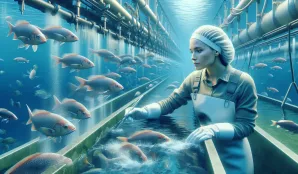
A fish master in fish farming is responsible for planning, operation, and supervision of fish farming activities. Tasks include caring for fish stocks, feeding, water quality control, disease prevention, and handling technical equipment for water treatment and oxygenation. The role also involves documentation, reporting, and sometimes personnel management. The work environment is often outdoors at ponds or indoors in recirculating systems, and can be physically demanding with varying working hours, especially during intensive production periods.
Salary development over time
Salary data for fish masters in fish farming are missing for the past three years, making it difficult to present a concrete salary trend. Generally, the profession has long been characterized by small salary differences and a stable but low salary level, reflecting both limited demand and the structure of the labor market. Since the profession belongs to a smaller occupational group and is often practiced in smaller companies or family-owned businesses, there have historically been few official salary statistics. It can be assumed that salary levels are affected by factors such as supply and demand for labor, education levels, and regional differences, but in the absence of public statistics, no clear trend can be established.
Fish master in fish farming salary – comprehensive overview
- Average salary: 0 SEK/month
- Lowest/Highest salary: No data available
- Hourly wage: 0 SEK
- Gender differences: No statistics available
- Regional differences: No statistics available
Education and qualifications
The path to becoming a fish master in fish farming typically goes through vocational education within natural resource programs focused on aquaculture or fish farming. Practical experience is highly valued, and many combine education with workplace-based learning. Success also requires specific knowledge of biology, environment, and technology, where additional courses or certificates can be advantageous.
- Vocational education: Natural Resources Program with specialization in aquaculture (3 years)
- Internships: Workplace-based learning during education
- Courses/certificates: Environmental knowledge, water chemistry, fish health
- Prerequisites: Basic upper secondary school eligibility
- Tips for choosing: Interest in biology and technology facilitates development in the profession
A fish master in fish farming often works close to nature and follows the fish's life cycle from spawning to slaughter-ready fish. The work involves both physical labor and technical responsibility, creating a unique combination of outdoor work and advanced technology management.
Common benefits and compensations
Common benefits for fish masters in fish farming include access to work clothing, wellness allowances, and sometimes subsidized lunches. Some employers also offer internal training and opportunities for further development within the field, especially in larger companies or corporations.
Competition and challenges
The labor market for fish masters in fish farming is limited and characterized by few positions and low turnover. Since the industry is dominated by small and medium-sized companies, competition for permanent positions is relatively high. Challenges include seasonal variations, strict environmental requirements, and the constant need to stay updated on new technology and regulations. The industry's development is also influenced by consumer demands for sustainability and quality, which places additional demands on practitioners.
Tips for aspiring fish masters in fish farming
To succeed as a fish master in fish farming, it is good to be curious and have a genuine interest in nature and water environments, which facilitates both studies and daily work. Precision is an important trait, especially regarding water quality control and documentation. Good physical fitness is an asset since the work often involves heavy lifting and outdoor work in changing weather conditions. Problem-solving skills are required because unexpected situations such as disease outbreaks or technical failures can occur quickly. Finally, teamwork and communication skills are crucial, as the work is often done in small teams where everyone contributes to the overall success.
Key facts about Fish Master, fish farming
- Education level: Natural resource education with specialization in aquaculture
- Work environment: Outdoors at cultivation sites and indoors in recirculating systems
- Common employment form: Full-time, seasonal employment occurs
- Number of job openings: 360
- Future prospects: No forecast available due to limited statistical data
Career paths and future outlooks
After three to five years as a fish master in fish farming, the role can develop into supervisory positions, such as operations manager or production manager. Specialization in aquaculture technology, fish health, or environmental certification is possible for those who want to deepen their expertise. The Swedish Public Employment Service's assessment for the profession of fish farmers lacks a specific forecast due to limited data, but the number of available positions indicates some demand. The long-term development of the industry is influenced by environmental requirements, technological innovation, and increased consumer interest in sustainably produced fish. For those wishing to broaden their skills, opportunities also exist in research, consulting, or education within aquaculture.
Frequently asked questions about Fish Master, fish farming
- What does a Fish Master, fish farming earn?
- There is no available salary statistics for the profession at the moment, neither as an average salary nor hourly wage. - What education is required to become a fish master in fish farming?
- The Natural Resources Program with a focus on aquaculture is recommended, preferably complemented with internships. - What is the work environment like for a fish master?
- The work environment is often outdoors at cultivation facilities or indoors in technical systems, and can be physically demanding. - Are there many jobs for a fish master in fish farming?
- There are approximately 360 job openings within the profession, but competition for permanent positions can be high. - What personal qualities are important for the profession?
- Accuracy, problem-solving skills, teamwork ability, and interest in nature and technology are central qualities. - What are the future prospects for a fish master in fish farming?
- Due to limited data, there is no official forecast, but the industry is influenced by environmental requirements and technological development. - Can I pursue further education in the field?
- Yes, there are opportunities for specialization and further training, for example in fish health or aquaculture technology.

Salary distributed by age and sector

About the data
All information displayed on this page is based on data from the Swedish Central Bureau of Statistics (SCB), the Swedish Tax Agency and the Swedish employment agency. Learn more about our data and data sources here.
All figures are gross salaries, meaning salaries before tax. The average salary, or mean salary, is calculated by adding up the total salary for all individuals within the profession and dividing it by the number of individuals. For specific job categories, we have also considered various criteria such as experience and education.
Profession Fiskmästare, fiskodling has the SSYK code 6221, which we use to match against the SCB database to obtain the latest salary statistics.

-
CEO, in agriculture, agricultural pets, without chief hierarchy
Breeders and caretakers of farm animals
Mon, 16 Mar 2026 - 05:04 -

Operations manager, agriculture, agricultural pets
Breeders and caretakers of farm animals
Mon, 16 Mar 2026 - 08:46


-

Save Big with Vimla – Mobile Plan for 20 SEK/Month + 100 GB Extra Data
Wed, 4 Mar 2026 - 22:00 -

Opinion Poll: Demoskop February 2026 – Center increases, S still largest
Fri, 27 Feb 2026 - 09:35 -

Policy rate remains at 1.75% – Riksbank signals stability
Thu, 29 Jan 2026 - 14:02