- Salary statistics
- Harvester, forestry salary
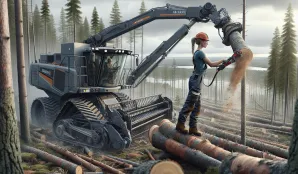
Harvester, forestry salary
Latest available salary statistics are for 2025. Compare average pay, salary range and related job listings.
32 400 - 33 500 SEK / month
Naturbruk
Related tools
Salary progression Harvester, forestry
What does a harvester operator do in forestry? – Tasks and work environment
A harvester operator in forestry primarily works with operating advanced forest machines, called harvesters, to fell, limb, and cut trees directly in the forest. The work involves planning and optimizing harvesting based on terrain, stand conditions, and environmental requirements. The harvester operator is also responsible for basic maintenance and daily inspections of the machine to ensure operational safety. The work environment is mostly outdoors in forest terrain, requiring good physical fitness and the ability to handle varying weather conditions. The work can be solitary but also involves cooperation with other machine operators and work teams during larger harvests.
Salary development over time
The salary for forestry harvester operators has shown steady growth over the past three years. In 2022, the average salary was 30,400 SEK, increasing to 32 900 SEK in 2023 and further to 33 500 SEK in 2024. This corresponds to a total salary increase of approximately 8.2% during this period. The driving forces behind this development include increased demand for machine operators in forestry and ongoing generational change as experienced operators retire. Technological advancements have also raised skill requirements and salary levels. The trend indicates that the profession remains competitively salaried, especially for those with the right education and experience.
Forestry harvester operator salary – complete overview
- Average salary: 33 500 SEK/month
- Lowest salary: 30,600 SEK/month
- Highest salary: 35,400 SEK/month
- Hourly wage: 198 SEK
- Men's average salary: 33 500 SEK/month
- Women's average salary: 30,600 SEK/month
- Women earn: 0% of what men do
- Regional differences: Data unavailable
Education and qualifications
To work as a forestry harvester operator, a typical requirement is upper secondary education with a focus on forest machinery operation or equivalent training. Practical experience is highly valuable, and many employers prefer candidates who have completed internships or trainee programs. Technical interest and good driving skills are essential, as well as understanding forest management and environmental considerations.
- Upper secondary education: Natural resources with forestry specialization (3 years)
- Certifications: Machine operator license and forestry machine training certificates
- Internships: Longer practical training or apprenticeship during education
- Prerequisites: B driver's license and good physical condition
- Courses: Continuing education in machine technology, safety, and environmental topics
Many harvester operators develop excellent local knowledge and become experts in reading terrain, making them valuable advisors in planning new harvests. Technological development in machinery also demands high digital skills.
Common benefits and compensations
Forestry harvester operators are often offered benefits such as per diems for work in other locations, wellness grants, work clothing, overtime pay, and performance-based bonuses. Some employers also provide opportunities for further training and skill development within the profession.
Competition and challenges
The profession as a forestry harvester operator is characterized by a paradoxical recruitment situation. Despite a relatively large pool of trained operators, it remains difficult to find the right expertise, often because many leave the profession or switch industries. Demand for skilled operators is expected to remain steady over the next five years, but employers report difficulties in recruiting experienced personnel. The work environment demands independence, technical knowledge, and physical endurance. Both technological advances and increased environmental regulations mean operators must continuously update their skills to meet industry changes.
Tips for aspiring forestry harvester operators
To succeed as a forestry harvester operator, perseverance and a technical interest are important, as the job requires precise machine handling during long shifts. Attention to detail and responsibility are crucial, especially for maintenance and troubleshooting. Flexibility and problem-solving skills help when faced with unexpected terrain challenges or rapidly changing conditions. Good teamwork skills are also advantageous, as communication with other operators and work teams is often necessary. An interest in nature and the environment makes it easier to understand and follow forest management principles. Finally, openness to ongoing training is a significant advantage, since technology is constantly evolving and new work methods are introduced.
Key facts about forestry harvester operators
- Education level: Upper secondary school diploma with forestry specialization
- Work environment: Outdoors, often in forest terrain and solo work
- Demand: Great opportunities for employment nationwide
- Job openings: 360 advertised positions within the occupation
- Special skills: Machinery technology and digital control systems
Career paths and future outlook
After three to five years as a forestry harvester operator, there are opportunities to advance to supervisory roles, such as team leader or planning manager for harvests. Some also choose to further their education in machinery technology or forest management and take on roles as instructors or trainers. According to the Swedish Public Employment Service's forecast, demand for agricultural and forestry machinery operators is expected to remain unchanged over the next five years. The job market is characterized by good opportunities due to large retirement waves and recruitment challenges. Those combining experience with further education in technology or leadership have particularly good prospects for career development within the profession.
Frequently asked questions about forestry harvester operators
- What does a forestry harvester operator earn?
- The average salary is 33 500 SEK per month, with variations between 30,600 SEK and 35,400 SEK depending on experience, gender, and sector. - How do you become a forestry harvester operator?
- Most commonly, by attending the natural resources program at upper secondary school with a forestry focus and then completing internships or trainee periods. - Are there salary differences between men and women?
- Yes, women earn on average 0% of what men do in the profession. - What work benefits are common?
- Per diems, wellness grants, work clothing, overtime pay, and bonuses are often offered. - What are the future prospects?
- Job opportunities are plentiful, and demand is expected to remain steady over the next five years. - What education is required?
- Upper secondary education in natural resources with forestry specialization and a machine operator certificate. - How many job openings are available?
- Approximately 360 positions are advertised within the occupation for agricultural and forestry machinery operators.

Salary distributed by age and sector
| Age | Base salary | Monthly salary | |
|---|---|---|---|
| 18-24 | 28500 kr | 29000 kr | |
| 25-34 | 33900 kr | 35400 kr | |
| 35-44 | 35200 kr | 36800 kr | |
| 45-54 | 34800 kr | 35800 kr | |
| 55-64 | 32800 kr | 33800 kr | |
| Snitt | 32400 kr | 33500 kr |
| Age | Base salary | Monthly salary | |
|---|---|---|---|
| 18-24 | 28500 kr | 29000 kr | |
| 25-34 | 33900 kr | 35400 kr | |
| 35-44 | 35200 kr | 36800 kr | |
| 45-54 | 34800 kr | 35800 kr | |
| 55-64 | 32800 kr | 33800 kr | |
| Snitt | 32400 kr | 33500 kr |
| Age | Base salary | Monthly salary | |
|---|---|---|---|
| 18-24 | 28500 kr | 29000 kr | |
| 25-34 | 33900 kr | 35400 kr | |
| 35-44 | 35200 kr | 36800 kr | |
| 45-54 | 34800 kr | 35800 kr | |
| 55-64 | 32800 kr | 33800 kr | |
| Snitt | 32400 kr | 33500 kr |
| Age | Base salary | Monthly salary | |
|---|---|---|---|
| 18-24 | 28500 kr | 29000 kr | |
| 25-34 | 34200 kr | 35400 kr | |
| 35-44 | 35200 kr | 36800 kr | |
| 45-54 | 34900 kr | 35800 kr | |
| 55-64 | 32800 kr | 33800 kr | |
| Snitt | 32600 kr | 33500 kr |
| Age | Base salary | Monthly salary | |
|---|---|---|---|
| 18-24 | 28500 kr | 29000 kr | |
| 25-34 | 34200 kr | 35400 kr | |
| 35-44 | 35200 kr | 36800 kr | |
| 45-54 | 34900 kr | 35800 kr | |
| 55-64 | 32800 kr | 33800 kr | |
| Snitt | 32600 kr | 33500 kr |
| Age | Base salary | Monthly salary | |
|---|---|---|---|
| 18-24 | 28500 kr | 29000 kr | |
| 25-34 | 34200 kr | 35400 kr | |
| 35-44 | 35200 kr | 36800 kr | |
| 45-54 | 34900 kr | 35800 kr | |
| 55-64 | 32800 kr | 33800 kr | |
| Snitt | 32600 kr | 33500 kr |

About the data
All information displayed on this page is based on data from the Swedish Central Bureau of Statistics (SCB), the Swedish Tax Agency and the Swedish employment agency. Learn more about our data and data sources here.
All figures are gross salaries, meaning salaries before tax. The average salary, or mean salary, is calculated by adding up the total salary for all individuals within the profession and dividing it by the number of individuals. For specific job categories, we have also considered various criteria such as experience and education.
Profession Harvester, forestry has the SSYK code 8341, which we use to match against the SCB database to obtain the latest salary statistics.
-

Machine Operator for Älvsbyn Production Area
Operators of agricultural and forestry machinery
Thu, 9 Jul 2026 - 00:04 -

Wheel Loader and Forklift Operator – Immediate Start!
Operators of agricultural and forestry machinery
Mon, 29 Jun 2026 - 21:41 -
Forest Machine Operator in Ljusdal – Sveaskog
Operators of agricultural and forestry machinery
Thu, 25 Jun 2026 - 09:25 -

Vehicle Driver at Södra Cell Mönsterås (Temporary)
Operators of agricultural and forestry machinery
Tue, 23 Jun 2026 - 20:35 -

Machine Operator at Trelleborgs Energi
Operators of agricultural and forestry machinery
Thu, 18 Jun 2026 - 21:41
Compare salary, work tasks and job outlook in adjacent occupations to find roles with similar skills or pay levels.
-

Operations manager, agriculture, agricultural pets salary
Average salary: 29 400 SEK/month • Naturbruk
Breeders and caretakers of farm animals
Compare with Harvester, forestry
Tue, 14 Jul 2026 - 13:07 -

Average salary: 44 900 SEK/month • Naturbruk
Specialists and advisors in agriculture etc.
Compare with Harvester, forestry
Tue, 14 Jul 2026 - 14:59 -

Homeowners, mixed operation salary
Average salary: 28 900 SEK/month • Naturbruk
Plant growers and animal breeders, mixed operations
Compare with Harvester, forestry
Tue, 14 Jul 2026 - 13:06 -

Replacement, mixed operation salary
Average salary: 28 900 SEK/month • Naturbruk
Plant growers and animal breeders, mixed operations
Compare with Harvester, forestry
Tue, 14 Jul 2026 - 08:16 -

Average salary: 32 000 SEK/month • Naturbruk
Gardeners etc.
Compare with Harvester, forestry
Tue, 14 Jul 2026 - 11:00 -

EU inspector, agricultural support salary
Average salary: 44 900 SEK/month • Naturbruk
Specialists and advisors in agriculture etc.
Compare with Harvester, forestry
Tue, 14 Jul 2026 - 13:58


