- Salary statistics
- Replacement, mixed operation salary
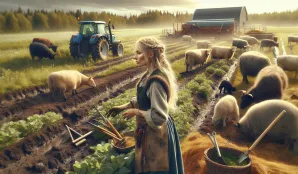
Replacement, mixed operation salary
Latest available salary statistics are for 2025. Compare average pay, salary range and related job listings.
28 300 - 46 800 SEK / month
Women earn 97% of what men do.
Naturbruk
Related tools
Salary progression Replacement, mixed operation
What does a substitute worker in mixed farming do? – Tasks and work environment
A substitute worker in mixed farming temporarily replaces regular staff at agricultural enterprises with both animal husbandry and crop cultivation. The job tasks vary greatly and can include everything from milking, feeding, and caring for animals to machinery operation, sowing, harvesting, and maintenance of technical equipment. Depending on the season and the farm's focus, the substitute encounters both intensive periods and more routine days. The work environment is usually outdoors or inside farm buildings, meaning that work is affected by weather and seasons. Physical endurance, flexibility, and good teamwork skills are important qualities as the pace and tasks can change quickly.
Wage development over time
The salary for a substitute worker in mixed farming has shown a slight positive trend in recent years. In 2022, the average salary was 26,900 SEK per month, which decreased slightly to 27 600 SEK in 2023. During 2024, the salary recovered and increased to 28 900 SEK, corresponding to an increase of about 3.4% compared to the previous year. This development reflects a stable but slow salary increase within the profession. Variations can partly be explained by changes in demand, labor market structure, and the educational level of employees. Salary development is also influenced by regional differences and sector affiliation, where public and private employers may offer different conditions.
Substitute workers in mixed farming salary – complete overview
- Average salary: 28 900 SEK/month
- Lowest salary: 25,300 SEK/month
- Highest salary: 50,400 SEK/month
- Hourly wage: 166 SEK
- Women earn: 25,300 SEK (97% of men's salary)
- Men earn: 28,500 SEK
- Regional differences: Salary variations occur, especially between rural areas and urban centers, but exact levels vary depending on employer and region.
Education and qualifications
To work as a substitute in mixed farming, a high school education with a focus on agriculture is often required, but experience is highly valued during recruitment. Practical knowledge of animal husbandry, crop cultivation, and machinery is central, and many employers prefer candidates who have completed relevant internships or have prior work experience in similar environments. Additional courses or certificates, such as machinery operator licenses, can enhance employment opportunities.
- High school education: Natural resources program with agricultural specialization (3 years)
- Internship: Often work-based learning during education
- Certificates: Machinery operator, animal welfare courses
- Experience: Previous work in agriculture is highly meritorious
- Additional courses: Possible via adult education or online learning
A substitute in mixed farming often gains a unique insight into many different agricultural enterprises and working methods. This variation makes the profession particularly rewarding for those who want to broaden their skills and network across the country. Flexibility and curiosity often open doors to new techniques and routines.
Common benefits and compensation
Common benefits for substitutes in mixed farming include per diems when working away from home, work clothing, wellness allowances, and sometimes subsidized lunches. Some employers also offer accommodation or transportation assistance to the workplace. Irregular working hours can be compensated with overtime pay and extra days off for weekend work.
Competition and challenges
The competition for positions as a substitute in mixed farming is relatively low, but the availability of jobs can vary greatly depending on season and region. The shortage of trained labor is a recurring problem, especially during busy periods like spring planting and harvest. Physical strain, varying working hours, and demands for broad skills mean the profession requires endurance and adaptability. Additionally, the work environment can be strenuous in bad weather or when working with large animals and heavy machinery. Despite the challenges, many are attracted to the profession for the freedom and variety it offers.
Tips for those who want to become a substitute in mixed farming
To succeed as a substitute in mixed farming, it is good to combine practical skills with an interest in both animals and technology. Flexibility makes it easier when tasks quickly shift between different activities and environments. Precision is important when handling animals and machinery, as well as the ability to quickly learn new routines on different farms. A social and communicative personality facilitates collaboration with farmers and colleagues. Being proactive and independent helps in autonomous work, especially when unexpected problems need to be solved on-site. Physical endurance and stress tolerance are also crucial for handling heavy lifts and long working days. Finally, a willingness to continually learn new things provides opportunities for development within the profession and taking on more advanced tasks.
Key facts about substitutes in mixed farming
- Education level: High school education (natural resources) recommended
- Work environment: Varied, often outdoors or inside farm buildings
- Common employment type: Fixed-term or hourly employment
- Demand: 360 job openings in the occupational group according to latest survey
- Special skills: Practical skills in both animal husbandry and crop cultivation
Career paths and future prospects
After three to five years as a substitute in mixed farming, many have built broad experience that opens opportunities for further development in agriculture. Common career paths include becoming a permanent employee on a larger farm, taking on a supervisory role, or specializing in areas such as machinery maintenance or animal health. Some choose to further their education to become an agricultural engineer or agronomist to take on greater responsibilities or work in advisory roles. According to the Employment Service's occupational forecast, there is no precise assessment for this specific profession due to limited data, but the large number of job openings indicates ongoing demand. The future will be influenced by structural changes in agriculture and technological development, creating new opportunities for those willing to upgrade their skills.
Frequently asked questions about substitutes in mixed farming
- What does a substitute in mixed farming earn?
- The average salary is 28 900 SEK per month, but variations occur depending on experience, region, and gender. - How to become a substitute in mixed farming?
- Most commonly, a high school education in natural resources, supplemented with practical training and possible certificates for machinery and animal handling. - What are the job responsibilities of a substitute in mixed farming?
- The duties include animal care, crop cultivation, machinery operation and maintenance, as well as replacing regular staff when needed. - Are there salary differences between men and women?
- Yes, women earn on average 97% of what men do in the profession. - What is the work environment like for a substitute?
- The work environment is often physically demanding and varies between outdoor work and work inside farm buildings. - What are the future prospects in this profession?
- The prognosis is uncertain, but there are many job openings within the occupational group according to recent surveys. - Can I work as a part-time substitute?
- Yes, many substitutes are hourly employed or work seasonally depending on the need.

Salary distributed by age and sector
| Age | Base salary | Monthly salary | |
|---|---|---|---|
| 18-24 | 26900 kr | 27900 kr | |
| 25-34 | 26600 kr | 27200 kr | |
| Snitt | 97% | 28300 kr | 28900 kr |
| Age | Base salary | Monthly salary | |
|---|---|---|---|
| 18-24 | 105% | 24500 kr | 30500 kr |
| 25-34 | 107% | 29900 kr | 32000 kr |
| 35-44 | 98% | 31200 kr | 33400 kr |
| 45-54 | 99% | 33500 kr | 35600 kr |
| 55-64 | 100% | 33700 kr | 35100 kr |
| 65-68 | 98% | 33400 kr | 36100 kr |
| Snitt | 97% | 30100 kr | 33100 kr |
| Age | Base salary | Monthly salary | |
|---|---|---|---|
| 18-24 | 102% | 24900 kr | 30000 kr |
| 25-34 | 107% | 29700 kr | 31900 kr |
| 35-44 | 98% | 30800 kr | 33100 kr |
| 45-54 | 99% | 32900 kr | 34900 kr |
| 55-64 | 109% | 31200 kr | 32800 kr |
| 65-68 | 96% | 34200 kr | 37700 kr |
| Snitt | 99% | 29800 kr | 32600 kr |
| Age | Base salary | Monthly salary | |
|---|---|---|---|
| 18-24 | 23600 kr | 31300 kr | |
| 25-34 | 31100 kr | 32900 kr | |
| 35-44 | 33300 kr | 35000 kr | |
| 45-54 | 101% | 36700 kr | 39300 kr |
| 55-64 | 74% | 41000 kr | 42000 kr |
| 65-68 | 30800 kr | 31500 kr | |
| Snitt | 86% | 30800 kr | 34800 kr |
| Age | Base salary | Monthly salary | |
|---|---|---|---|
| Snitt | 28100 kr | 28500 kr |
| Age | Base salary | Monthly salary | |
|---|---|---|---|
| Snitt | 28100 kr | 28500 kr |
| Age | Base salary | Monthly salary | |
|---|---|---|---|
| Snitt | 97% | 28900 kr | 29200 kr |
| Age | Base salary | Monthly salary | |
|---|---|---|---|
| 18-24 | 105% | 25700 kr | 29000 kr |
| 25-34 | 107% | 29800 kr | 30500 kr |
| 35-44 | 98% | 32000 kr | 33800 kr |
| 45-54 | 99% | 33900 kr | 35700 kr |
| 55-64 | 100% | 34000 kr | 35200 kr |
| 65-68 | 98% | 33300 kr | 36300 kr |
| Snitt | 97% | 32100 kr | 33700 kr |
| Age | Base salary | Monthly salary | |
|---|---|---|---|
| 18-24 | 102% | 27000 kr | 29500 kr |
| 25-34 | 107% | 29700 kr | 30400 kr |
| 35-44 | 98% | 31600 kr | 33400 kr |
| 45-54 | 99% | 33000 kr | 35000 kr |
| 55-64 | 109% | 30900 kr | 32100 kr |
| 65-68 | 96% | 34500 kr | 38200 kr |
| Snitt | 99% | 31200 kr | 32800 kr |
| Age | Base salary | Monthly salary | |
|---|---|---|---|
| 45-54 | 101% | 38200 kr | 39000 kr |
| 55-64 | 74% | 46600 kr | 47500 kr |
| Snitt | 86% | 37300 kr | 38700 kr |
| Age | Base salary | Monthly salary | |
|---|---|---|---|
| Snitt | 97% | 27100 kr | 28300 kr |
| Age | Base salary | Monthly salary | |
|---|---|---|---|
| 18-24 | 105% | 24300 kr | 30600 kr |
| 25-34 | 107% | 30000 kr | 32600 kr |
| 35-44 | 98% | 30500 kr | 33000 kr |
| 45-54 | 99% | 33300 kr | 35500 kr |
| 55-64 | 100% | 32800 kr | 35000 kr |
| 65-68 | 98% | 33500 kr | 35700 kr |
| Snitt | 97% | 28900 kr | 32700 kr |
| Age | Base salary | Monthly salary | |
|---|---|---|---|
| 18-24 | 102% | 24600 kr | 30100 kr |
| 25-34 | 107% | 29700 kr | 32500 kr |
| 35-44 | 98% | 30100 kr | 32800 kr |
| 45-54 | 99% | 32900 kr | 34800 kr |
| 55-64 | 109% | 32000 kr | 34800 kr |
| 65-68 | 96% | 33600 kr | 36600 kr |
| Snitt | 99% | 29100 kr | 32500 kr |
| Age | Base salary | Monthly salary | |
|---|---|---|---|
| 18-24 | 23800 kr | 31600 kr | |
| 25-34 | 31000 kr | 33200 kr | |
| 35-44 | 32100 kr | 33900 kr | |
| 45-54 | 101% | 35800 kr | 39500 kr |
| 55-64 | 74% | 34100 kr | 35300 kr |
| Snitt | 86% | 28600 kr | 33400 kr |

About the data
All information displayed on this page is based on data from the Swedish Central Bureau of Statistics (SCB), the Swedish Tax Agency and the Swedish employment agency. Learn more about our data and data sources here.
All figures are gross salaries, meaning salaries before tax. The average salary, or mean salary, is calculated by adding up the total salary for all individuals within the profession and dividing it by the number of individuals. For specific job categories, we have also considered various criteria such as experience and education.
Profession Replacement, mixed operation has the SSYK code 6130, which we use to match against the SCB database to obtain the latest salary statistics.
-

Experienced Machine Operator Wanted in Bjärred – Immediate Start
Plant growers and animal breeders, mixed operations
Mon, 13 Jul 2026 - 21:45 -

Farm Worker / Animal Caretaker at Dansjö Farm
Plant growers and animal breeders, mixed operations
Wed, 8 Jul 2026 - 20:59 -
Team Member for Agricultural Operations at Hörninge Gård AB
Plant growers and animal breeders, mixed operations
Sat, 4 Jul 2026 - 01:17 -

Operations Manager for Sollentuna Center
Plant growers and animal breeders, mixed operations
Wed, 24 Jun 2026 - 21:47 -
Part-Time Position: Firewood Manufacturing and Packaging
Plant growers and animal breeders, mixed operations
Sun, 14 Jun 2026 - 20:37
Compare salary, work tasks and job outlook in adjacent occupations to find roles with similar skills or pay levels.
-

Farmer, plant cultivation salary
Average salary: 31 752 SEK/month • Naturbruk
Growers of agricultural crops, fruit and berries
Compare with Replacement, mixed operation
Mon, 13 Jul 2026 - 17:09 -

Agricultural foreman, mixed operation salary
Average salary: 28 900 SEK/month • Naturbruk
Plant growers and animal breeders, mixed operations
Compare with Replacement, mixed operation
Mon, 13 Jul 2026 - 07:18 -
Average salary: 44 800 SEK/month • Naturbruk
Specialists and advisors in forestry
Compare with Replacement, mixed operation
Tue, 14 Jul 2026 - 07:16 -

Average salary: 29 784 SEK/month • Naturbruk
Breeders and caretakers of pets
Compare with Replacement, mixed operation
Tue, 14 Jul 2026 - 05:53 -

Average salary: 32 000 SEK/month • Naturbruk
Gardeners etc.
Compare with Replacement, mixed operation
Tue, 14 Jul 2026 - 04:59 -

Average salary: 28 200 SEK/month • Naturbruk
Berry pickers and planters etc.
Compare with Replacement, mixed operation
Sun, 12 Jul 2026 - 06:51


