- Salary statistics
- Landowners, agricultural beekeepers and silk growers salary
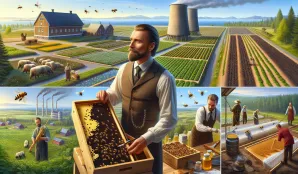
Landowners, agricultural beekeepers and silk growers salary
Latest available salary statistics are for 2025. Compare average pay, salary range and related job listings.
26 000 - 32 000 SEK / month
Naturbruk
Related tools
Salary progression Landowners, agricultural beekeepers and silk growers
What does a landowner, agricultural beekeeper, and silk farmer do? – Tasks and work environment
A landowner, agricultural beekeeper, and silk farmer is responsible for operating and developing a farm where beekeeping and silk farming may be specialized activities. Tasks include everything from planning crops, caring for bees and silkworms, to financial management and marketing of the farm’s products. The work is often outdoors and involves physically demanding tasks as well as administrative work. The work environment varies between fields, barns, and offices, and seasonal workload can fluctuate significantly.
Salary development over time
Salaries for landowners, agricultural beekeepers, and silk farmers have shown some variation over the past three years. In 2022, the average salary was 25,000 SEK, which increased to 26 300 SEK in 2023 – an increase of approximately 11.2%. In 2024, the average salary has slightly decreased to 30 000 SEK. This decline can partly be explained by market changes, such as increased operating costs and fluctuating demand for agricultural products. Changes in education levels and experience among practitioners may also influence salary development. Despite the recent decrease, the salary level remains competitive within the group of "other animal breeders and animal caretakers."
Landowner, agricultural beekeeper, and silk farmer salary – comprehensive overview
- Average salary: 30 000 SEK/month
- Lowest salary: 25,100 SEK/month (women), 25,400 SEK/month (men)
- Highest salary: 28,000 SEK/month (women), 27,500 SEK/month (men)
- Hourly wage: 158 SEK
- Gender differences: Women earn on average the same as men, but the highest and lowest salaries vary slightly between genders
- Regional differences: Data unavailable
Education and qualifications
To become a landowner, agricultural beekeeper, and silk farmer, a high school education with a focus on agriculture or natural resources is typically required. Many also choose to pursue further training in beekeeping or silk farming, often through post-secondary courses or vocational colleges. Practical experience is highly valuable and often crucial for success in the profession. Certifications in animal husbandry and food safety can also be advantageous.
- High school education: Natural resources or agriculture, 3 years
- Post-secondary education: Vocational training in beekeeping/silk farming, 1–2 years
- Certifications: Food safety, hygiene, animal husbandry
- Internship: Strongly recommended, preferably at a farm with a similar focus
- Prerequisites: Interest in animals, nature, and entrepreneurship
Beekeeping and silk farming are niche activities where innovation and sustainability play a significant role. Many professionals combine traditional methods with new technology to increase production and reduce environmental impact.
Common benefits and compensations
Common benefits for landowners, agricultural beekeepers, and silk farmers often include company housing, work clothing, subsidized tools, and access to further training in agriculture and animal husbandry. Some employers also offer bonuses linked to production or profitability, as well as flexible working hours depending on the season and workload.
Competition and challenges
The competition within the profession of landowners, agricultural beekeepers, and silk farmers is moderate but strongly influenced by market prices for agricultural products and weather conditions. Increasing demands for sustainability and certification mean practitioners need to stay updated on legislation and industry standards. Seasonal variations and investments in equipment are other challenges, as is finding and retaining the right expertise for specialized activities like beekeeping and silk farming. At the same time, there are good opportunities for those willing to invest in further education and innovation.
Tips for those wishing to become landowners, agricultural beekeepers, and silk farmers
To succeed as a landowner, agricultural beekeeper, and silk farmer, it’s important to be persistent and adaptable, as the work often involves long days and varied tasks depending on the season. Building a network within the industry and seeking internships early is wise, as practical experience is invaluable. Carefulness and responsibility are key qualities, especially regarding animal care and food safety. Continual education and staying updated on new techniques can provide competitive advantages. A genuine interest in sustainability and environmental issues is also beneficial, as these topics are increasingly important. Finally, some entrepreneurial spirit is necessary, as many operate their own businesses or combine multiple income sources.
Key facts about landowners, agricultural beekeepers, and silk farmers
- Education level: High school or post-secondary education recommended
- Work environment: Combination of outdoor work and administration
- Typical employment: Self-employed or privately employed
- Demand: 360 job openings in Sweden (2024)
- Special skills: Beekeeping, silk farming, animal husbandry
Career paths and future prospects
After three to five years in the profession, there are good opportunities to develop into more specialized roles, such as advising in beekeeping or agricultural development, or taking on greater responsibilities on a farm or operation. Some choose to start their own production of honey, silk, or other niche products, while others move into education or consulting roles. Forecasts from the Employment Service show steady demand, with 360 job openings in 2024. Digitalization and sustainability requirements are expected to continue shaping the future of the profession, offering opportunities for those who wish to combine tradition with innovation.
Common questions about landowners, agricultural beekeepers, and silk farmers
- What does a landowner, agricultural beekeeper, and silk farmer earn?
- The average salary is 30 000 SEK per month, with variation depending on experience and education. - What education is required to work as a landowner, agricultural beekeeper, and silk farmer?
- High school education with a focus on natural resources or agriculture is recommended, often supplemented with courses in beekeeping or silk farming. - Are there salary differences between men and women?
- Women and men have similar average salaries, but the highest and lowest salaries vary slightly between genders. - What is the job market like for this profession?
- There are 360 job openings within the profession according to current statistics. - What are the biggest challenges in the profession?
- Seasonal variations, market prices, and sustainability requirements are some of the main challenges. - Which specialized skills are particularly valuable?
- Experience in beekeeping, silk farming, and animal husbandry is highly valued. - Are there opportunities for further education?
- Yes, there are several courses and training programs in both beekeeping and agricultural development.

Salary distributed by age and sector
| Age | Base salary | Monthly salary | |
|---|---|---|---|
| 18-24 | 23300 kr | 27500 kr | |
| 25-34 | 29600 kr | 30700 kr | |
| Snitt | 28500 kr | 30000 kr |
| Age | Base salary | Monthly salary | |
|---|---|---|---|
| 18-24 | 103% | 25200 kr | 26000 kr |
| 25-34 | 108% | 26700 kr | 27700 kr |
| 35-44 | 27300 kr | 27600 kr | |
| 45-54 | 29000 kr | 29600 kr | |
| 55-64 | 99% | 27200 kr | 28400 kr |
| Snitt | 103% | 26900 kr | 27700 kr |
| Age | Base salary | Monthly salary | |
|---|---|---|---|
| 18-24 | 103% | 25200 kr | 26000 kr |
| 25-34 | 108% | 26700 kr | 27700 kr |
| 35-44 | 27300 kr | 27600 kr | |
| 45-54 | 29000 kr | 29600 kr | |
| 55-64 | 99% | 27200 kr | 28400 kr |
| Snitt | 103% | 26900 kr | 27700 kr |
| Age | Base salary | Monthly salary | |
|---|---|---|---|
| 18-24 | 22900 kr | 27900 kr | |
| Snitt | 29000 kr | 30600 kr |
| Age | Base salary | Monthly salary | |
|---|---|---|---|
| 18-24 | 22900 kr | 27900 kr | |
| Snitt | 29000 kr | 30600 kr |
| Age | Base salary | Monthly salary | |
|---|---|---|---|
| 18-24 | 103% | 25300 kr | 25400 kr |
| 25-34 | 108% | 25300 kr | 25800 kr |
| 55-64 | 99% | 28200 kr | 28700 kr |
| Snitt | 103% | 26600 kr | 27000 kr |
| Age | Base salary | Monthly salary | |
|---|---|---|---|
| 18-24 | 103% | 25300 kr | 25400 kr |
| 25-34 | 108% | 25300 kr | 25800 kr |
| 55-64 | 99% | 28200 kr | 28700 kr |
| Snitt | 103% | 26600 kr | 27000 kr |
| Age | Base salary | Monthly salary | |
|---|---|---|---|
| 18-24 | 23200 kr | 27600 kr | |
| 25-34 | 29700 kr | 30800 kr | |
| Snitt | 29400 kr | 31000 kr |
| Age | Base salary | Monthly salary | |
|---|---|---|---|
| 18-24 | 103% | 25200 kr | 26100 kr |
| 25-34 | 108% | 26800 kr | 27800 kr |
| 35-44 | 27300 kr | 27500 kr | |
| 45-54 | 29100 kr | 29700 kr | |
| 55-64 | 99% | 27000 kr | 28400 kr |
| Snitt | 103% | 26900 kr | 27700 kr |
| Age | Base salary | Monthly salary | |
|---|---|---|---|
| 18-24 | 103% | 25200 kr | 26100 kr |
| 25-34 | 108% | 26800 kr | 27800 kr |
| 35-44 | 27300 kr | 27500 kr | |
| 45-54 | 29100 kr | 29700 kr | |
| 55-64 | 99% | 27000 kr | 28400 kr |
| Snitt | 103% | 26900 kr | 27700 kr |
| Age | Base salary | Monthly salary | |
|---|---|---|---|
| 18-24 | 22800 kr | 27900 kr | |
| Snitt | 30200 kr | 32000 kr |
| Age | Base salary | Monthly salary | |
|---|---|---|---|
| 18-24 | 22800 kr | 27900 kr | |
| Snitt | 30200 kr | 32000 kr |

About the data
All information displayed on this page is based on data from the Swedish Central Bureau of Statistics (SCB), the Swedish Tax Agency and the Swedish employment agency. Learn more about our data and data sources here.
All figures are gross salaries, meaning salaries before tax. The average salary, or mean salary, is calculated by adding up the total salary for all individuals within the profession and dividing it by the number of individuals. For specific job categories, we have also considered various criteria such as experience and education.
Profession Landowners, agricultural beekeepers and silk growers has the SSYK code 6129, which we use to match against the SCB database to obtain the latest salary statistics.
-
Animal Care Assistant Wanted at Hags Gårdsveterinär in Avesta
Other animal breeders and animal caretakers
Mon, 13 Jul 2026 - 21:18 -
Job in Robotic Milking and Feeding
Other animal breeders and animal caretakers
Sat, 11 Jul 2026 - 20:32 -

Veterinary Care Assistant Needed in Stockholm – AnnSam AB
Other animal breeders and animal caretakers
Thu, 9 Jul 2026 - 21:18 -
Animal Caretaker for Newborns – Granepig AB
Other animal breeders and animal caretakers
Mon, 6 Jul 2026 - 21:37 -
Animal Caretaker Needed in Stockholm – AnnSam AB
Other animal breeders and animal caretakers
Mon, 6 Jul 2026 - 20:38
Compare salary, work tasks and job outlook in adjacent occupations to find roles with similar skills or pay levels.
-

Average salary: 33 600 SEK/month • Naturbruk
Forestry workers
Compare with Landowners, agricultural beekeepers and silk growers
Tue, 14 Jul 2026 - 09:56 -

Homeowners, plant cultivation salary
Average salary: 31 752 SEK/month • Naturbruk
Growers of agricultural crops, fruit and berries
Compare with Landowners, agricultural beekeepers and silk growers
Tue, 14 Jul 2026 - 08:16 -

Average salary: 30 200 SEK/month • Naturbruk
Horticulturists
Compare with Landowners, agricultural beekeepers and silk growers
Mon, 13 Jul 2026 - 00:46 -

Landowners, agriculture mixed plant species salary
Average salary: 31 752 SEK/month • Naturbruk
Growers of agricultural crops, fruit and berries
Compare with Landowners, agricultural beekeepers and silk growers
Tue, 14 Jul 2026 - 09:48 -

Ground preparation driver, forestry salary
Average salary: 33 500 SEK/month • Naturbruk
Operators of agricultural and forestry machinery
Compare with Landowners, agricultural beekeepers and silk growers
Tue, 14 Jul 2026 - 05:43 -

Average salary: 30 000 SEK/month • Naturbruk
Other animal breeders and animal caretakers
Compare with Landowners, agricultural beekeepers and silk growers
Sat, 11 Jul 2026 - 14:48


