- Salary statistics
- Accordion repairman salary
Accordion repairman salary
Latest available salary statistics are for 2025. Compare average pay, salary range and related job listings.
33 800 - 34 000 SEK / month
Hantverksyrken
Related tools
Salary progression Accordion repairman
What does an Accordion Repairer do? – Tasks and Work Environment
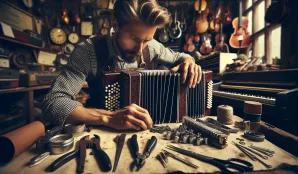
An accordion repairer works with servicing, repairing, and sometimes renovating accordions of various types and ages. Tasks include troubleshooting, replacing mechanical parts, tuning tone plates, gluing work, and adjusting buttons and keys. Repairs can range from simple maintenance to advanced procedures where the instrument is disassembled to restore it to its original condition. The work is often performed in specialized workshops equipped with precise tools for delicate work. The environment is calm but requires patience, concentration, and great dexterity. Customer contact occurs regularly, especially during instrument intake and delivery, as well as providing advice on care and maintenance.
Salary Development Over Time
Over the past three years, salary trends for accordion repairers have shown some fluctuations. In 2022, the average salary was 34,382 kronor per month. The following year, it increased slightly to 30 900 kronor, which is approximately a 0.8 % increase. Between 2023 and 2024, a clear decline was noted, with the average salary dropping to 34 000 kronor, a decrease of over 10.8 %. This decline may partly be due to decreased demand for craftsmanship repairs, changes in the musical instrument industry, or more workers in part-time or smaller operations. The profession is niche, which means salary levels can quickly be affected by market changes and the availability of specialized assignments.
Accordion Repairer Salary – Complete Overview
- Average salary: 34 000 kr/month
- Lowest/Highest salary: Data unavailable
- Hourly wage: 186 kr/hour (based on 166 hours/month)
- Gender differences: Not available
- Regional differences: Not available
Education and Qualifications
The path to becoming an accordion repairer often involves an apprenticeship, specialized training in musical instrument technology, or vocational education with a craft focus. Formal requirements are rare, but a combination of practical experience and technical knowledge is crucial. For those wishing to deepen their skills, courses or internships with established repairers are sometimes available. Self-study and continuous skill development are also common, as techniques and materials evolve over time.
- Vocational training: Craft programs with a focus on musical instruments (3 years)
- Apprenticeship: Internship with an established repairer recommended
- Courses: Specialized short courses in instrument care and repair
- Prerequisites: Good fine motor skills and an interest in music
- Self-study: Common for developing personal techniques and knowledge
Many accordion repairers also have personal experience as musicians, which provides a deeper understanding of the instrument's sound and playability. This insight can be invaluable for tailoring repairs to the customer's needs and expectations.
Common Benefits and Compensation
Benefits for accordion repairers may include flexible working hours, the possibility of owning a workshop, access to tools and materials, and discounts on music accessories. In some cases, opportunities for skills development, participation in fairs or events, and insurance covering both personnel and instruments in case of damage or accidents are offered.
Competition and Challenges
The profession of accordion repairer is niche with few practitioners, leading to limited competition but also a small job market. Challenges include finding new clients and staying updated with modern materials and techniques. Many older accordions require specialized knowledge and spare parts that can be difficult to obtain. Digitalization of music and changing musical tastes can also impact demand for repairs. Success requires both technical skill and the ability to adapt to market needs.
Tips for Aspiring Accordion Repairers
To succeed as an accordion repairer, it is good to have a genuine passion for both music and craftsmanship. Attention to detail is crucial, especially when working with small and delicate parts, to ensure repairs are of high quality. High patience levels help with complex faults and lengthy restorations. Being service-minded and responsive to customer wishes builds trust and repeat business. Curiosity about new techniques and materials helps stay current in the profession. Finally, being self-reliant and organized is an advantage, especially if running your own business.
Key Facts about Accordion Repairer
- Education level: Vocational training or apprenticeship
- Work environment: Workshop environment with precision work
- Work form: Often self-employed or employed in smaller workshops
- Demand: 341 available jobs within the profession
- Special skills: Instrument technology and fine motor skills
Career Paths and Future Prospects
After three to five years in the profession, an accordion repairer may have built a client base and deepened their skills in specific instrument types or repair processes. It is common for experienced repairers to start their own business, collaborate with music stores, or expand their offerings to other musical instruments. The outlook is stable within the profession of musical instrument makers and other craft artisans, with 341 available jobs according to the latest matches (Arbetsförmedlingen). Digitalization and changing music trends may influence demand, but the need for specialized craftsmen remains, as older instruments require ongoing maintenance and expertise.
Frequently Asked Questions about Accordion Repairer
- What does an Accordion Repairer earn?
- An accordion repairer has an average salary of 34 000 kronor per month. - How to become an accordion repairer?
- The path usually goes through vocational training in craftsmanship or an apprenticeship with an experienced repairer. - Are there many job opportunities for accordion repairers?
- There are approximately 341 available jobs within the profession according to the Employment Service. - What qualities are important for the profession?
- Attention to detail, patience, fine motor skills, and a service mindset are central qualities. - What does an accordion repairer do on a daily basis?
- The tasks include repair, maintenance, and servicing of accordions, as well as customer contact. - Is formal education necessary?
- Formal education is not always required, but vocational training or practical experience facilitates entry into the profession. - Are there regional salary differences?
- There is no available information about regional salary differences for the profession.

Salary distributed by age and sector
| Age | Base salary | Monthly salary | |
|---|---|---|---|
| Snitt | 33800 kr | 34000 kr |
| Age | Base salary | Monthly salary | |
|---|---|---|---|
| Snitt | 33800 kr | 34000 kr |
| Age | Base salary | Monthly salary | |
|---|---|---|---|
| Snitt | 33800 kr | 34000 kr |

About the data
All information displayed on this page is based on data from the Swedish Central Bureau of Statistics (SCB), the Swedish Tax Agency and the Swedish employment agency. Learn more about our data and data sources here.
All figures are gross salaries, meaning salaries before tax. The average salary, or mean salary, is calculated by adding up the total salary for all individuals within the profession and dividing it by the number of individuals. For specific job categories, we have also considered various criteria such as experience and education.
Profession Accordion repairman has the SSYK code 7319, which we use to match against the SCB database to obtain the latest salary statistics.
-

Production Staff Wanted at Svebab – Svenska Brandslangsfabriken AB
Musical instrument makers and other artisans
Fri, 10 Jul 2026 - 21:23 -

Engraver and Customer Receptionist at Vasaboden – Full-Time Temporary Position
Musical instrument makers and other artisans
Tue, 7 Jul 2026 - 09:01 -

Screen Printer for Sign Production in Tumba
Musical instrument makers and other artisans
Mon, 29 Jun 2026 - 23:45 -

Machine Operator for Glass Manufacturing in Limmared
Musical instrument makers and other artisans
Thu, 25 Jun 2026 - 22:17 -

Teacher in Wood and Metal Craft at Vasaskolan in Hedemora
Musical instrument makers and other artisans
Thu, 25 Jun 2026 - 21:44
Compare salary, work tasks and job outlook in adjacent occupations to find roles with similar skills or pay levels.
-

Average salary: 34 000 SEK/month • Hantverksyrken
Musical instrument makers and other artisans
Compare with Accordion repairman
Tue, 14 Jul 2026 - 00:20 -

Average salary: 38 800 SEK/month • Hantverksyrken
Blacksmiths
Compare with Accordion repairman
Tue, 14 Jul 2026 - 10:05 -

Average salary: 33 100 SEK/month • Hantverksyrken
Tailors and atelier seamstresses etc.
Compare with Accordion repairman
Tue, 14 Jul 2026 - 08:14 -

Average salary: 34 000 SEK/month • Hantverksyrken
Musical instrument makers and other artisans
Compare with Accordion repairman
Tue, 14 Jul 2026 - 07:12 -

Average salary: 34 000 SEK/month • Hantverksyrken
Musical instrument makers and other artisans
Compare with Accordion repairman
Sun, 12 Jul 2026 - 03:25 -

Cabin master, glassworks salary
Average salary: 34 000 SEK/month • Hantverksyrken
Musical instrument makers and other artisans
Compare with Accordion repairman
Mon, 13 Jul 2026 - 23:36


