- Salary statistics
- Cold butcher salary
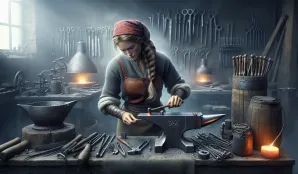
Cold butcher salary
Latest available salary statistics are for 2025. Compare average pay, salary range and related job listings.
36 800 - 38 800 SEK / month
Hantverksyrken
Related tools
Salary progression Cold butcher
What does a cold worker do? – Tasks and work environment
A cold worker processes metal without heating the material. Tasks include shaping, bending, and joining steel and metal components, often using machines and specialized tools. Cold workers are found in industries such as manufacturing, construction, and repair, where precision and accuracy are crucial. The work environment can vary from workshops to industrial facilities, requiring both technical skills and an eye for detail. Collaboration with other trades, such as welders and assemblers, is often part of completing complex structures.
Salary development over time
The salary for a cold worker has shown fluctuations over the past three years. In 2022, the average salary was 32,300 SEK per month. In 2023, it increased to 36 000 SEK, representing a roughly 17% increase. In 2024, the average salary decreased to 38 800 SEK, a decline of about 5% compared to the previous year. This decline can be explained by market fluctuations, changing demand, and potential changes in collective bargaining agreements. Despite salary fluctuations, the profession remains in demand, especially within the industrial sector where specialized skills in cold processing are important.
Cold worker salary – comprehensive overview
- Average salary: 38 800 SEK/month
- Lowest/Highest salary: Data unavailable
- Hourly wage: 216 SEK/hour
- Gender differences: Men earn 38 800 SEK; data for women is missing
- Regional differences: No detailed statistics available
Education and qualifications
To work as a cold worker, a high school vocational education in industrial technology or equivalent experience is usually required. Many cold workers have specialized in forging or metalworking, and additional training or certifications can be advantageous. Practical experience through internships or apprenticeships is often essential for employment in the field.
- High school education: Industrial technology program, specializing in forging/metallurgy (3 years)
- Internship: Apprenticeship or practical training during education is recommended
- Certificates: Possibility to obtain industry-specific certificates for increased employability
- Prerequisites: Basic technical understanding and good physics skills
- Further education: Courses in advanced metalworking and machine technology
Many cold workers develop an intuition for material behavior over time that cannot be learned theoretically, but only through hands-on experience in the workshop. This tactile sense for precision and adaptation is highly valued in the profession.
Common benefits and compensations
Cold workers are often covered by collective agreements that provide holiday pay, occupational pension, and insurance. Other common benefits include wellness allowances, work clothing, and sometimes shift premiums for inconvenient working hours. Some employers also offer skills development and further training as part of employment.
Competition and challenges
Competition for cold worker positions varies by region and economic conditions. Since the profession requires a combination of technical knowledge and practical experience, finding qualified applicants can be challenging, sometimes leading to skill shortages. Technological changes and automation increase the demand for continuous skills development. At the same time, the physically demanding nature of the work poses risks of strain injuries, emphasizing the importance of a safe work environment and safety routines.
Tips for aspiring cold workers
To succeed as a cold worker, it is good to be meticulous, patient, and solution-oriented. A strong attention to detail facilitates fitting components precisely, and endurance is needed for physically demanding tasks. Early internships or apprenticeships provide valuable experience and improve employment chances. Flexibility and willingness to learn new techniques are important, as the industry develops rapidly. Building a network through contacts in the industry can open doors to new opportunities, and a positive attitude towards teamwork makes the workday easier and more rewarding.
Key facts about cold workers
- Education level: High school, industrial technology
- Work environment: Industrial and workshop settings
- Work form: Full-time or shift work common
- Demand: 341 job openings within the smiths group
- Special knowledge: Metal processing without heating
Career paths and future prospects
After three to five years in the profession, a cold worker can advance to more specialized roles such as supervisor, production technician, or machine operator within metalworking. Further education can enable work with advanced machinery or quality control. Forecasts from the Employment Service indicate that it is currently difficult to assess the future outlook for cold workers due to limited statistical data in this broader occupational group. However, there are indications of continued demand within the industry, especially for those with specialized skills and experience.
Frequently asked questions about cold workers
- What does a cold worker earn?
- A cold worker has an average salary of 38 800 SEK per month. - What education is required to become a cold worker?
- High school education in industrial technology, preferably with a focus on forging or metal, is recommended. - Are there salary differences between men and women?
- Salary data is available for men (38 800 SEK), but statistics for women are missing. - What does the job market look like for cold workers?
- There are 341 job openings within the smiths group, but no specific forecast for the profession. - What workplace risks are there for cold workers?
- Strain injuries and accidents during machine work are common risks; safety routines are important. - What benefits are common for cold workers?
- Holiday pay, occupational pension, insurances, and wellness contributions are common.

Salary distributed by age and sector
| Age | Base salary | Monthly salary | |
|---|---|---|---|
| 25-34 | 36800 kr | 38600 kr | |
| 35-44 | 36800 kr | 38300 kr | |
| Snitt | 36800 kr | 38800 kr |
| Age | Base salary | Monthly salary | |
|---|---|---|---|
| Snitt | 39500 kr | 39500 kr |
| Age | Base salary | Monthly salary | |
|---|---|---|---|
| Snitt | 39500 kr | 39500 kr |
| Age | Base salary | Monthly salary | |
|---|---|---|---|
| 25-34 | 36800 kr | 38700 kr | |
| 35-44 | 36800 kr | 38300 kr | |
| Snitt | 36800 kr | 38800 kr |
| Age | Base salary | Monthly salary | |
|---|---|---|---|
| 25-34 | 36800 kr | 38700 kr | |
| 35-44 | 36800 kr | 38300 kr | |
| Snitt | 36800 kr | 38800 kr |
| Age | Base salary | Monthly salary | |
|---|---|---|---|
| 35-44 | 36800 kr | 38300 kr | |
| Snitt | 36900 kr | 38800 kr |
| Age | Base salary | Monthly salary | |
|---|---|---|---|
| Snitt | 39500 kr | 39500 kr |
| Age | Base salary | Monthly salary | |
|---|---|---|---|
| Snitt | 39500 kr | 39500 kr |
| Age | Base salary | Monthly salary | |
|---|---|---|---|
| 35-44 | 36800 kr | 38300 kr | |
| Snitt | 36900 kr | 38800 kr |
| Age | Base salary | Monthly salary | |
|---|---|---|---|
| 35-44 | 36800 kr | 38300 kr | |
| Snitt | 36900 kr | 38800 kr |

About the data
All information displayed on this page is based on data from the Swedish Central Bureau of Statistics (SCB), the Swedish Tax Agency and the Swedish employment agency. Learn more about our data and data sources here.
All figures are gross salaries, meaning salaries before tax. The average salary, or mean salary, is calculated by adding up the total salary for all individuals within the profession and dividing it by the number of individuals. For specific job categories, we have also considered various criteria such as experience and education.
Profession Cold butcher has the SSYK code 7221, which we use to match against the SCB database to obtain the latest salary statistics.
-

Experienced Smith/Fitter Needed for Building Ironwork in Gothenburg Area
Blacksmiths
Mon, 6 Jul 2026 - 18:42



Compare salary, work tasks and job outlook in adjacent occupations to find roles with similar skills or pay levels.
-

Average salary: 34 000 SEK/month • Hantverksyrken
Musical instrument makers and other artisans
Compare with Cold butcher
Tue, 14 Jul 2026 - 00:20 -

Average salary: 38 800 SEK/month • Hantverksyrken
Blacksmiths
Compare with Cold butcher
Tue, 14 Jul 2026 - 10:05 -

Average salary: 33 100 SEK/month • Hantverksyrken
Tailors and atelier seamstresses etc.
Compare with Cold butcher
Tue, 14 Jul 2026 - 08:14 -

Average salary: 34 000 SEK/month • Hantverksyrken
Musical instrument makers and other artisans
Compare with Cold butcher
Tue, 14 Jul 2026 - 07:12 -

Average salary: 34 000 SEK/month • Hantverksyrken
Musical instrument makers and other artisans
Compare with Cold butcher
Sun, 12 Jul 2026 - 03:25 -

Cabin master, glassworks salary
Average salary: 34 000 SEK/month • Hantverksyrken
Musical instrument makers and other artisans
Compare with Cold butcher
Mon, 13 Jul 2026 - 23:36


