- Salary statistics
- Bench worker salary
Bench worker salary
Latest available salary statistics are for 2025. Compare average pay, salary range and related job listings.
37 300 - 37 900 SEK / month
Industriell tillverkning
Related tools
Salary progression Bench worker
What does a bench worker do? – Tasks and work environment
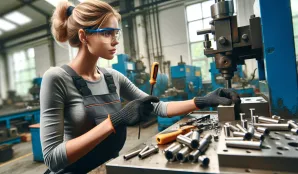
A bench worker mainly works with manufacturing, processing, and repairing metal parts and tools in a workshop environment. The profession involves carefully following drawings and specifications to create components with high precision, often using both hand tools and machines. Tasks can include assembly, filing, drilling, and adjusting parts, and sometimes welding and grinding depending on the workplace. The environment is often industrial, with demands for accuracy, safety, and good teamwork, as work can be performed in teams or independently.
Salary development over time
Over the past three years, the salary for bench workers has shown stable and positive growth. In 2022, the average salary was 33,500 SEK per month, which increased to 35 900 SEK in 2023. The latest data from 2024 shows an average salary of 37 900 SEK, representing a total increase of approximately 7.2% over the period. This trend reflects a continued demand for skilled industrial workers, especially in toolmaking where technical competence and experience are highly valued. Factors driving the salary increase include industry needs for skilled labor and technological development, which demands higher skills from workers. The wage growth has been somewhat slower in the last year, possibly due to stabilization in demand and regional differences.
Bench worker salary – complete overview
- Average salary: 37 900 SEK/month
- Lowest/Highest salary: Data not specified, but varies depending on experience and region
- Hourly wage: 216 SEK
- Gender differences: Men earn 38 000 SEK, no specific data about women
- Regional differences: Salaries may vary between regions, but detailed statistics are lacking
Education and qualifications
To work as a bench worker, a vocational upper secondary education in industrial technology or workshop technology is generally required. Many employers also value practical experience, either through internships during education or prior work within the industry. Specialized courses and certifications in machine processing or toolmaking can be advantageous and increase employability.
- Upper secondary education: Industrial technology program, 3 years
- Internship/Trainee: Often a mandatory part of the education
- Certifications: For example, in machine processing, CNC, or welding
- Prerequisites: Basic mathematics and technical interest
- Tips for choosing: Opt for specialization in workshop or production for the best prospects
Many bench workers quickly develop broad technical skills that open doors to several roles within the industry, such as toolmaker or production technician. Practical experience and problem-solving skills are also highly valued in other parts of the manufacturing chain.
Common benefits and compensations
Bench workers are usually covered by collective agreements that entitle them to holiday pay, occupational pension, and insurance. Other benefits may include wellness allowances, work clothing, subsidized lunches, and sometimes bonuses based on production targets. Overtime pay and shift work may also apply, positively affecting total compensation.
Competition and challenges
The competition for positions as a bench worker varies depending on region and economic climate. Demand is stronger in industrial cities and areas with large manufacturing sectors, while job supply may be more limited in smaller towns. A challenge is that technological development requires workers to continuously update their skills in new machines and methods. Physical workload and monotonous tasks can also be demanding. However, the shortage of trained workers in certain regions means experienced bench workers often have good opportunities for continued employment and advancement.
Tips for those wanting to become a bench worker
To succeed as a bench worker, it is beneficial to combine technical interest with precision and patience. A practical person who enjoys solving problems and working with their hands has a significant advantage. Flexibility and willingness to learn new techniques and machines are important, as the industry evolves rapidly. Taking the initiative to do internships during education provides valuable experience and can lead to employment. Good teamwork skills are also essential, as many projects are carried out in teams. Finally, responsibility and following safety routines are appreciated, since the work often involves machines and tools.
Key facts about bench workers
- Education level: Vocational upper secondary education, often industrial technology program
- Work environment: Industrial workshop environment, often with machines and hand tools
- Job prospects: 1,437 job openings within the profession (May 2024)
- Typical work form: Full-time, sometimes shift work
- Special skills: Machine processing, reading drawings, problem-solving
Career paths and future outlook
After three to five years as a bench worker, there are opportunities for further development within the industry, such as becoming a toolmaker, production technician, or supervisor. Many choose to specialize in CNC machining or quality assurance, which can lead to higher responsibility and salary. Forecasts from the Swedish Public Employment Service show that there is currently no precise assessment for bench workers, but within the toolmaker profession, demand remains stable with over 1,400 job openings. The shortage of trained workers in some regions can mean good chances for employment in the long term. However, technological development requires continuous skill development to remain competitive.
Frequently asked questions about bench workers
- What does a bench worker earn?
- The average salary is 37 900 SEK per month, with variation depending on experience and region. - What education is required to become a bench worker?
- The most common is a vocational upper secondary education in industrial technology or workshop technology. - Are there many job openings for bench workers?
- Yes, there are over 1,400 job openings within the toolmaker profession. - What does a bench worker do on the job?
- Tasks include manufacturing, processing, and repairing metal parts and tools. - Is there significant salary variation between regions?
- Yes, salaries can vary depending on the work location, but detailed statistics are lacking. - What personal qualities are important?
- Precision, technical interest, and teamwork skills are central qualities. - What are the future prospects for bench workers?
- The outlook is stable, with continued demand for trained workers in the industry.

Salary distributed by age and sector
| Age | Base salary | Monthly salary | |
|---|---|---|---|
| 25-34 | 36300 kr | 36900 kr | |
| 35-44 | 36200 kr | 36800 kr | |
| 45-54 | 37400 kr | 37800 kr | |
| 55-64 | 39000 kr | 39600 kr | |
| Snitt | 37300 kr | 37900 kr |
| Age | Base salary | Monthly salary | |
|---|---|---|---|
| 25-34 | 36300 kr | 36900 kr | |
| 35-44 | 36200 kr | 36800 kr | |
| 45-54 | 37400 kr | 37800 kr | |
| 55-64 | 39000 kr | 39600 kr | |
| Snitt | 37300 kr | 37900 kr |
| Age | Base salary | Monthly salary | |
|---|---|---|---|
| 25-34 | 36300 kr | 36900 kr | |
| 35-44 | 36200 kr | 36800 kr | |
| 45-54 | 37400 kr | 37800 kr | |
| 55-64 | 39000 kr | 39600 kr | |
| Snitt | 37300 kr | 37900 kr |
| Age | Base salary | Monthly salary | |
|---|---|---|---|
| 35-44 | 36400 kr | 37100 kr | |
| 45-54 | 37400 kr | 37800 kr | |
| 55-64 | 39100 kr | 39700 kr | |
| Snitt | 37400 kr | 38000 kr |
| Age | Base salary | Monthly salary | |
|---|---|---|---|
| 35-44 | 36400 kr | 37100 kr | |
| 45-54 | 37400 kr | 37800 kr | |
| 55-64 | 39100 kr | 39700 kr | |
| Snitt | 37400 kr | 38000 kr |
| Age | Base salary | Monthly salary | |
|---|---|---|---|
| 35-44 | 36400 kr | 37100 kr | |
| 45-54 | 37400 kr | 37800 kr | |
| 55-64 | 39100 kr | 39700 kr | |
| Snitt | 37400 kr | 38000 kr |

About the data
All information displayed on this page is based on data from the Swedish Central Bureau of Statistics (SCB), the Swedish Tax Agency and the Swedish employment agency. Learn more about our data and data sources here.
All figures are gross salaries, meaning salaries before tax. The average salary, or mean salary, is calculated by adding up the total salary for all individuals within the profession and dividing it by the number of individuals. For specific job categories, we have also considered various criteria such as experience and education.
Profession Bench worker has the SSYK code 7222, which we use to match against the SCB database to obtain the latest salary statistics.
-

Prototype Technician at Zenvo Automotive – Build the World's Most Exclusive Hypercars
Toolmakers
Thu, 25 Jun 2026 - 00:12




Compare salary, work tasks and job outlook in adjacent occupations to find roles with similar skills or pay levels.
-

Average salary: 42 600 SEK/month • Industriell tillverkning
Machine operators, chemical technology and photographic products
Compare with Bench worker
Sun, 26 Jul 2026 - 03:12 -

Average salary: 34 600 SEK/month • Industriell tillverkning
Printers
Compare with Bench worker
Sat, 25 Jul 2026 - 08:31 -

Average salary: 42 500 SEK/month • Industriell tillverkning
Process operators, paper
Compare with Bench worker
Fri, 24 Jul 2026 - 20:00 -
Average salary: 28 600 SEK/month • Industriell tillverkning
Machine operators, bleaching, dyeing and washing
Compare with Bench worker
Sat, 25 Jul 2026 - 12:04 -

Average salary: 36 300 SEK/month • Industriell tillverkning
Machine setters and machine operators, metal work
Compare with Bench worker
Sat, 25 Jul 2026 - 15:26 -

Average salary: 36 400 SEK/month • Industriell tillverkning
Painters and industrial painters
Compare with Bench worker
Sat, 25 Jul 2026 - 09:58


