- Salary statistics
- Band weavers salary
Band weavers salary
Latest available salary statistics are for 2025. Compare average pay, salary range and related job listings.
31 300 - 34 400 SEK / month
Women earn 94% of what men do.
Industriell tillverkning
Related tools
Salary progression Band weavers
What does a Bandvävare do? – Tasks and work environment
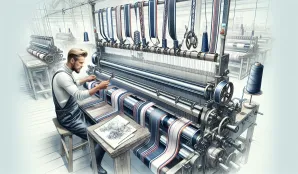
A bandweaver works with manufacturing bands, straps, and similar textile products in an industrial setting. The tasks include monitoring, adjusting, and maintaining weaving machines, as well as ensuring that production meets quality standards. The work often involves shift work and collaboration with other machine operators within the textile industry. The work environment is typically factory-like, with high noise levels and periods of intense pace. Precision, technical understanding, and good teamwork skills are important qualities for success as a bandweaver.
Salary development over time
The salary for bandweavers has steadily increased over the past three years. In 2022, the average salary was 27,700 SEK per month, which increased to 30 400 SEK in 2023. During 2024, the average salary continued upward to 32 200 SEK. This corresponds to an increase of approximately 9.8% over the three-year period. The salary increase can partly be explained by a higher demand for specialized machine operators in the textile industry and general industry wage adjustments. Despite this positive trend, salary development remains relatively steady, without major peaks or dips, indicating a stable but slow improvement for the profession.
Bandvävare salary – comprehensive overview
- Average salary: 32 200 SEK/month
- Lowest salary: 29,400 SEK/month (female, private sector, high school education 3 years)
- Highest salary: 32,200 SEK/month (male, regional sector, high school education up to 2 years)
- Hourly wage: 183 SEK/hour
- Women: 31 300 SEK/month (94% of men's salary)
- Men: 33 200 SEK/month
- Regional differences: Highest salaries are found in regional sectors, lowest in private sector
Education and qualifications
Bandweavers are most often recruited from high school industrial technical programs or equivalent education with a focus on textile production. Practical experience in the textile industry is often advantageous and sometimes a requirement. Further education in mechanical engineering or automation can provide advantages in the job market and open up more advanced tasks.
- High school education: Industrial technical program with a focus on textiles (3 years)
- Internship: Workplace-based learning during education is recommended
- Courses: Machine handling, maintenance, textile knowledge
- Prerequisites: Basic eligibility from compulsory school
- Certification: Not formally required but may be present at some workplaces
Many bandweavers get the opportunity to work with advanced machinery and automation, making the profession particularly interesting for those who enjoy technical challenges and problem-solving. Continuous development of machinery means curiosity and willingness to learn new skills are valuable traits.
Common benefits and compensations
Bandweavers are often covered by collective agreements, which include occupational pension, insurances, and overtime pay. Many employers also offer wellness contributions and opportunities for skills development, especially in machinery technology and safety.
Competition and challenges
The job market for bandweavers is relatively small and specialized. Competition for positions can vary depending on region and economic conditions, but the number of available jobs within the profession is limited. Digitalization and automation of production increase demands for technical competence and flexibility. At the same time, the industry needs both experienced operators and younger talents with knowledge of modern machinery systems. Staying updated with new technology and being prepared for changes are crucial for long-term success in the profession.
Tips for those who want to become a Bandvävare
To succeed as a bandweaver, it is good to combine technical interest with accuracy and a willingness to learn new skills. Patience and perseverance help when monitoring and fine-tuning machines, and problem-solving skills are often required when unexpected technical issues arise. It is wise to seek internships within the textile industry during training to quickly understand industry requirements and work environment. Being communicative and collaborative facilitates teamwork with colleagues and technicians. Engagement and a positive attitude towards change also provide good opportunities for development within the profession and taking on new challenges.
Key facts about Bandvävare
- Education level: High school education with a focus on industry/textiles
- Typical work form: Shift work in a factory environment
- Demand: 1,437 available jobs within the profession
- Special skills: Machine handling and textile production
Career paths and future prospects
After three to five years as a bandweaver, there are opportunities to advance to supervisory roles, such as team leader or production manager. Some choose to further their education in automation, quality control, or maintenance technology to broaden their skills and undertake more qualified tasks. The future outlook for the industry is somewhat uncertain, as the Employment Service lacks specific forecasts for the profession due to limited data. However, within the entire group of machine operators in the textile, leather, and hide industry, there are reported 1,437 available jobs, indicating some demand. For those who are flexible and willing to further their education, career opportunities can remain good in the future.
Common questions about Bandvävare
- What does a Bandvävare earn?
- A bandweaver has an average salary of 32 200 SEK per month. - What are the gender differences in salaries for Bandvävare?
- Men earn an average of 33 200 SEK and women 31 300 SEK, which means women earn approximately 94% of men's salaries. - What education is required to become a Bandvävare?
- High school education, usually industrial technical programs with a focus on textiles, is most common. - What is the work environment like for a Bandvävare?
- The work environment is factory-like, often with shift work and periods of high tempo. - Are there many job opportunities for Bandvävare?
- There are 1,437 available jobs within the textile, leather, and hide industry machine operator group. - How has the salary for Bandvävare developed in recent years?
- The average salary has increased from 27,700 SEK (2022) to 32 200 SEK (2024). - What are the most common benefits?
- Occupational pension, insurances, overtime pay, and sometimes wellness contributions.

Salary distributed by age and sector
| Age | Base salary | Monthly salary | |
|---|---|---|---|
| 25-34 | 29100 kr | 31500 kr | |
| 35-44 | 95% | 29900 kr | 31800 kr |
| 45-54 | 92% | 30900 kr | 32600 kr |
| 55-64 | 93% | 31200 kr | 33000 kr |
| Snitt | 94% | 30300 kr | 32200 kr |
| Age | Base salary | Monthly salary | |
|---|---|---|---|
| 25-34 | 29100 kr | 31500 kr | |
| 35-44 | 95% | 29900 kr | 31800 kr |
| 45-54 | 92% | 30900 kr | 32600 kr |
| 55-64 | 93% | 31200 kr | 33000 kr |
| Snitt | 94% | 30300 kr | 32200 kr |
| Age | Base salary | Monthly salary | |
|---|---|---|---|
| 25-34 | 29100 kr | 31500 kr | |
| 35-44 | 95% | 29900 kr | 31800 kr |
| 45-54 | 92% | 30900 kr | 32600 kr |
| 55-64 | 93% | 31200 kr | 33000 kr |
| Snitt | 94% | 30300 kr | 32200 kr |
| Age | Base salary | Monthly salary | |
|---|---|---|---|
| 25-34 | 29600 kr | 32500 kr | |
| 35-44 | 95% | 29800 kr | 32500 kr |
| 45-54 | 92% | 31800 kr | 34000 kr |
| 55-64 | 93% | 31700 kr | 34500 kr |
| Snitt | 94% | 30500 kr | 33200 kr |
| Age | Base salary | Monthly salary | |
|---|---|---|---|
| 25-34 | 29600 kr | 32500 kr | |
| 35-44 | 95% | 29800 kr | 32500 kr |
| 45-54 | 92% | 31800 kr | 34000 kr |
| 55-64 | 93% | 31700 kr | 34500 kr |
| Snitt | 94% | 30500 kr | 33200 kr |
| Age | Base salary | Monthly salary | |
|---|---|---|---|
| 25-34 | 29600 kr | 32500 kr | |
| 35-44 | 95% | 29800 kr | 32500 kr |
| 45-54 | 92% | 31800 kr | 34000 kr |
| 55-64 | 93% | 31700 kr | 34500 kr |
| Snitt | 94% | 30500 kr | 33200 kr |
| Age | Base salary | Monthly salary | |
|---|---|---|---|
| 35-44 | 95% | 30000 kr | 30900 kr |
| 45-54 | 92% | 30200 kr | 31400 kr |
| 55-64 | 93% | 30900 kr | 32000 kr |
| Snitt | 94% | 30000 kr | 31300 kr |
| Age | Base salary | Monthly salary | |
|---|---|---|---|
| 35-44 | 95% | 30000 kr | 30900 kr |
| 45-54 | 92% | 30200 kr | 31400 kr |
| 55-64 | 93% | 30900 kr | 32000 kr |
| Snitt | 94% | 30000 kr | 31300 kr |
| Age | Base salary | Monthly salary | |
|---|---|---|---|
| 35-44 | 95% | 30000 kr | 30900 kr |
| 45-54 | 92% | 30200 kr | 31400 kr |
| 55-64 | 93% | 30900 kr | 32000 kr |
| Snitt | 94% | 30000 kr | 31300 kr |

About the data
All information displayed on this page is based on data from the Swedish Central Bureau of Statistics (SCB), the Swedish Tax Agency and the Swedish employment agency. Learn more about our data and data sources here.
All figures are gross salaries, meaning salaries before tax. The average salary, or mean salary, is calculated by adding up the total salary for all individuals within the profession and dividing it by the number of individuals. For specific job categories, we have also considered various criteria such as experience and education.
Profession Band weavers has the SSYK code 8159, which we use to match against the SCB database to obtain the latest salary statistics.
-

Machine Operator at Nordifa in Halmstad
Other machine operators, textile, leather and leather industry
Wed, 8 Jul 2026 - 06:22 -

Industrial Seamstress for Germa in Kristianstad
Other machine operators, textile, leather and leather industry
Tue, 7 Jul 2026 - 21:42 -

Sewer/Seamstress for NHC in Umeå
Other machine operators, textile, leather and leather industry
Mon, 6 Jul 2026 - 21:26 -
Sewer/Seamstress for NHC in Timrå
Other machine operators, textile, leather and leather industry
Mon, 6 Jul 2026 - 17:06 -
Process Operator at TreeToTextile – Develop the Next Generation of Sustainable Textile Fiber
Other machine operators, textile, leather and leather industry
Thu, 2 Jul 2026 - 00:37
Compare salary, work tasks and job outlook in adjacent occupations to find roles with similar skills or pay levels.
-

Average salary: 34 200 SEK/month • Industriell tillverkning
Machine operators, plastics industry
Compare with Band weavers
Tue, 14 Jul 2026 - 11:56 -

Average salary: 48 700 SEK/month • Industriell tillverkning
Process operators, stone crushing and ore processing
Compare with Band weavers
Tue, 14 Jul 2026 - 03:32 -

Steel engravers, print media salary
Average salary: 35 300 SEK/month • Industriell tillverkning
Prepress technicians
Compare with Band weavers
Tue, 14 Jul 2026 - 13:14 -

Average salary: 32 200 SEK/month • Industriell tillverkning
Other machine operators, textile, leather and leather industry
Compare with Band weavers
Mon, 13 Jul 2026 - 11:22 -

Average salary: 28 600 SEK/month • Industriell tillverkning
Machine operators, bleaching, dyeing and washing
Compare with Band weavers
Tue, 14 Jul 2026 - 13:55 -

Average salary: 33 800 SEK/month • Industriell tillverkning
Bookbinders etc.
Compare with Band weavers
Tue, 14 Jul 2026 - 13:55


