News and articles
- Home
- Articles






Latest posts

A dredging machine operator primarily handles and operates heavy machinery to remove sediment, clay, and other materials from the bottoms of harbors, waterways, channels, and lakes. The tasks often include controlling the dredging equipment, monitoring the dredging process, and maintaining the machines. The work is usually outdoors, often in shifts and under varying weather conditions. Safety awareness, technical understanding, and good multitasking skills are important qualities, as the environment can be demanding and the tasks complex.
Read more ->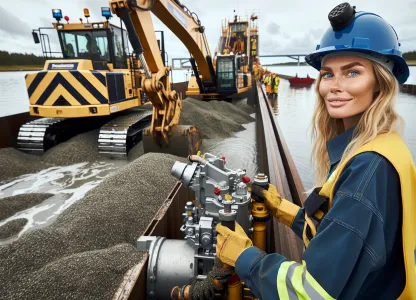
A dredger operator works with operating and managing dredging machines, which are used to remove sediment, clay, and other materials from the bottoms of harbors, waterways, and channels. Tasks include both controlling the machine and monitoring the dredging process, often in close collaboration with other machine operators and technicians on site. The environment is often outdoors and can be physically demanding and weather-dependent, especially since work is performed on or near water. Safety procedures are essential, as the machines are large and the work environment can be risky.
Read more ->-

Opinion Landscape: Novus February 2026 – Social Democrats Still Largest
Thu, 19 Feb 2026 - 01:35 -

Policy rate remains at 1.75% – Riksbank signals stability
Thu, 29 Jan 2026 - 14:02


A reception nurse primarily works at health centers, specialist clinics, or within primary care. Tasks include receiving patients, making medical assessments, collecting samples, and providing advice both in person and via phone. The role requires close collaboration with doctors, other nurses, and healthcare administrators. The environment is often fast-paced and involves daily contact with people of different ages and situations, demanding flexibility and good communication skills.
Read more ->
A reception nurse is responsible for assessing, treating, and following up with patients seeking care at clinics within primary or specialized healthcare. The work includes medical assessments, sample collection, counseling, and often a central role in patient flow, where coordination and communication with other professionals are crucial. The work environment is characterized by a fast pace, varied tasks, and significant patient responsibility, where both independent work and teamwork are important parts of daily life. Many reception nurses work during daytime hours, but some positions may involve evening or weekend work depending on the organization's needs.
Read more ->
Reception assistants mainly work within the healthcare and social care sector, supporting licensed staff with practical tasks at clinics and reception areas. Tasks vary but often include receiving patients, assisting with simple examinations, handling administrative duties, and ensuring waiting rooms and reception areas are orderly. Reception assistants contribute to a smooth patient flow and create a safe and welcoming environment for visitors. The work is usually daytime and involves close collaboration with nurses, doctors, and other healthcare staff.
Read more ->
A motorvagnsförare's primary task is to operate train vehicles for passenger or freight transport on the railway. The work involves responsibility for onboard safety, adhering to schedules, and following regulations. Continuous communication with traffic control and colleagues is a natural part of the workday. The work environment is characterized by shift work, which can include early mornings, late evenings, and weekends. Motorvagnsförare often work independently in the driver’s cab but collaborate closely with other staff to maintain punctuality and safety. The profession demands high attention, stress tolerance, and the ability to act quickly in unexpected situations.
Read more ->
A motorskötare on ships has the important responsibility of monitoring, operating, and maintaining the vessel's mechanical systems. Tasks include daily inspections of engines and auxiliary systems, troubleshooting, and repairing machinery. The motorskötare works closely with the crew in the engine room to ensure everything functions smoothly for a safe and efficient voyage. Work often involves shift work and periods at sea, requiring high technical competence and the ability to work under varying conditions.
Read more ->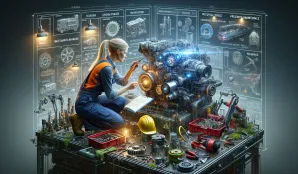
A machine motor repairer is responsible for maintaining, diagnosing, and repairing engines and related systems of heavy machinery. Tasks include identifying faults, replacing worn or broken parts, and servicing everything from industrial engines to construction and agricultural machinery. Work can take place both in workshops and on-site, where quick and efficient action is often needed to minimize downtime. The profession requires strong technical understanding, precision, and the ability to work independently and in teams. The work environment can be noisy and sometimes physically demanding, involving heavy lifting and working in confined spaces.
Read more ->
Vehicle motor repair technicians mainly work with servicing, diagnostics, and repairs of various types of motor vehicles – from passenger cars to light trucks and sometimes heavy vehicles. Tasks include identifying faults in engines, gearboxes, braking systems, and electronics, as well as performing both scheduled and emergency maintenance. Many times, work involves using diagnostic tools and computerized systems, especially in modern vehicle fleets. The work environment is often workshop-based, involving both physical labor and technically advanced tasks. Contact with customers and suppliers occurs, along with teamwork with colleagues.
Read more ->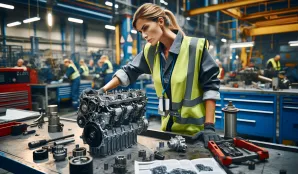
A motor tester primarily works with testing, inspecting, and evaluating engines at various development stages. Tasks include manual and computer-controlled tests of engine performance, emissions, and reliability. It is common for motor testers to work in test labs, workshops, or production environments where both physical and technical requirements are met. Precision and systematic problem-solving are key qualities, as the role often involves identifying faults and optimizing engine function. The work environment can range from clean lab settings to noisier workshops, sometimes involving shift work depending on the employer's needs.
Read more ->