News and articles
- Home
- Articles






Latest posts
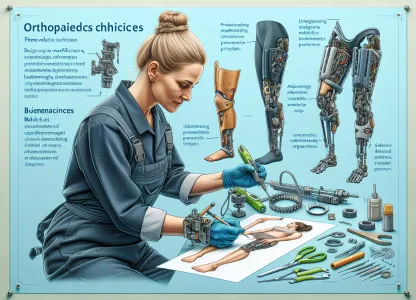
An orthopaedic technician works with developing, manufacturing, and customizing orthopaedic aids such as prostheses, orthoses, and other supports for individuals with disabilities or injuries. The profession involves close collaboration with patients, doctors, and physiotherapists to ensure that the aids are individually tailored and provide optimal function and comfort. Work is carried out both in workshop environments, where technical skill and precision are required, and in clinical settings where patient contact and advice are central parts of daily work. The work environment is often ergonomically designed but can involve physical tasks such as measuring, fitting, and adjusting aids on-site.
Read more ->
An orthopedic surgeon is a specialist doctor focused on diagnosing, treating, and operating injuries and diseases of the musculoskeletal system, which includes bones, joints, muscles, and tendons. Tasks often include patient assessments, surgical procedures, postoperative care, and rehabilitation, with close collaboration with other healthcare professionals such as physiotherapists and nurses. The position is mainly performed at hospitals and specialist clinics, where the pace can be high and the environment technically advanced. On-call and standby duties are common, especially in cases of acute injuries, demanding flexibility and stress resilience.
Read more ->-

Opinion Landscape: Novus February 2026 – Social Democrats Still Largest
Thu, 19 Feb 2026 - 01:35 -

Policy rate remains at 1.75% – Riksbank signals stability
Thu, 29 Jan 2026 - 14:02


An orthopaedic engineer works on developing, customizing, and manufacturing orthopaedic aids such as prostheses, orthoses, and other supportive products for people with disabilities or mobility impairments. Tasks include investigating and analyzing patients' needs, designing and adjusting aids, and following up on results together with the patient. The work is often carried out in close collaboration with doctors, physiotherapists, and other healthcare professionals, with the orthopaedic engineer playing a central role in the patient's rehabilitation process. The work environment is usually clinic-based but may also include workshop tasks and patient meetings at home or other healthcare facilities.
Read more ->
An orthopaedic assistant in manufacturing works with producing, customizing, and sometimes repairing orthopaedic aids such as prostheses, orthoses, and support bandages. The tasks involve creating products based on doctors' or orthopaedic engineers' instructions to support, correct, or replace body parts, thereby improving the patient's quality of life. The work is often carried out in a workshop environment with a mix of manual craftsmanship and machine processing of materials like plastic, metal, and textiles. The profession requires accuracy, a good eye for detail, and the ability to work ergonomically and hygienically, as the work sometimes involves patient contact during fittings or adjustments.
Read more ->
An orthopedist is a specialist doctor focusing on diagnosis, treatment, and rehabilitation of injuries and diseases of the musculoskeletal system – that is, bones, joints, muscles, and tendons. Tasks include everything from patient consultations and clinical examinations to advanced surgical procedures and follow-up care. Orthopedists often work at hospital orthopedic clinics, in operating rooms, outpatient clinics, and sometimes within primary care or private specialist clinics. The work environment is characterized by a fast pace, many urgent cases, and close collaboration with other medical professionals such as physiotherapists, anesthesiologists, and nurses.
Read more ->
An orthodontic dental assistant works with specialized dental care in orthodontics, often in collaboration with orthodontists and dentists. Tasks include assisting during treatments, preparing and sterilizing instruments, taking impressions, documenting patient data, and providing information and support to patients before and during treatment. The work is mainly carried out in specialist orthodontic clinics, where teamwork and patient contact are central. The environment is clinical and characterized by high demands on accuracy, hygiene, and service orientation.
Read more ->
An orthodontist works with diagnosing, preventing, and treating bite irregularities and orthodontic issues in both children and adults. The work often involves analyzing X-rays, developing individualized treatment plans, and monitoring patients over extended periods to adjust and oversee orthodontic appliances. Orthodontists collaborate closely with general dentists and other dental staff and typically work at specialist clinics within both public and private sectors. The work environment is characterized by precision, advanced technology, and patient-centered care where good communication is essential.
Read more ->
An Orthodontic Assistant works within dental care and specializes in assisting dentists and orthodontists with the treatment of orthodontic patients. Common tasks include preparing patients, assisting with the application and adjustment of braces, taking impressions and X-rays, and providing instructions on oral hygiene to patients with braces. The work environment is clinic-based, often in close collaboration with orthodontists, dental nurses, and other dental staff. The pace can be high, especially at larger clinics, and the job requires good communication skills and precision.
Read more ->
An ENT doctor, or specialist in ear, nose, and throat diseases (ENT), diagnoses and treats illnesses and injuries in the ears, nose, sinuses, oral cavity, throat, larynx, and neck. Tasks include outpatient care, surgical procedures, endoscopic examinations, hearing assessments, and collaboration with other specialists such as audiologists and speech therapists. The work primarily takes place at hospital ENT clinics, but also in specialist clinics or as a private practitioner. The environment is characterized by advanced medical technology, high precision requirements, and close cooperation with colleagues in multidisciplinary teams.
Read more ->
Ornithologists study birds, their behaviors, ecology, and populations. Tasks range from field studies and data collection in nature to laboratory work, analysis of collected material, and report writing. Many ornithologists work at universities, research institutes, government agencies, or non-profit organizations, contributing to environmental monitoring, conservation, and educational efforts. The work environment can vary greatly – some periods are spent outdoors in various weather conditions, while others involve analysis and administrative tasks in offices or laboratories.
Read more ->