Latest posts
Image that illustrates

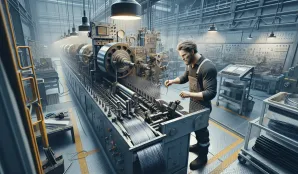
A paper dryer works in the process industry and is responsible for monitoring, controlling, and optimizing the drying process during paper manufacturing. The tasks mainly involve ensuring that the pulp is dried to the correct moisture content and quality, which is achieved with advanced machines and control systems. Safety and precision are central to the work, as the machines are often large and the process can be sensitive to deviations. The work environment is characterized by shift work, noise, and sometimes high temperatures, requiring both physical endurance and technical knowledge.

Read more ->
Image that illustrates

A topographer works with collecting, analyzing, and presenting geographic information about the Earth's surface. Tasks often include field measurements, processing data using advanced GIS tools, and creating maps and digital models. The work of a topographer is essential for urban planning, construction projects, environmental monitoring, and infrastructure development. The work environment varies between office work, where digital tools are used for analysis and visualization, and fieldwork, which may involve being in forests, on land, or in urban areas under different weather conditions.

Read more ->
Image that illustrates What does a composer do? – tasks and work environment
What does a composer do? – tasks and work environment

A composer creates and arranges musical works, often commissioned by orchestras, theaters, film and TV productions, or as an independent artist. Tasks include composing new pieces, editing and arranging music, collaborating with musicians, conductors, and producers, and participating in rehearsals and recordings. Many composers work as freelancers, which means their work environment varies—from home studios to professional recording studios and concert halls. Flexibility and project-based work are common, and workload can fluctuate depending on the season and assignments.

Read more ->
Image that illustrates What does a Tomato Picker do? – Tasks and Work Environment
What does a Tomato Picker do? – Tasks and Work Environment

Tomato pickers mainly work by hand harvesting tomatoes, often in greenhouse environments or outdoors. Tasks include identifying ripe tomatoes, carefully picking them to avoid damage, and sorting and packaging the harvest according to specific quality standards. A typical workday may also include some plant care, such as tying up vines or removing leaves. The work environment is characterized by physical activity, often in warm and humid conditions, and work is frequently performed in teams where cooperation and pace are crucial. Seasonal employment and varying working hours depending on the harvest period and weather conditions are common.

Read more ->
Image that illustrates What does a TOM (Technical Operation Manager) do – tasks and work environment
What does a TOM (Technical Operation Manager) do – tasks and work environment

A TOM (Technical Operation Manager) is responsible for leading, planning, and overseeing technical operations within broadcasting and image technology. The role often involves ensuring that all technical equipment functions optimally during live broadcasts, event productions, or in studio-based environments. Tasks include coordinating technical teams, troubleshooting on-site, monitoring broadcast chains, and implementing new technical solutions to improve production. The work environment is typically dynamic and can vary between office-based workplaces, studios, and sometimes on-site during live broadcasts or major events. Flexibility and the ability to act quickly during technical disruptions are central qualities in this profession.

Read more ->
Image that illustrates What does a healthcare interpreter do? – Tasks and work environment
What does a healthcare interpreter do? – Tasks and work environment

A healthcare interpreter plays a central role in meetings between patients and healthcare staff where language and cultural barriers can affect the quality of care. The tasks include translating conversations during medical examinations, treatments, diagnoses, and follow-ups, both orally and sometimes in writing. Interpretation often occurs in real-time and requires accuracy, neutrality, and the ability to handle sensitive conversations. The work environment varies: some interpreters work on-site in hospitals, clinics, or healthcare centers, while others work remotely via phone or video link. The profession often involves quick shifts between different situations and patient groups, demanding flexibility and stress resilience.

Read more ->
Image that illustrates What does an interpreter in the justice system do? – Tasks and working environment
What does an interpreter in the justice system do? – Tasks and working environment

An interpreter in the justice system primarily facilitates accurate communication between individuals who do not speak the same language in legal contexts. This often involves interpreting orally during court proceedings, police interrogations, immigration cases, and other official contacts. The work environment is usually formal and can be mentally and cognitively demanding, as high demands are placed on accuracy, impartiality, and concentration. Many interpreters work as freelancers or on assignment, which can entail varying working hours and locations, from courts to detention centers and government agencies.

Read more ->
Image that illustrates What does an interpreter do? – Tasks and work environment
What does an interpreter do? – Tasks and work environment

An interpreter's main task is to facilitate communication between people who do not speak the same language. The work can vary greatly depending on whether it involves interpretation in legal contexts, healthcare, government contacts, or business meetings. Interpretation can be consecutive, where the interpreter speaks after the speaker has finished, or simultaneous, where the interpretation occurs concurrently with the conversation. The work requires high concentration, accuracy, and strong language skills. Many interpreters work as freelancers and may have diverse work environments, from digital meetings and phone calls to physical meetings at authorities, courts, or hospitals.

Read more ->
Image that illustrates What does a contact interpreter do? – Tasks and work environment
What does a contact interpreter do? – Tasks and work environment

A contact interpreter works to facilitate communication between individuals speaking different languages, often in situations where accurate understanding is crucial. Tasks include real-time oral translation during meetings, government contacts, medical visits, and legal settings. The interpreter’s role requires high linguistic precision, neutrality, and quickness to convey messages without adding or removing information. The work environment varies depending on the client and situation – from public institutions and private companies to digital meetings and phone calls. Interpreters often work independently and collaboratively with other professionals, which demands high integrity and flexibility.

Read more ->
Image that illustrates What does a conference interpreter do? – Tasks and working environment
What does a conference interpreter do? – Tasks and working environment

A conference interpreter works by translating spoken language between different languages during meetings, conferences, international seminars, and negotiations. Tasks include simultaneous interpreting, where speech is translated in real-time, or consecutive interpreting, where the speaker pauses to allow for translation. The work often takes place in soundproof interpreting booths with technical equipment, but also on-site in meeting rooms. The work environment is characterized by a high tempo, demands for concentration and accuracy, and the need to quickly familiarize oneself with new subject areas and terminology.

Read more ->