- Salary statistics
- Welders, grooves salary
Welders, grooves salary
Latest available salary statistics are for 2025. Compare average pay, salary range and related job listings.
33 900 - 41 500 SEK / month
Women earn 93% of what men do.
Industriell tillverkning
Related tools
Salary progression Welders, grooves
What does a track welder do – tasks and work environment
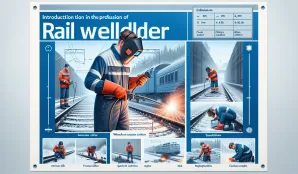
A track welder primarily works on joining and repairing rails and railway tracks through welding. Tasks include preparing welding surfaces, inspecting materials, performing the welding process, and conducting post-inspections to ensure the tracks meet quality and safety standards. The work often takes place outdoors under varying weather conditions and sometimes at inconvenient hours, as railway maintenance is often performed when traffic is low. The work environment can be physically demanding and requires high safety standards, precision, and good teamwork skills.
Salary development over time
The salary for a track welder has shown a steady increase in recent years. In 2022, the average salary was 32,600 SEK per month, rising to 35 900 SEK in 2023 and further to 36 800 SEK in 2024. This represents a total increase of approximately 10.1% over three years. This salary growth reflects an increased demand for qualified welders in the railway sector, as employers compete for workers with the right certifications and experience. Despite good employment opportunities, specialization remains important as technical requirements and safety standards are raised, positively affecting salary levels for competent professionals.
Track welder salary – comprehensive overview
- Average salary: 36 800 SEK/month
- Lowest salary: 32,500 SEK/month (men), 32,800 SEK/month (women)
- Highest salary: 38,200 SEK/month (men), 33,200 SEK/month (women)
- Hourly wage: 216 SEK/hour (average)
- Gender differences: Women earn 93% of what men do
- Regional differences: No specific regional data available
Education and qualifications
To work as a track welder, a secondary vocational education in industrial technology with a focus on welding is usually required, supplemented with specialized courses in track welding. Many employers also require certifications and practical experience in railway welding environments. The educational path may vary depending on the employer and track technology, and some workplaces offer internal trainee programs to ensure the right skill level.
- High school education: Industrial technology program, approximately 3 years
- Specialized courses: Track welding, certification according to industry standards
- Internship: Often required work-based internship or trainee program
- Certifications: Welding tests according to SS-EN ISO 9606-1 or equivalent
- Prerequisites: Good physical condition, technical interest, and safety awareness
A track welder often works under time pressure when railway sections are to be reopened for traffic. Unexpected challenges, such as weather changes or technical faults, require great flexibility and problem-solving skills. It is common to work in teams where clear communication and precision are crucial for both safety and quality.
Common benefits and compensations
Track welders often receive benefits such as overtime pay for evening and night work, extra compensation during on-call and standby duties, as well as various wellness contributions. Personal protective equipment and work clothing are provided by the employer, and some companies also offer skill development or further training in welding and safety.
Competition and challenges
The profession as a track welder is characterized by paradoxical conditions: despite high recruitment difficulties, there are simultaneously many unemployed within the profession. However, demand is expected to remain high and stable over the next five years, according to the Employment Service's forecast. The main challenges involve matching the right skills with employer requirements for certification, experience, and flexibility. Technical changes and increased safety demands make continuous further training increasingly important to maintain competitiveness in the job market.
Tips for those who want to become a track welder
To succeed as a track welder, it is good to combine technical interest with a careful and safety-conscious attitude. Being flexible and able to quickly adapt to new tasks or changing conditions is a major advantage, especially since work may occur in varying weather and at different times of the day. Good teamwork skills are important, as tasks are often performed in teams where communication and coordination are crucial for safety. Early pursuit of internships and obtaining certifications in welding give an advantage in the job market. A strong personal drive and sense of responsibility help to take initiative and quickly solve problems that may arise during work. Staying updated on new techniques and safety routines is also valuable for long-term development in the profession.
Key facts about track welders
- Average salary: 36 800 SEK/month
- Salary range: 32,500–38,200 SEK/month
- Gender difference: Women earn 93% of men's salaries
- Education: High school + certification
- Demand: Great opportunities for employment according to the Employment Service
Career paths and future outlook
After three to five years in the profession, there are good opportunities to advance to roles such as site supervisor, welding instructor, or quality manager within railway maintenance. Some choose to specialize further in advanced welding methods or take on training responsibilities for new colleagues. The forecast from the Employment Service indicates that demand for welders and gas cutters, including those working with tracks, will remain high and unchanged over five years. This means stable future prospects, although matching the right skills with employer requirements continues to be a challenge. A total of 1,437 job openings were recorded in the latest survey, signaling a continued strong job market.
Frequently asked questions about track welders
- What does a track welder earn?
- The average salary is 36 800 SEK per month, with a range between 32,500–38,200 SEK depending on experience, sector, and gender. - What education is required to become a track welder?
- A secondary industrial technical education with a focus on welding, supplemented with certification in track welding. - What is the work environment like for a track welder?
- The work is mostly outdoors, sometimes at inconvenient hours, requiring high safety standards and teamwork. - Are there salary differences between men and women?
- Yes, women earn on average 93% of what men do in the profession. - What are the future prospects for the profession?
- Demand is expected to remain high and stable over the next five years, according to the Employment Service. - What benefits are common for track welders?
- Common benefits include overtime pay, wellness contributions, personal protective equipment, and sometimes skill development. - How many job openings are there in the profession?
- As of the latest measurement, there are 1,437 job openings in the welding and gas cutting profession.

Salary distributed by age and sector
| Age | Base salary | Monthly salary | |
|---|---|---|---|
| 18-24 | 31100 kr | 32300 kr | |
| 25-34 | 88% | 34800 kr | 36600 kr |
| 35-44 | 36100 kr | 37400 kr | |
| 45-54 | 36700 kr | 38000 kr | |
| 55-64 | 36400 kr | 37700 kr | |
| Snitt | 93% | 35400 kr | 36800 kr |
| Age | Base salary | Monthly salary | |
|---|---|---|---|
| 55-64 | 33800 kr | 34200 kr | |
| Snitt | 33700 kr | 33900 kr |
| Age | Base salary | Monthly salary | |
|---|---|---|---|
| 55-64 | 33800 kr | 34200 kr | |
| Snitt | 33700 kr | 33900 kr |
| Age | Base salary | Monthly salary | |
|---|---|---|---|
| 18-24 | 31100 kr | 32300 kr | |
| 25-34 | 88% | 34800 kr | 36600 kr |
| 35-44 | 36100 kr | 37400 kr | |
| 45-54 | 36700 kr | 38000 kr | |
| 55-64 | 36400 kr | 37700 kr | |
| Snitt | 93% | 35400 kr | 36800 kr |
| Age | Base salary | Monthly salary | |
|---|---|---|---|
| 18-24 | 31100 kr | 32300 kr | |
| 25-34 | 88% | 34800 kr | 36600 kr |
| 35-44 | 36100 kr | 37400 kr | |
| 45-54 | 36700 kr | 38000 kr | |
| 55-64 | 36400 kr | 37700 kr | |
| Snitt | 93% | 35400 kr | 36800 kr |
| Age | Base salary | Monthly salary | |
|---|---|---|---|
| 18-24 | 31000 kr | 32100 kr | |
| 25-34 | 88% | 35300 kr | 37100 kr |
| 35-44 | 36100 kr | 37500 kr | |
| 45-54 | 36700 kr | 38100 kr | |
| 55-64 | 36400 kr | 37800 kr | |
| Snitt | 93% | 35500 kr | 36900 kr |
| Age | Base salary | Monthly salary | |
|---|---|---|---|
| 55-64 | 33800 kr | 34200 kr | |
| Snitt | 33700 kr | 33900 kr |
| Age | Base salary | Monthly salary | |
|---|---|---|---|
| 55-64 | 33800 kr | 34200 kr | |
| Snitt | 33700 kr | 33900 kr |
| Age | Base salary | Monthly salary | |
|---|---|---|---|
| 18-24 | 31000 kr | 32100 kr | |
| 25-34 | 88% | 35300 kr | 37100 kr |
| 35-44 | 36100 kr | 37500 kr | |
| 45-54 | 36700 kr | 38100 kr | |
| 55-64 | 36400 kr | 37800 kr | |
| Snitt | 93% | 35500 kr | 36900 kr |
| Age | Base salary | Monthly salary | |
|---|---|---|---|
| 18-24 | 31000 kr | 32100 kr | |
| 25-34 | 88% | 35300 kr | 37100 kr |
| 35-44 | 36100 kr | 37500 kr | |
| 45-54 | 36700 kr | 38100 kr | |
| 55-64 | 36400 kr | 37800 kr | |
| Snitt | 93% | 35500 kr | 36900 kr |
| Age | Base salary | Monthly salary | |
|---|---|---|---|
| 25-34 | 88% | 32000 kr | 32800 kr |
| Snitt | 93% | 33300 kr | 34300 kr |
| Age | Base salary | Monthly salary | |
|---|---|---|---|
| 25-34 | 88% | 32000 kr | 32800 kr |
| Snitt | 93% | 33300 kr | 34300 kr |
| Age | Base salary | Monthly salary | |
|---|---|---|---|
| 25-34 | 88% | 32000 kr | 32800 kr |
| Snitt | 93% | 33300 kr | 34300 kr |

About the data
All information displayed on this page is based on data from the Swedish Central Bureau of Statistics (SCB), the Swedish Tax Agency and the Swedish employment agency. Learn more about our data and data sources here.
All figures are gross salaries, meaning salaries before tax. The average salary, or mean salary, is calculated by adding up the total salary for all individuals within the profession and dividing it by the number of individuals. For specific job categories, we have also considered various criteria such as experience and education.
Profession Welders, grooves has the SSYK code 7212, which we use to match against the SCB database to obtain the latest salary statistics.
-

TIG Welder for Varied Production with Focus on Quality
Welders and gas cutters
Mon, 13 Jul 2026 - 20:43




Compare salary, work tasks and job outlook in adjacent occupations to find roles with similar skills or pay levels.
-
Average salary: 33 700 SEK/month • Industriell tillverkning
Other machine operators, food industry etc.
Compare with Welders, grooves
Tue, 14 Jul 2026 - 11:56 -

Average salary: 37 800 SEK/month • Industriell tillverkning
Machine operators, cement, stone and concrete products
Compare with Welders, grooves
Mon, 13 Jul 2026 - 10:26 -

Average salary: 42 500 SEK/month • Industriell tillverkning
Process operators, paper
Compare with Welders, grooves
Tue, 14 Jul 2026 - 08:16 -
Wallpaper roller engravers salary
Average salary: 35 300 SEK/month • Industriell tillverkning
Prepress technicians
Compare with Welders, grooves
Tue, 14 Jul 2026 - 11:05 -

Average salary: 36 900 SEK/month • Industriell tillverkning
Other process and machine operators
Compare with Welders, grooves
Tue, 14 Jul 2026 - 13:04 -

Hasplare, textile industry salary
Average salary: 32 200 SEK/month • Industriell tillverkning
Other machine operators, textile, leather and leather industry
Compare with Welders, grooves
Tue, 14 Jul 2026 - 11:54


