- Salary statistics
- Seamstress, car upholstery salary
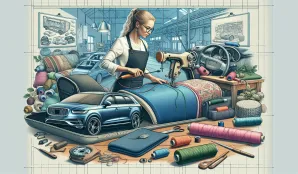
Seamstress, car upholstery salary
Latest available salary statistics are for 2025. Compare average pay, salary range and related job listings.
33 327 - 32 802 SEK / month
Hantverksyrken
Related tools
Salary progression Seamstress, car upholstery
What does a tailor within car upholstery do? – Tasks and work environment
A tailor within car upholstery primarily works with sewing, repairing, and assembling upholstery for vehicle interiors. Tasks include cutting fabric or leather, sewing upholstery parts, and installing them on car seats, door panels, and other interior details. The profession requires precision, attention to detail, and a good understanding of material properties. The work environment often consists of workshops or specialized car trimming firms, involving both manual and machine work. The pace can vary depending on orders and season, and the work often involves both independent and collaborative tasks.
Wage development over time
The salary for a tailor within car upholstery has shown a very slow but steady increase over the past three years. In 2022, the average salary was 30,698 SEK per month, rising slightly the following year to 31 077 SEK. In 2024, the average salary has increased further to 32 802 SEK, representing a total increase of about 1.2% over three years. The slow wage growth reflects a market where demand is relatively stable but opportunities for larger increases are limited. The industry's specialization and limited access to trained personnel may, in the long run, lead to higher salary demands, especially if demand for handcrafted or customized car interiors increases.
Salary overview for tailors within car upholstery
- Average salary: 32 802 SEK/month
- Lowest/Highest salary: Data unavailable, but the average provides guidance
- Hourly wage: 187 SEK/hour (based on 166 working hours/month)
- Gender differences: Specific data unavailable
- Regional differences: No detailed statistics available
Education and qualifications
To work as a tailor specializing in car upholstery, a combination of formal education and practical experience is usually required. Many employers seek training in textiles, sewing, or crafts, complemented by internships in the automotive industry. Specialized courses or internal training programs are common, and professional skills are often built through mentoring or apprenticeship programs. Self-study and an interest in materials and techniques are often crucial for development in the profession.
- Vocational training in textiles, sewing, or crafts: Typically 1–3 years
- Specialized courses in automotive interior: Can be offered internally or through industry colleges
- Internships or apprenticeships: Provide valuable experience and industry contacts
- Prerequisites: Basic sewing skills and material knowledge
- Self-study/online learning: Self-education on new materials and techniques is recommended
Many tailors within car upholstery get the opportunity to work on unique orders for classic cars and special builds. This not only adds variety to the workday but also allows the development of craftsmanship and creative problem-solving when meeting unusual materials and design requirements.
Common benefits and compensations
Tailors within car upholstery are often offered benefits such as wellness allowances, work clothing, and opportunities for further training within the company. Some employers also provide staff discounts on materials or car-related products. Overtime pay and collective agreements are common, providing security and stability in employment.
Competition and challenges
The competition within the profession of tailors specializing in car upholstery is moderate but influenced by the overall demand for customized car interiors and the limited number of trained tailors. Growing interest in restoring vintage cars and luxury vehicles may increase the need for qualified labor. At the same time, automation and cheaper mass-produced solutions from abroad pose challenges for traditional craft professions. Staying updated on new materials and techniques is crucial to remain competitive. Profitability can also vary depending on economic conditions and industry development.
Tips for those wanting to become a tailor within car upholstery
To succeed as a tailor within car upholstery, it is important to combine precision with a strong sense of form and function. A genuine curiosity about different materials and a willingness to try new techniques are essential, as the industry is constantly evolving. Flexibility and a solution-oriented mindset help when facing unexpected challenges, especially with custom orders. Good teamwork skills enable effective collaboration, while independence and responsibility are needed to drive projects to completion. Building networks within the industry and taking advantage of internship opportunities can open doors to more advanced or specialized roles over time. Finally, patience and perseverance are key, as each project may require many hours of meticulous craftsmanship.
Key facts about Tailors, car upholstery
- Education level: Vocational training in textiles or sewing (1–3 years)
- Work environment: Workshop or specialized car trimming company
- Work form: Often full-time, sometimes project-based
- Demand: 341 available jobs within the profession
- Special skills: Material knowledge and technical problem-solving
Career paths and future prospects
After 3–5 years in the profession, a tailor within car upholstery can advance to more specialized roles, such as supervisor, trainer for new employees, or expert in unique materials and techniques. Some choose to start their own business focusing on restoring vintage cars or luxury interiors, while others move into related fields such as textiles, design, or product development. According to employment forecasts, no specific assessment is made for this niche, but with 341 available jobs, there is some demand. The future will be influenced by trends in the automotive industry, sustainability interests, exclusive interior design, and technological developments in materials and sewing.
Frequently asked questions about Tailors, car upholstery
- What does a tailor within car upholstery earn?
- The average salary is 32 802 SEK per month and the hourly wage is 187 SEK. - Is education required to work as a tailor within car upholstery?
- Yes, vocational training in textiles/sewing and practical experience are common requirements. - What does the work environment look like?
- The work mainly takes place in workshops or specialized car trimming firms, involving manual and machine tasks. - Are there many job opportunities in the profession?
- There are 341 available jobs within the profession of tailors. - What benefits are common?
- Common benefits include wellness allowances, work clothing, and collective agreements. - What are the future prospects?
- No exact forecast exists, but demand is influenced by the automotive industry and custom orders. - Can one develop within the profession?
- Yes, there are opportunities for specialization, supervisory roles, or entrepreneurship.

Salary distributed by age and sector

About the data
All information displayed on this page is based on data from the Swedish Central Bureau of Statistics (SCB), the Swedish Tax Agency and the Swedish employment agency. Learn more about our data and data sources here.
All figures are gross salaries, meaning salaries before tax. The average salary, or mean salary, is calculated by adding up the total salary for all individuals within the profession and dividing it by the number of individuals. For specific job categories, we have also considered various criteria such as experience and education.
Profession Seamstress, car upholstery has the SSYK code 7532, which we use to match against the SCB database to obtain the latest salary statistics.
Compare salary, work tasks and job outlook in adjacent occupations to find roles with similar skills or pay levels.
-
Upholsterer, seamstress salary
Average salary: 32 200 SEK/month • Hantverksyrken
Upholsterers
Compare with Seamstress, car upholstery
Mon, 13 Jul 2026 - 19:41 -

Average salary: 40 900 SEK/month • Hantverksyrken
Precision mechanics
Compare with Seamstress, car upholstery
Mon, 13 Jul 2026 - 13:51 -

Average salary: 34 200 SEK/month • Hantverksyrken
Fine, interior and furniture carpenters
Compare with Seamstress, car upholstery
Wed, 8 Jul 2026 - 18:06 -

Average salary: 34 000 SEK/month • Hantverksyrken
Musical instrument makers and other artisans
Compare with Seamstress, car upholstery
Tue, 14 Jul 2026 - 07:11 -

Average salary: 38 800 SEK/month • Hantverksyrken
Blacksmiths
Compare with Seamstress, car upholstery
Tue, 14 Jul 2026 - 07:13 -

Average salary: 34 000 SEK/month • Hantverksyrken
Musical instrument makers and other artisans
Compare with Seamstress, car upholstery
Tue, 14 Jul 2026 - 07:16


