- Salary statistics
- Carriage maker salary
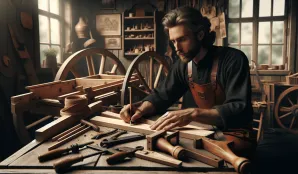
Carriage maker salary
Latest available salary statistics are for 2025. Compare average pay, salary range and related job listings.
34 100 - 34 200 SEK / month
Hantverksyrken
Related tools
Salary progression Carriage maker
What does a cart maker do? – Tasks and work environment
A cart maker traditionally works with manufacturing, restoring, and maintaining horse-drawn carriages, carts, and other wooden vehicles. The profession requires extensive knowledge of woodworking, metalworking, and sometimes leatherwork, as many vehicles incorporate these materials. Tasks can range from building new carts based on historical models to restoring antique vehicles for museums or private collectors. Many cart makers operate in small workshops or craft environments, often working by hand with traditional tools. The work environment can be physically demanding, especially when handling large pieces of wood, but also offers a unique opportunity for creativity and detailed craftsmanship.
Salary development over time
The salary development for cart makers has experienced some fluctuations over the past three years. In 2022, the average salary was 30,400 SEK per month. In 2023, the salary increased to 32 300 SEK, corresponding to an approximate 8% increase. The following year, 2024, the average salary slightly decreased to 34 200 SEK, a reduction of about 2% compared to the previous year. These variations may be due to changes in demand, availability of specialized craftsmen, and wage negotiations within the profession. Despite being a niche and smaller profession, the salary levels have remained relatively stable, although the market does not show strong growth. The salary development is also influenced by the overall wage structure within fine carpentry, interior and furniture carpentry, where cart makers are included.
Cart maker salary – comprehensive overview
- Average salary: 34 200 SEK/month
- Lowest salary: 30,400 SEK/month (2022 level)
- Highest salary: 32 300 SEK/month (2023 level)
- Hourly wage: 194 SEK
- Gender differences: Only salary data for men is available (34 200 SEK); information about women is missing
- Regional differences: Specific regional salary differences are not available, but demand and salary levels may vary depending on local needs for craftsmen
Education and qualifications
To work as a cart maker, a broad craft education is required, often within carpentry or fine, interior, and furniture carpentry. Specialization in cart making usually occurs through practical training or apprenticeship, as there are few formal education programs directly aimed at the profession. Experience with traditional techniques and materials is essential, and many cart makers supplement their education with courses in restoration or historical crafts. Knowledge of wood and metalworking is particularly valuable.
- Basic education: Vocational high school education with a focus on carpentry (3 years)
- Specialized courses: Short courses or workshops in cart making and restoration
- Practical training/apprenticeship: Hands-on experience under the supervision of an experienced cart maker
- Prerequisites: Skills in wood and metalworking
- Tips: Engagement in cultural heritage projects or museum work can provide valuable experience
A cart maker is one of the few craft professions where knowledge is passed down through the master-apprentice tradition, and many workshops still use tools and methods unchanged since the 1800s. Mastering both historical techniques and modern materials allows you to help preserve an important cultural heritage.
Common benefits and compensations
Cart makers are often offered benefits such as flexible working hours, opportunities for further education in crafts and restoration, and access to specialized tools and materials. In some cases, employers may also provide wellness allowances and insurance. For those running their own businesses, there is also potential for project-based work and collaborations with museums and cultural institutions.
Competitions and challenges
Competition within cart making is limited but particularly noticeable due to the small number of practitioners. Overall demand for cart makers is low, and the job market is characterized by an oversupply of trained craftsmen within the profession. Many cart makers need to combine their craft with other types of carpentry or specialized assignments to ensure a stable income. The main challenges are finding enough assignments, especially since restoration projects are often seasonal and dependent on external funding sources. Additionally, technological developments and changing material choices require continuous further training to remain competitive.
Tips for those who want to become a cart maker
To succeed as a cart maker, patience and precision are important, as the work often requires great attention to detail. A genuine interest in historical crafts and cultural heritage makes it easier to learn traditional techniques and materials. Being flexible and creative is an advantage, especially since each project can be unique and require custom solutions. It is also important to be persistent, as the path to becoming a skilled cart maker is often long and involves practical experience and further education. Good collaboration skills and a willingness to learn from experienced colleagues open doors to apprenticeships and networks. Finally, having a business sense is valuable, as many cart makers run their own companies or work on a project basis.
Key facts about Cart Makers
- Education level: Vocational high school education with specialization
- Work environment: Workshop setting, often small teams or self-employment
- Work form: Project-based or assignment-based, sometimes seasonal
- Demand: Small, with a national surplus of craftsmen within the profession
- Special skills: Wood and metalworking, restoration techniques
Career paths and future prospects
After three to five years as a cart maker, there are opportunities to further specialize in restoring cultural heritage objects or to start your own business. Experienced cart makers can also work as consultants for museums, cultural projects, or educational initiatives within traditional crafts. According to the Swedish Public Employment Service's forecast for fine, interior, and furniture carpenters, including cart makers, the job market is expected to be stable but with limited new job opportunities and a slight surplus of trained workers. Demand is expected to remain unchanged over the next five years, meaning competition for assignments will likely stay high. However, there are currently 341 job openings nationwide in the profession, indicating some demand for related skills.
Frequently asked questions about Cart Makers
- What is the average salary of a cart maker?
- A cart maker has an average monthly salary of 34 200 SEK. - How has the salary development been for cart makers?
- The salary has varied over the past three years, from 30,400 SEK (2022) to 32 300 SEK (2023) and now 34 200 SEK (2024). - Are there differences in salary between men and women?
- Only salary data for men is available; information about women is missing. - What education is required to become a cart maker?
- A vocational high school education with a focus on carpentry and practical experience or apprenticeship in cart making is recommended. - What is the job market like for cart makers?
- The job market is characterized by low demand and a national surplus of trained craftsmen within the profession. - What tasks does a cart maker perform?
- Tasks include manufacturing, restoring, and maintaining horse-drawn carriages and other wooden vehicles. - Are there opportunities for specialization or further training?
- Yes, further training in restoration, historical crafts, and project management is common.

Salary distributed by age and sector
| Age | Base salary | Monthly salary | |
|---|---|---|---|
| 35-44 | 37500 kr | 37500 kr | |
| 45-54 | 33400 kr | 33900 kr | |
| Snitt | 34100 kr | 34200 kr |
| Age | Base salary | Monthly salary | |
|---|---|---|---|
| 35-44 | 37500 kr | 37500 kr | |
| 45-54 | 33400 kr | 33900 kr | |
| Snitt | 34100 kr | 34200 kr |
| Age | Base salary | Monthly salary | |
|---|---|---|---|
| 35-44 | 37500 kr | 37500 kr | |
| 45-54 | 33400 kr | 33900 kr | |
| Snitt | 34100 kr | 34200 kr |
| Age | Base salary | Monthly salary | |
|---|---|---|---|
| 45-54 | 33400 kr | 33900 kr | |
| Snitt | 34100 kr | 34300 kr |
| Age | Base salary | Monthly salary | |
|---|---|---|---|
| 45-54 | 33400 kr | 33900 kr | |
| Snitt | 34100 kr | 34300 kr |
| Age | Base salary | Monthly salary | |
|---|---|---|---|
| 45-54 | 33400 kr | 33900 kr | |
| Snitt | 34100 kr | 34300 kr |

About the data
All information displayed on this page is based on data from the Swedish Central Bureau of Statistics (SCB), the Swedish Tax Agency and the Swedish employment agency. Learn more about our data and data sources here.
All figures are gross salaries, meaning salaries before tax. The average salary, or mean salary, is calculated by adding up the total salary for all individuals within the profession and dividing it by the number of individuals. For specific job categories, we have also considered various criteria such as experience and education.
Profession Carriage maker has the SSYK code 7522, which we use to match against the SCB database to obtain the latest salary statistics.
-

Trade Show Builder / Traveling Installer – Create Unique Experiences
Fine, interior and furniture carpenters
Fri, 10 Jul 2026 - 21:41 -

Experienced Carpenter/Specialist Carpenter at Xylergon Bygg AB
Fine, interior and furniture carpenters
Thu, 9 Jul 2026 - 06:26 -

Event Producers and Carpenters Needed in Jordbro
Fine, interior and furniture carpenters
Tue, 7 Jul 2026 - 22:28 -

PN Snedkeri is looking for skilled carpenters and joinery installers in Denmark
Fine, interior and furniture carpenters
Sat, 4 Jul 2026 - 01:11 -

Woodworker in Glimåkra – Varied Daily Tasks
Fine, interior and furniture carpenters
Tue, 30 Jun 2026 - 09:05
Compare salary, work tasks and job outlook in adjacent occupations to find roles with similar skills or pay levels.
-

Average salary: 33 100 SEK/month • Hantverksyrken
Tailors and atelier seamstresses etc.
Compare with Carriage maker
Tue, 14 Jul 2026 - 08:16 -

Average salary: 33 100 SEK/month • Hantverksyrken
Tailors and atelier seamstresses etc.
Compare with Carriage maker
Tue, 14 Jul 2026 - 11:56 -

Average salary: 34 000 SEK/month • Hantverksyrken
Musical instrument makers and other artisans
Compare with Carriage maker
Tue, 14 Jul 2026 - 07:13 -

Curtain seamstress, studio salary
Average salary: 33 100 SEK/month • Hantverksyrken
Tailors and atelier seamstresses etc.
Compare with Carriage maker
Tue, 14 Jul 2026 - 11:57 -

Ice cream grinder, other salary
Average salary: 34 000 SEK/month • Hantverksyrken
Musical instrument makers and other artisans
Compare with Carriage maker
Tue, 14 Jul 2026 - 10:07 -

Average salary: 34 200 SEK/month • Hantverksyrken
Fine, interior and furniture carpenters
Compare with Carriage maker
Tue, 14 Jul 2026 - 00:44


