- Salary statistics
- Grinding wheel formers salary
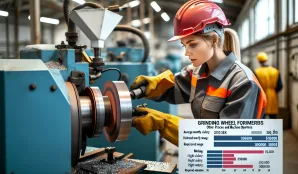
Grinding wheel formers salary
Latest available salary statistics are for 2025. Compare average pay, salary range and related job listings.
35 200 - 37 600 SEK / month
Women earn 95% of what men do.
Industriell tillverkning
Related tools
Salary progression Grinding wheel formers
What does a slipskiveformare do? – Tasks and work environment
A slipskiveformare primarily works in the industry to shape and manufacture grinding wheels for various types of grinding machines and tools. Tasks include monitoring and controlling machines, mixing and processing raw materials, and checking the quality of finished products. Slipskiveformare often work in production environments where precision, accuracy, and safety are crucial. The work can be physically demanding and sometimes involves shift work, especially in larger industrial facilities where production runs around the clock.
Salary development over time
Wages for slipskiveformare have shown steady increases over the past three years. In 2022, the average salary was 34,400 SEK per month, slightly decreasing to 37 100 SEK in 2023. In 2024, the salary rose sharply to 36 900 SEK, representing an increase of about 10% compared to the previous year. The positive trend is linked to increased demand for skilled operators and general wage growth within the industrial sector. Although there are variations between years, the development indicates that knowledge in the field is increasingly valued and employers are willing to pay more for experienced personnel. The salary increase can also be explained by technological advances requiring more specialized skills, as well as changes in working conditions and industry competitiveness.
Slipskiveformare salary – comprehensive overview
- Average salary: 36 900 SEK/month
- Lowest salary: 35,400 SEK/month
- Highest salary: 39,000 SEK/month
- Hourly wage: 223 SEK
- Gender differences: Men 37 300 SEK, women 35,700 SEK (women earn 95% of men's salary)
- Regional differences: Data on variation exists, but details are limited
Education and qualifications
The path to becoming a slipskiveformare typically involves a high school industrial program with a focus on process or workshop industry. Post-secondary education and internal company training are common, especially at larger employers. Practical experience is highly valued, and many employers offer introductory programs or internships as part of employment.
- High school education: Industrial technology program, 3 years
- Post-secondary education: Technical courses (shorter than 3 years) can be advantageous
- Internship: Workplace-based internships provide valuable experience
- Internal training: Common at larger companies
- Prerequisites: Approved grades in mathematics and technology from compulsory school
Technical interest and precision are especially important qualities for slipskiveformare, as small errors in manufacturing can affect both the product's performance and safety in the end-user's operations. The role often requires quick adaptation to changes and problem-solving directly in the production environment.
Common benefits and compensations
In addition to a monthly salary, slipskiveformare often receive benefits such as shift allowances, wellness grants, work clothing, and sometimes bonuses linked to production targets. Occupational pension schemes and insurances are standard in the industry, and many workplaces have collective agreements regulating both wages and compensation for unsocial hours.
Competition and challenges
The job market for slipskiveformare is characterized by specialized tasks and a limited number of training places, which can lead to competition for the most attractive positions. The shortage of new recruits and technological development in the industry impose high demands on flexibility and continuous retraining. A challenge is that the profession is often associated with physically demanding work and shift work, which can affect work-life balance. At the same time, technological advances make tasks more complex, requiring staff to keep up with new technology and digitalization. Another challenge is that the work environment can be noisy and involve contact with chemicals, requiring safety awareness and diligence.
Tips for those who want to become slipskiveformare
To succeed as a slipskiveformare, it helps to have a genuine technical interest and a willingness to learn new machines and methods. Precision is crucial, as small mistakes can have significant consequences for both product quality and safety, so always double-check your work. Good teamwork skills are important since production often takes place in teams where communication and responsibility are central. Flexibility and stress tolerance are helpful when the pace increases or unexpected problems arise. Being solution-oriented and willing to take initiative is appreciated by employers, especially when it involves quickly fixing errors or improving workflows. Engagement and a desire for further training, such as internal courses, can open doors to new tasks or higher wages. Finally, a positive attitude and the ability to motivate oneself even during monotonous or demanding tasks are advantageous.
Key facts about slipskiveformare
- Average salary: 36 900 SEK/month
- Salary range: 35,400–39,000 SEK/month
- Education path: Industrial technical program or equivalent
- Work environment: Production environment, often with shift work
- Demand: 1,437 job vacancies within the occupational group (May 2024)
Career paths and future prospects
After three to five years in the profession, a slipskiveformare can advance to roles such as team leader, production coordinator, or further qualify as a technician in process and machine operation. There are also opportunities to specialize in quality control, machine maintenance, or product development. The outlook for slipskiveformare is difficult to assess since the profession is part of a broader occupational group where the Employment Service does not make a separate evaluation, but the large number of job openings (1,437 within the group) indicates continued demand for skilled workers. Technological changes and automation may influence the work content, but experienced personnel willing to develop are expected to have good employment prospects.
Frequently asked questions about slipskiveformare
- What does a slipskiveformare earn?
- A slipskiveformare has an average salary of 36 900 SEK per month. - What is the highest salary for a slipskiveformare?
- The highest salary is 39,000 SEK per month and applies to a man with a shorter post-secondary education. - What is the lowest salary for a slipskiveformare?
- The lowest salary is 35,400 SEK per month and applies to a woman with a high school education. - Are there differences between men's and women's salaries?
- Yes, women earn on average 95% of what men do within the profession. - What education is required to become a slipskiveformare?
- A high school industrial technical program is most common, but internal training programs are also available. - What does the work environment look like for slipskiveformare?
- Work takes place in a production environment, often involving machines, shift work, and safety routines. - What are the future prospects?
- The Employment Service makes no separate assessment, but there are many job openings within the occupational group.

Salary distributed by age and sector
| Age | Base salary | Monthly salary | |
|---|---|---|---|
| 18-24 | 30300 kr | 35200 kr | |
| 25-34 | 32000 kr | 36100 kr | |
| 35-44 | 33100 kr | 37300 kr | |
| 45-54 | 33600 kr | 37400 kr | |
| 55-64 | 34300 kr | 38100 kr | |
| Snitt | 95% | 32900 kr | 36900 kr |
| Age | Base salary | Monthly salary | |
|---|---|---|---|
| 18-24 | 30300 kr | 35200 kr | |
| 25-34 | 32000 kr | 36100 kr | |
| 35-44 | 33100 kr | 37300 kr | |
| 45-54 | 33600 kr | 37400 kr | |
| 55-64 | 34300 kr | 38100 kr | |
| Snitt | 95% | 32900 kr | 36900 kr |
| Age | Base salary | Monthly salary | |
|---|---|---|---|
| 18-24 | 30300 kr | 35200 kr | |
| 25-34 | 32000 kr | 36100 kr | |
| 35-44 | 33100 kr | 37300 kr | |
| 45-54 | 33600 kr | 37400 kr | |
| 55-64 | 34300 kr | 38100 kr | |
| Snitt | 95% | 32900 kr | 36900 kr |
| Age | Base salary | Monthly salary | |
|---|---|---|---|
| 18-24 | 30400 kr | 35700 kr | |
| 25-34 | 31900 kr | 36200 kr | |
| 35-44 | 33400 kr | 38000 kr | |
| 45-54 | 33800 kr | 37800 kr | |
| 55-64 | 34500 kr | 38300 kr | |
| Snitt | 95% | 33000 kr | 37300 kr |
| Age | Base salary | Monthly salary | |
|---|---|---|---|
| 18-24 | 30400 kr | 35700 kr | |
| 25-34 | 31900 kr | 36200 kr | |
| 35-44 | 33400 kr | 38000 kr | |
| 45-54 | 33800 kr | 37800 kr | |
| 55-64 | 34500 kr | 38300 kr | |
| Snitt | 95% | 33000 kr | 37300 kr |
| Age | Base salary | Monthly salary | |
|---|---|---|---|
| 18-24 | 30400 kr | 35700 kr | |
| 25-34 | 31900 kr | 36200 kr | |
| 35-44 | 33400 kr | 38000 kr | |
| 45-54 | 33800 kr | 37800 kr | |
| 55-64 | 34500 kr | 38300 kr | |
| Snitt | 95% | 33000 kr | 37300 kr |
| Age | Base salary | Monthly salary | |
|---|---|---|---|
| Snitt | 95% | 32400 kr | 35600 kr |
| Age | Base salary | Monthly salary | |
|---|---|---|---|
| Snitt | 95% | 32400 kr | 35600 kr |
| Age | Base salary | Monthly salary | |
|---|---|---|---|
| Snitt | 95% | 32400 kr | 35600 kr |

About the data
All information displayed on this page is based on data from the Swedish Central Bureau of Statistics (SCB), the Swedish Tax Agency and the Swedish employment agency. Learn more about our data and data sources here.
All figures are gross salaries, meaning salaries before tax. The average salary, or mean salary, is calculated by adding up the total salary for all individuals within the profession and dividing it by the number of individuals. For specific job categories, we have also considered various criteria such as experience and education.
Profession Grinding wheel formers has the SSYK code 8189, which we use to match against the SCB database to obtain the latest salary statistics.
-

Operator in Storfors – Starting in August
Other process and machine operators
Fri, 10 Jul 2026 - 21:19 -

Machine Operator for Grinding Disc Production in Västervik
Other process and machine operators
Thu, 9 Jul 2026 - 21:15 -

Production Staff for EB Glas & Fasad AB in Halmstad
Other process and machine operators
Fri, 3 Jul 2026 - 21:31 -

Machine Operator in Skurup – Fixed-term with potential for permanent role
Other process and machine operators
Mon, 15 Jun 2026 - 20:58 -
Machine Operator for Grinding Disc Production in Västervik
Other process and machine operators
Fri, 22 May 2026 - 22:05
Compare salary, work tasks and job outlook in adjacent occupations to find roles with similar skills or pay levels.
-

Average salary: 31 900 SEK/month • Industriell tillverkning
Hand packers and other factory workers
Compare with Grinding wheel formers
Tue, 14 Jul 2026 - 09:18 -

Vehicle paint, manufacturing salary
Average salary: 36 400 SEK/month • Industriell tillverkning
Painters and industrial painters
Compare with Grinding wheel formers
Tue, 14 Jul 2026 - 10:59 -

Average salary: 38 300 SEK/month • Industriell tillverkning
Operators in sawmills, planing mills and plywood etc.
Compare with Grinding wheel formers
Tue, 14 Jul 2026 - 10:58 -

Average salary: 35 200 SEK/month • Industriell tillverkning
Machine operators, mill, bakery and confectionery industry
Compare with Grinding wheel formers
Tue, 14 Jul 2026 - 16:13 -

Sheet metal worker, heavy plate salary
Average salary: 39 700 SEK/month • Industriell tillverkning
Steel construction assemblers and heavy plate workers
Compare with Grinding wheel formers
Tue, 14 Jul 2026 - 16:18 -

Average salary: 33 000 SEK/month • Industriell tillverkning
Machine operators, meat and fish processing industry
Compare with Grinding wheel formers
Tue, 14 Jul 2026 - 17:25


