- Salary statistics
- Slider, rock blasting salary
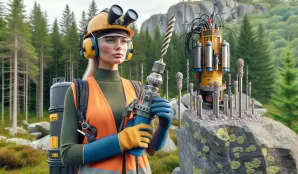
Slider, rock blasting salary
Latest available salary statistics are for 2025. Compare average pay, salary range and related job listings.
45 900 - 48 000 SEK / month
Industriell tillverkning
Related tools
Salary progression Slider, rock blasting
What does a blaster in rock blasting do? – Tasks and work environment
A blaster in rock blasting is responsible for planning, preparing, and executing blasting operations in rock, stone, and other hard materials. Tasks include drilling holes, loading explosives, safety checks, and firing blasts according to carefully established safety procedures. The role involves close cooperation with engineers, machine operators, and other professionals at construction and civil engineering sites. The work environment is often outdoors, sometimes in challenging terrain or underground, requiring high safety awareness, precision, and the ability to work under varying weather conditions.
Salary development over time
The salary development for blasters in rock blasting has shown some variation in recent years. In 2022, the average salary was 42,800 SEK per month. In 2023, the salary increased significantly to 46 000, corresponding to an increase of approximately 11.7 %. Subsequently, a slight decline has been noted to 48 000 in 2024, a decrease of about 3.8 % from the previous year. This trend may be linked to changes in demand for blasting services, project volumes in construction and infrastructure, and the availability of qualified labor. Despite fluctuations, the salary remains high compared to many other trades within the construction industry, reflecting both the risk level and the specialized expertise required.
Blaster, rock blasting salary – comprehensive overview
- Average salary: 48 000 SEK/month
- Lowest/Highest salary: Data unavailable
- Hourly wage: 277 SEK/hour
- Gender differences: Men earn 48 300 SEK, data on women is unavailable
- Regional differences: No detailed statistics available
Education and qualifications
To work as a blaster in rock blasting, specialized training in the field is required, often combined with practical experience from the construction or civil engineering sector. The training includes both theoretical modules on blasting technology and safety, as well as practical training under supervision. Certification according to applicable legislation is mandatory for performing blasting work.
- Formal education: Vocational training in rock blasting, typically 1–2 years
- Certification: Blasting certificate according to the Swedish Work Environment Authority's requirements
- Practical experience: Apprenticeship or on-site training
- Prerequisites: B driver's license, good physical condition, and technical interest
- Courses: Continuing education in blasting technology and safety is recommended
An unusual aspect of the profession is that blasters often need good local knowledge and the ability to read terrain, as each blast must be adapted to the area's unique geology and surroundings. This requires both technical expertise and a sense of nature's variations.
Common benefits and compensations
Among the most common benefits for blasters in rock blasting are per diems for work in other locations, company cars or work vehicles, and compensation for unsociable working hours. Work clothing, protective equipment, and regular health checks are often provided. Some employers also offer supplementary insurance and opportunities for further training.
Competition and challenges
The labor market for blasters in rock blasting is relatively limited and specialized, which means competition for available positions can vary between regions and depend on the economic situation in the construction industry. Challenges in the profession include high safety requirements, continuous updates on regulations and technology, and physically demanding work environments. The lack of detailed salary statistics for women indicates a male-dominated industry, which may affect recruitment and diversity. Additionally, the profession demands great precision and responsibility, as mistakes can lead to serious accidents. Employers therefore seek mainly experienced and certified individuals.
Tips for those who want to become a blaster in rock blasting
To succeed as a blaster in rock blasting, it is good to have a strong sense of safety and be very precise in all work. It is recommended to gain practical experience early, such as through internships or apprenticeships, as employers value both technical knowledge and field experience. Good physical condition and stress tolerance are important, as the work is often physically demanding and sometimes under tight deadlines. An interest in technology and problem-solving skills facilitate handling unexpected situations in the field. It is also wise to continuously update your knowledge through courses and certifications in blasting technology and safety. Being communicative and able to collaborate with different professional groups is crucial for managing complex projects and ensuring all steps are correctly executed. Finally, a future blaster should be flexible and prepared to work at various locations and times to meet industry needs.
Key facts about Blaster, rock blasting
- Education level: Vocational training with certification required
- Work environment: Often outdoors, sometimes underground, and in varying weather conditions
- Work mode: Project-based and field-oriented
- Demand: 1437 job openings registered within the profession
- Special skills: Blasting technology, safety work, and terrain analysis
Career paths and future prospects
After three to five years in the profession, there are opportunities to take on greater responsibility, such as leading blasting teams or specializing in advanced blasting techniques. Some choose to further their education toward project management or consulting roles within the construction and civil engineering sectors. According to the Swedish Public Employment Service, no detailed forecast exists for the specific profession, but the number of job openings is high, indicating strong demand. The industry’s specialization and safety requirements mean that experienced and certified blasters are often highly sought after in the labor market. Technological advances and new environmental regulations may create additional career paths for those interested in, for example, environmentally adapted blasting or training new blasters.
Frequently asked questions about Blaster, rock blasting
- What does a blaster in rock blasting earn?
- The average salary is 48 000 SEK per month, with an hourly wage of approximately 277 SEK. - What education is required to become a blaster?
- Vocational training with certification according to the Swedish Work Environment Authority's requirements is necessary. - What is the work environment like for a blaster?
- Work is often performed outdoors, sometimes underground, and under varying weather conditions. - Are there many job openings in this profession?
- Yes, approximately 1,437 job openings are available within the rock blasting profession. - What personal qualities are important?
- Precision, safety awareness, technical interest, and good physical condition are central qualities. - Are there regional salary differences?
- Specific statistics are lacking, but variations may occur depending on region and project. - What are the future prospects?
- No specific forecast exists for the profession, but demand for labor remains strong within the trade.

Salary distributed by age and sector
| Age | Base salary | Monthly salary | |
|---|---|---|---|
| Snitt | 45900 kr | 48000 kr |
| Age | Base salary | Monthly salary | |
|---|---|---|---|
| Snitt | 45900 kr | 48000 kr |
| Age | Base salary | Monthly salary | |
|---|---|---|---|
| Snitt | 45900 kr | 48000 kr |
| Age | Base salary | Monthly salary | |
|---|---|---|---|
| Snitt | 46100 kr | 48300 kr |
| Age | Base salary | Monthly salary | |
|---|---|---|---|
| Snitt | 46100 kr | 48300 kr |
| Age | Base salary | Monthly salary | |
|---|---|---|---|
| Snitt | 46100 kr | 48300 kr |

About the data
All information displayed on this page is based on data from the Swedish Central Bureau of Statistics (SCB), the Swedish Tax Agency and the Swedish employment agency. Learn more about our data and data sources here.
All figures are gross salaries, meaning salaries before tax. The average salary, or mean salary, is calculated by adding up the total salary for all individuals within the profession and dividing it by the number of individuals. For specific job categories, we have also considered various criteria such as experience and education.
Profession Slider, rock blasting has the SSYK code 8115, which we use to match against the SCB database to obtain the latest salary statistics.
Compare salary, work tasks and job outlook in adjacent occupations to find roles with similar skills or pay levels.
-

Metal construction fitter salary
Average salary: 39 700 SEK/month • Industriell tillverkning
Steel construction assemblers and heavy plate workers
Compare with Slider, rock blasting
Mon, 13 Jul 2026 - 10:41 -

Wood industry worker, wood fiber salary
Average salary: 38 300 SEK/month • Industriell tillverkning
Operators in sawmills, planing mills and plywood etc.
Compare with Slider, rock blasting
Tue, 14 Jul 2026 - 07:16 -

Average salary: 36 300 SEK/month • Industriell tillverkning
Machine setters and machine operators, metal work
Compare with Slider, rock blasting
Mon, 13 Jul 2026 - 05:38 -

Average salary: 32 200 SEK/month • Industriell tillverkning
Other machine operators, textile, leather and leather industry
Compare with Slider, rock blasting
Sun, 12 Jul 2026 - 21:48 -

Average salary: 42 500 SEK/month • Industriell tillverkning
Process operators, paper
Compare with Slider, rock blasting
Tue, 14 Jul 2026 - 07:14 -

Machine operator, food industry, fruit and vegetables salary
Average salary: 33 700 SEK/month • Industriell tillverkning
Other machine operators, food industry etc.
Compare with Slider, rock blasting
Sun, 12 Jul 2026 - 19:00


