- Salary statistics
- Bandsaws, metal salary
Bandsaws, metal salary
Latest available salary statistics are for 2025. Compare average pay, salary range and related job listings.
33 600 - 37 300 SEK / month
Women earn 97% of what men do.
Industriell tillverkning
Related tools
Salary progression Bandsaws, metal
What does a bandsaw operator in the metal industry do? – Tasks and work environment
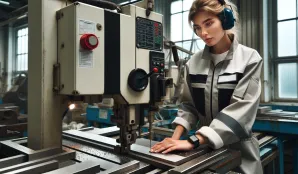
A bandsaw operator in the metal industry primarily works with processing and cutting metal materials using band saws and other machine tools. The work involves measuring and marking materials, adjusting machines for different cutting tasks, and monitoring that production meets specified standards and safety requirements. Bandsaw operators are also responsible for basic machine maintenance and workplace safety checks. The profession is often practiced in industrial facilities with noise, heavy lifting, and demands for precision and safety.
Salary development over time
The salary for bandsaw operators in the metal industry has shown steady growth over the past three years. In 2022, the average salary was 33,000 SEK per month, which increased to 35 200 SEK in 2023 and now reaches 36 300 SEK in 2024. This development corresponds to a total salary increase of approximately 6.7% over the period. The increase can be explained by higher demand for technically skilled workers and inflation's impact on salary formation. At the same time, the shortage of qualified machine operators in metals has contributed to upward pressure on wages, although the future indicates a potential decline in demand due to automation and technological advancements.
Metal Bandsaw Operator Salary – Complete overview
- Average salary: 36 300 SEK/month
- Lowest salary: 31,400 SEK/month
- Highest salary: 36,100 SEK/month
- Hourly wage: 212 SEK
- Gender differences: Men 36 500 SEK, women 35 300 SEK (women earn 97% of men's salary)
- Regional differences: Salaries may vary depending on region and employer
Education and qualifications
To work as a bandsaw operator in the metal industry, a high school education in industrial technology or equivalent practical training is generally required. Many employers also view supplementary courses in machine technology or CNC positively, along with relevant internships. Some workplaces offer internal training to ensure proper machine knowledge and safety routines.
- High school education: Industrial technology program, 3 years
- Certifications: Courses in machine safety and cutting technology are advantageous
- Internship/Trainee: Workplace-based internships are common
- Prerequisites: Basic mathematics and technology
- Tips for choosing: Opt for specialization in metal processing to increase competitiveness
A metal industry bandsaw operator often works in teams where collaboration and communication are crucial for efficient production. The ability to quickly identify and solve problems on site is a valued trait among employers.
Common benefits and compensations
Benefits often include overtime pay for evening and night shifts, wellness allowances, workwear, and sometimes opportunities for further training at the employer’s expense. Some employers also offer bonus systems linked to production or safety goals.
Competition and challenges
The profession of metal bandsaw operators today is characterized by strong demand, with many job openings and a noticeable shortage of qualified workers. At the same time, the profession faces challenges related to increased automation and technological development, which may reduce the need for traditional machine operators in the long term. To stay competitive, continuous skills development and adaptation to new machines and methods are necessary. The work environment can be physically demanding and requires high safety and accuracy standards, making it essential to always follow current routines and regulations.
Tips for those wishing to become a metal industry bandsaw operator
To succeed as a bandsaw operator in the metal industry, it is beneficial to develop precision, as exact measurements and cuts are crucial for work quality. An interest in technology facilitates understanding and handling different machines and tools effectively. Flexibility is a valuable asset since tasks and machines can vary between workplaces and projects. Problem-solving skills are needed to quickly address machine stoppages or production deviations. Finally, teamwork skills are important because the work is often performed in teams, and communication with colleagues is essential for safety and workflow.
Key facts about Metal Bandsaw Operators
- Education level: High school education in industry recommended
- Work environment: Industrial halls requiring protective equipment
- Work form: Shift work is common
- Demand: Good job opportunities but decreasing need over time
- Special skills: Machine safety and material knowledge
Career paths and future outlooks
After three to five years in the profession, a metal industry bandsaw operator can advance to roles such as lead operator, supervisor, or technical specialist within production. Many also choose to further their education in CNC technology or automation to broaden their opportunities. The employment agency’s forecasts show that job opportunities are currently abundant, but the demand for bandsaw operators and machine operators in metals is expected to decline over the next five years, mainly due to automation and technological progress. Despite this, there are currently many job openings, offering good prospects for those with the right skills and willingness to develop within the profession.
Frequently asked questions about Metal Bandsaw Operators
- What is the average salary of a Metal Bandsaw Operator?
- The average salary is 36 300 SEK per month. - How do salary differences between men and women look?
- Men earn on average 36 500 SEK, women 35 300 SEK. - What education is required to become a metal bandsaw operator?
- A high school education in industrial technology is recommended, preferably with practical training. - What occupational hazards are present in the profession?
- Noise, heavy lifting, and risk of cuts are common hazards. - What are the future prospects for metal bandsaw operators?
- There are many jobs today, but demand is expected to decline over time due to automation. - What is the highest salary for a metal bandsaw operator?
- The highest salary is 36,100 SEK for men and 34,500 SEK for women. - How many job openings are available in the profession?
- Currently, there are 1,437 job openings in the profession.

Salary distributed by age and sector
| Age | Base salary | Monthly salary | |
|---|---|---|---|
| 18-24 | 100% | 31900 kr | 34300 kr |
| 25-34 | 98% | 34200 kr | 36400 kr |
| 35-44 | 96% | 34400 kr | 36400 kr |
| 45-54 | 96% | 35100 kr | 36900 kr |
| 55-64 | 95% | 35100 kr | 36700 kr |
| 65-68 | 33500 kr | 34800 kr | |
| Snitt | 97% | 34300 kr | 36300 kr |
| Age | Base salary | Monthly salary | |
|---|---|---|---|
| 25-34 | 32900 kr | 35600 kr | |
| 35-44 | 35600 kr | 36700 kr | |
| 45-54 | 32700 kr | 32700 kr | |
| 55-64 | 33300 kr | 34300 kr | |
| Snitt | 33300 kr | 34300 kr |
| Age | Base salary | Monthly salary | |
|---|---|---|---|
| 25-34 | 32900 kr | 35600 kr | |
| 35-44 | 35600 kr | 36700 kr | |
| 45-54 | 32700 kr | 32700 kr | |
| 55-64 | 33300 kr | 34300 kr | |
| Snitt | 33300 kr | 34300 kr |
| Age | Base salary | Monthly salary | |
|---|---|---|---|
| 18-24 | 100% | 31900 kr | 34300 kr |
| 25-34 | 98% | 34200 kr | 36400 kr |
| 35-44 | 96% | 34400 kr | 36400 kr |
| 45-54 | 96% | 35100 kr | 37000 kr |
| 55-64 | 95% | 35100 kr | 36700 kr |
| 65-68 | 33500 kr | 34800 kr | |
| Snitt | 97% | 34300 kr | 36300 kr |
| Age | Base salary | Monthly salary | |
|---|---|---|---|
| 18-24 | 100% | 31900 kr | 34300 kr |
| 25-34 | 98% | 34200 kr | 36400 kr |
| 35-44 | 96% | 34400 kr | 36400 kr |
| 45-54 | 96% | 35100 kr | 37000 kr |
| 55-64 | 95% | 35100 kr | 36700 kr |
| 65-68 | 33500 kr | 34800 kr | |
| Snitt | 97% | 34300 kr | 36300 kr |
| Age | Base salary | Monthly salary | |
|---|---|---|---|
| 18-24 | 100% | 32000 kr | 34300 kr |
| 25-34 | 98% | 34200 kr | 36500 kr |
| 35-44 | 96% | 34600 kr | 36700 kr |
| 45-54 | 96% | 35300 kr | 37200 kr |
| 55-64 | 95% | 35300 kr | 37000 kr |
| 65-68 | 33600 kr | 34800 kr | |
| Snitt | 97% | 34500 kr | 36500 kr |
| Age | Base salary | Monthly salary | |
|---|---|---|---|
| 25-34 | 32800 kr | 36400 kr | |
| 35-44 | 35600 kr | 36700 kr | |
| 45-54 | 32700 kr | 32700 kr | |
| 55-64 | 33300 kr | 34300 kr | |
| Snitt | 33300 kr | 34300 kr |
| Age | Base salary | Monthly salary | |
|---|---|---|---|
| 25-34 | 32800 kr | 36400 kr | |
| 35-44 | 35600 kr | 36700 kr | |
| 45-54 | 32700 kr | 32700 kr | |
| 55-64 | 33300 kr | 34300 kr | |
| Snitt | 33300 kr | 34300 kr |
| Age | Base salary | Monthly salary | |
|---|---|---|---|
| 18-24 | 100% | 32000 kr | 34300 kr |
| 25-34 | 98% | 34200 kr | 36500 kr |
| 35-44 | 96% | 34600 kr | 36700 kr |
| 45-54 | 96% | 35300 kr | 37200 kr |
| 55-64 | 95% | 35300 kr | 37000 kr |
| 65-68 | 33600 kr | 34800 kr | |
| Snitt | 97% | 34500 kr | 36500 kr |
| Age | Base salary | Monthly salary | |
|---|---|---|---|
| 18-24 | 100% | 32000 kr | 34300 kr |
| 25-34 | 98% | 34200 kr | 36500 kr |
| 35-44 | 96% | 34600 kr | 36700 kr |
| 45-54 | 96% | 35300 kr | 37200 kr |
| 55-64 | 95% | 35300 kr | 37000 kr |
| 65-68 | 33600 kr | 34800 kr | |
| Snitt | 97% | 34500 kr | 36500 kr |
| Age | Base salary | Monthly salary | |
|---|---|---|---|
| 18-24 | 100% | 31900 kr | 34300 kr |
| 25-34 | 98% | 34100 kr | 35900 kr |
| 35-44 | 96% | 33400 kr | 35300 kr |
| 45-54 | 96% | 33800 kr | 35700 kr |
| 55-64 | 95% | 33500 kr | 35200 kr |
| Snitt | 97% | 33400 kr | 35300 kr |
| Age | Base salary | Monthly salary | |
|---|---|---|---|
| 18-24 | 100% | 31900 kr | 34300 kr |
| 25-34 | 98% | 34100 kr | 35900 kr |
| 35-44 | 96% | 33400 kr | 35300 kr |
| 45-54 | 96% | 33800 kr | 35700 kr |
| 55-64 | 95% | 33500 kr | 35200 kr |
| Snitt | 97% | 33400 kr | 35300 kr |
| Age | Base salary | Monthly salary | |
|---|---|---|---|
| 18-24 | 100% | 31900 kr | 34300 kr |
| 25-34 | 98% | 34100 kr | 35900 kr |
| 35-44 | 96% | 33400 kr | 35300 kr |
| 45-54 | 96% | 33800 kr | 35700 kr |
| 55-64 | 95% | 33500 kr | 35200 kr |
| Snitt | 97% | 33400 kr | 35300 kr |

About the data
All information displayed on this page is based on data from the Swedish Central Bureau of Statistics (SCB), the Swedish Tax Agency and the Swedish employment agency. Learn more about our data and data sources here.
All figures are gross salaries, meaning salaries before tax. The average salary, or mean salary, is calculated by adding up the total salary for all individuals within the profession and dividing it by the number of individuals. For specific job categories, we have also considered various criteria such as experience and education.
Profession Bandsaws, metal has the SSYK code 7223, which we use to match against the SCB database to obtain the latest salary statistics.
-
Machine Operator for Precision Industry in Northern Stockholm
Machine setters and machine operators, metal work
Mon, 13 Jul 2026 - 21:55 -

Bending Press Operator Wanted at Plåtteknik i Kumla AB
Machine setters and machine operators, metal work
Mon, 13 Jul 2026 - 21:36 -

Machine Operator for Established Operation in Västerås
Machine setters and machine operators, metal work
Mon, 13 Jul 2026 - 21:30 -

Machine setters and machine operators, metal work
Mon, 13 Jul 2026 - 21:27 -

CNC Operator in Årjäng – Opportunity for Permanent Employment
Machine setters and machine operators, metal work
Mon, 13 Jul 2026 - 21:26
Compare salary, work tasks and job outlook in adjacent occupations to find roles with similar skills or pay levels.
-

Metal construction fitter salary
Average salary: 39 700 SEK/month • Industriell tillverkning
Steel construction assemblers and heavy plate workers
Compare with Bandsaws, metal
Mon, 13 Jul 2026 - 10:41 -

Wood industry worker, wood fiber salary
Average salary: 38 300 SEK/month • Industriell tillverkning
Operators in sawmills, planing mills and plywood etc.
Compare with Bandsaws, metal
Tue, 14 Jul 2026 - 07:16 -

Average salary: 36 300 SEK/month • Industriell tillverkning
Machine setters and machine operators, metal work
Compare with Bandsaws, metal
Mon, 13 Jul 2026 - 05:38 -

Average salary: 32 200 SEK/month • Industriell tillverkning
Other machine operators, textile, leather and leather industry
Compare with Bandsaws, metal
Sun, 12 Jul 2026 - 21:48 -

Average salary: 42 500 SEK/month • Industriell tillverkning
Process operators, paper
Compare with Bandsaws, metal
Tue, 14 Jul 2026 - 07:14 -

Machine operator, food industry, fruit and vegetables salary
Average salary: 33 700 SEK/month • Industriell tillverkning
Other machine operators, food industry etc.
Compare with Bandsaws, metal
Sun, 12 Jul 2026 - 19:00


