- Salary statistics
- Foam worker salary
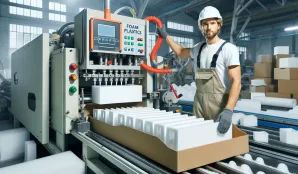
Foam worker salary
Latest available salary statistics are for 2025. Compare average pay, salary range and related job listings.
32 600 - 35 200 SEK / month
Women earn 94% of what men do.
Industriell tillverkning
Related tools
Salary progression Foam worker
What does a foam installer do? – Tasks and work environment
A foam installer primarily works within the plastics industry and is responsible for the production and processing of foam plastic products. Typical tasks include monitoring and controlling machines that produce foam plastic, conducting quality checks, and performing basic maintenance of equipment. The work may also involve assembly, post-processing, or packaging of finished products. The work environment is often characterized by industrial premises with machine noise, chemical handling, and high safety standards, requiring precision and adherence to routines.
Wage development over time
The salary for foam installers has shown a steady increase in recent years. In 2022, the average salary was 30,900 kr per month, which increased to 33 200 kr in 2023 and reached 34 200 kr in 2024. This represents a total increase of approximately 7.5% over three years. This trend reflects a general wage adjustment within the industry, driven by increased demand for technically skilled operators and inflation. At the same time, increased automation and technological development are beginning to impact demand, which may slow future wage growth. Regional differences exist, but the overall trend is a moderate but stable wage increase across the country.
Foam installer salary – complete overview
- Average salary: 34 200 kr/month
- Lowest salary: 31,500 kr/month (female, regional sector, high school education up to 2 years)
- Highest salary: 35,700 kr/month (male, private employee, post-secondary education at least 3 years)
- Hourly wage: 200 kr/hour (average, based on 166 hours/month)
- Gender difference: Women earn 94% of what men do (men: 34 800 kr, women: 32 700 kr)
- Regional differences: Variations occur, especially between urban and rural areas
Education and qualifications
To work as a foam installer, a high school education in industry, engineering, or similar is usually required. Many employers also offer internal training for specific machines and processes, but basic technical understanding and practical experience are often advantageous. Internships and prior experience in industrial production can be beneficial during recruitment.
- High school education: Industrial/technical programs, 3 years
- Internal training: Commonly provided by employers
- Internships: Meritorious and often part of the education
- Certifications: Safety training and machine licenses may be required
- Prerequisites: Technical understanding and good physical condition
Many foam installers quickly take responsibility for advanced machines and processes. Technological development is rapid, making curious and adaptable individuals particularly well-suited for the profession.
Common benefits and compensations
Foam installers are often covered by collective agreements that entitle them to overtime pay, holiday pay, and occupational pensions. Other common benefits include wellness contributions, work clothing, and opportunities for further training within the company. Some workplaces also offer subsidized lunches or employee discounts.
Competition and challenges
The competition for jobs as a foam installer has been relatively low in recent years, partly because many leave the profession and recruitment difficulties occur. At the same time, ongoing automation means some tasks disappear or change, which could reduce the number of available positions in the long term. Flexibility and willingness to further educate oneself in new technologies are therefore increasingly important. The physical work environment and working hours can also be challenging, especially for those working in three-shift systems or noisy environments. For those with technical interest and good work discipline, there are good opportunities for employment, especially in larger industrial regions.
Tips for those who want to become a foam installer
To succeed as a foam installer, it is good to be meticulous and have a genuine interest in technology, as the work often involves responsibility for machines that require precision. Being flexible and willing to learn new skills when new machines and methods are introduced is helpful. Good organizational skills help maintain safety and follow industry routines. Physical endurance is also an advantage, as the work can be monotonous and sometimes heavy. Enjoying teamwork is important, as collaboration with colleagues is often crucial for smooth production. Finally, being proactive and showing engagement often leads to more development opportunities within the company.
Key facts about foam installers
- Average salary: 34 200 kr/month
- Salary range: 31,500–35,700 kr/month
- Education level: High school education (industry/engineering) recommended
- Work environment: Industrial, often shift work and noise
- Demand: Great opportunities today, but decreasing in the long term according to forecasts
Career paths and future prospects
After three to five years in the profession as a foam installer, there are opportunities to advance to more specialized roles, such as process operator, production manager, or quality technician. Some choose to further their education in automation or maintenance, which can lead to greater responsibility and higher wages. According to the Swedish Public Employment Service's forecast, the job prospects within the plastics industry remain strong in the near future, but demand is expected to decline over five years due to increased automation and technological development. Despite this, there are currently over 1,400 job openings in the field, indicating good chances for employment for those with the right skills. Flexibility and willingness to further educate oneself will be increasingly important for long-term job security.
Frequently asked questions about foam installers
- What does a foam installer earn?
- The average salary is 34 200 kr per month, with an hourly wage of about 200 kr. - Are there wage differences between men and women?
- Yes, women earn approximately 94% of what men do within the profession. - What education is required to become a foam installer?
- A high school education in industry or engineering is recommended, often combined with internal training. - What development opportunities are available?
- After a few years, you can advance to process operator, production supervisor, or further education in automation. - What is the job market like?
- Currently, there are great opportunities, but demand is expected to decrease in the long term. - What are the most common workplace risks?
- Noise, chemical exposure, and heavy lifting are common risk factors. - What benefits are usually included?
- Collective agreements, overtime pay, occupational pension, and wellness contributions are common benefits.

Salary distributed by age and sector
| Age | Base salary | Monthly salary | |
|---|---|---|---|
| 18-24 | 28800 kr | 31400 kr | |
| 25-34 | 94% | 31200 kr | 34300 kr |
| 35-44 | 91% | 32300 kr | 34900 kr |
| 45-54 | 96% | 32300 kr | 34900 kr |
| 55-64 | 94% | 32500 kr | 34600 kr |
| Snitt | 94% | 31600 kr | 34200 kr |
| Age | Base salary | Monthly salary | |
|---|---|---|---|
| 18-24 | 28800 kr | 31400 kr | |
| 25-34 | 94% | 31200 kr | 34300 kr |
| 35-44 | 91% | 32300 kr | 34900 kr |
| 45-54 | 96% | 32300 kr | 34900 kr |
| 55-64 | 94% | 32500 kr | 34600 kr |
| Snitt | 94% | 31600 kr | 34200 kr |
| Age | Base salary | Monthly salary | |
|---|---|---|---|
| 18-24 | 28800 kr | 31400 kr | |
| 25-34 | 94% | 31200 kr | 34300 kr |
| 35-44 | 91% | 32300 kr | 34900 kr |
| 45-54 | 96% | 32300 kr | 34900 kr |
| 55-64 | 94% | 32500 kr | 34600 kr |
| Snitt | 94% | 31600 kr | 34200 kr |
| Age | Base salary | Monthly salary | |
|---|---|---|---|
| 18-24 | 28800 kr | 31900 kr | |
| 25-34 | 94% | 31300 kr | 34800 kr |
| 35-44 | 91% | 32900 kr | 35600 kr |
| 45-54 | 96% | 32400 kr | 35400 kr |
| 55-64 | 94% | 33000 kr | 35500 kr |
| Snitt | 94% | 31900 kr | 34800 kr |
| Age | Base salary | Monthly salary | |
|---|---|---|---|
| 18-24 | 28800 kr | 31900 kr | |
| 25-34 | 94% | 31300 kr | 34800 kr |
| 35-44 | 91% | 32900 kr | 35600 kr |
| 45-54 | 96% | 32400 kr | 35400 kr |
| 55-64 | 94% | 33000 kr | 35500 kr |
| Snitt | 94% | 31900 kr | 34800 kr |
| Age | Base salary | Monthly salary | |
|---|---|---|---|
| 18-24 | 28800 kr | 31900 kr | |
| 25-34 | 94% | 31300 kr | 34800 kr |
| 35-44 | 91% | 32900 kr | 35600 kr |
| 45-54 | 96% | 32400 kr | 35400 kr |
| 55-64 | 94% | 33000 kr | 35500 kr |
| Snitt | 94% | 31900 kr | 34800 kr |
| Age | Base salary | Monthly salary | |
|---|---|---|---|
| 25-34 | 94% | 30800 kr | 32700 kr |
| 35-44 | 91% | 30200 kr | 32400 kr |
| 45-54 | 96% | 32100 kr | 33900 kr |
| 55-64 | 94% | 31700 kr | 33200 kr |
| Snitt | 94% | 31000 kr | 32700 kr |
| Age | Base salary | Monthly salary | |
|---|---|---|---|
| 25-34 | 94% | 30800 kr | 32700 kr |
| 35-44 | 91% | 30200 kr | 32400 kr |
| 45-54 | 96% | 32100 kr | 33900 kr |
| 55-64 | 94% | 31700 kr | 33200 kr |
| Snitt | 94% | 31000 kr | 32700 kr |
| Age | Base salary | Monthly salary | |
|---|---|---|---|
| 25-34 | 94% | 30800 kr | 32700 kr |
| 35-44 | 91% | 30200 kr | 32400 kr |
| 45-54 | 96% | 32100 kr | 33900 kr |
| 55-64 | 94% | 31700 kr | 33200 kr |
| Snitt | 94% | 31000 kr | 32700 kr |

About the data
All information displayed on this page is based on data from the Swedish Central Bureau of Statistics (SCB), the Swedish Tax Agency and the Swedish employment agency. Learn more about our data and data sources here.
All figures are gross salaries, meaning salaries before tax. The average salary, or mean salary, is calculated by adding up the total salary for all individuals within the profession and dividing it by the number of individuals. For specific job categories, we have also considered various criteria such as experience and education.
Profession Foam worker has the SSYK code 8142, which we use to match against the SCB database to obtain the latest salary statistics.
-

Production Operator for UW Elast in Traryd – Day Shift
Machine operators, plastics industry
Fri, 10 Jul 2026 - 21:25 -

Setup Technician for Preformance in Öggestorp
Machine operators, plastics industry
Tue, 7 Jul 2026 - 21:53 -
Setter for Injection Molding at Preformance in Öggestorp
Machine operators, plastics industry
Tue, 7 Jul 2026 - 21:52 -
Hiring Setup Technician at Preformance in Jönköping
Machine operators, plastics industry
Tue, 7 Jul 2026 - 21:51

Compare salary, work tasks and job outlook in adjacent occupations to find roles with similar skills or pay levels.
-
Average salary: 33 700 SEK/month • Industriell tillverkning
Other machine operators, food industry etc.
Compare with Foam worker
Tue, 14 Jul 2026 - 11:56 -

Average salary: 37 800 SEK/month • Industriell tillverkning
Machine operators, cement, stone and concrete products
Compare with Foam worker
Mon, 13 Jul 2026 - 10:26 -

Average salary: 42 500 SEK/month • Industriell tillverkning
Process operators, paper
Compare with Foam worker
Tue, 14 Jul 2026 - 08:16 -
Wallpaper roller engravers salary
Average salary: 35 300 SEK/month • Industriell tillverkning
Prepress technicians
Compare with Foam worker
Tue, 14 Jul 2026 - 11:05 -

Average salary: 36 900 SEK/month • Industriell tillverkning
Other process and machine operators
Compare with Foam worker
Tue, 14 Jul 2026 - 13:04 -

Hasplare, textile industry salary
Average salary: 32 200 SEK/month • Industriell tillverkning
Other machine operators, textile, leather and leather industry
Compare with Foam worker
Tue, 14 Jul 2026 - 11:54


