- Salary statistics
- Priest, Greek Orthodox Church salary
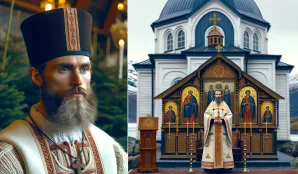
Priest, Greek Orthodox Church salary
Latest available salary statistics are for 2025. Compare average pay, salary range and related job listings.
51 400 - 52 800 SEK / month
Women earn 98% of what men do.
Socialt arbete
Related tools
Salary progression Priest, Greek Orthodox Church
What does a priest in the Greek Orthodox Church do? – Tasks and work environment
A priest within the Greek Orthodox Church is responsible for leading services, performing sacraments such as baptisms and weddings, and providing spiritual guidance to the congregation. The duties also include teaching about the church's faith and traditions, as well as pastoral care for members. The work environment often involves a combination of church ceremonies, administrative tasks, and meetings with parish members, requiring presence and flexibility in working hours.
Salary development over time
The salary for a priest in the Greek Orthodox Church has shown stable and positive growth over the past three years. In 2022, the average salary was 46,400 SEK per month, increasing to 50 800 SEK in 2023, corresponding to an increase of about 6.9%. In 2024, the salary continued to rise to 50,800 SEK, a further increase of approximately 2.4%. This salary increase can be linked to a higher demand for qualified priests within the church and a general salary adjustment in the public and religious sectors. The level of education and the specific requirements of the profession also contribute to maintaining a stable salary level over time.
Priests within the Greek Orthodox Church are often culturally engaged and serve as important bridges between different communities, which enhances their role beyond purely religious duties.
Priest in the Greek Orthodox Church salary – comprehensive overview
- Average salary: 50,800 SEK/month
- Lowest salary: 50,400 SEK (female)
- Highest salary: 51,300 SEK (male)
- Hourly wage: 306 SEK (based on 166 working hours/month)
- Gender differences: Women earn 98% of men's salaries
- Regional differences: No data available for clear regional variations
Education and qualifications
To become a priest in the Greek Orthodox Church, a theological education focusing on Orthodox faith and practice is usually required. The education is often combined with practical experience within the church and formal ordination.
- Theological education: University degree or equivalent, often 3–5 years
- Ordination: Ceremonial ordination within the Greek Orthodox Church
- Practical training: Service in parishes under supervision
- Prerequisites: Basic knowledge of church liturgy and traditions
- Language skills: Greek and Swedish are often necessary
Common benefits and compensations
Priests in the Greek Orthodox Church are often offered benefits such as housing, pension contributions, and opportunities for further theological education. The work may also include travel allowances and access to church networks and support structures.
Competition and challenges
The competition for positions within the Greek Orthodox Church is moderate, but the profession requires deep theological knowledge and commitment, which limits the number of qualified applicants. A challenge is balancing traditional values with modern parish activities, while priests need to meet the diverse needs of their congregations. Language and cultural skills are important for reaching a broad audience. At the same time, the work environment demands good psychological resilience and conflict management skills.
Tips for those aspiring to become a priest in the Greek Orthodox Church
To succeed as a priest in the Greek Orthodox Church, it is beneficial to develop strong empathetic abilities, as the profession involves many meetings with people in different life situations. Being meticulous and responsible facilitates handling both liturgical duties and administrative tasks. It is also important to be communicative and able to convey complex religious messages in an accessible way. Engagement with church traditions and a willingness to deepen theological knowledge are central to building trust within the congregation. Patience and flexibility can help meet the often irregular working hours and shifting tasks.
Key facts about priests in the Greek Orthodox Church
- Education level: Theological degree (3–5 years)
- Salary range: 50,400–51,300 SEK/month
- Work environment: Church and administrative environment with varying hours
- Demand: 237 job openings within the priest profession (SSYK code)
- Gender salary gap: Women earn 98% of men's salaries
Career paths and future outlook
After 3–5 years as a priest in the Greek Orthodox Church, there are opportunities to advance to leadership positions within parishes or church organizations. Some priests choose to specialize in teaching or pastoral care, while others may engage in ecumenical work or theological research. According to the Swedish Public Employment Service's forecasts, demand remains stable for priests with strong theological competence and cultural understanding, with a total of 237 job openings in the profession. The profession is expected to have good future prospects, especially in congregations that need linguistic and cultural diversity.
Frequently asked questions about priests in the Greek Orthodox Church
- What does a priest in the Greek Orthodox Church earn?
- The average salary is approximately 50,800 SEK per month, with variation from 50,400 to 51,300 SEK depending on experience and employment type. - What education is required to become a priest in the Greek Orthodox Church?
- A theological degree combined with ordination and practical service is normally required. - Are there gender differences in salary?
- Yes, women earn on average 98% of what men earn in the profession. - What is the work environment like for a Greek Orthodox priest?
- The work environment is a combination of church ceremonies, administrative tasks, and meetings with the congregation. - What personal qualities are important in this profession?
- Empathy, responsibility, communication skills, and flexibility are central qualities. - What are the future prospects for priests within this church?
- The outlook is stable with good demand, especially for priests with linguistic and cultural competence. - Are there regional differences in salary?
- There is no clear data on regional salary differences for this profession.

Salary distributed by age and sector
| Age | Base salary | Monthly salary | |
|---|---|---|---|
| 35-44 | 47300 kr | 49200 kr | |
| 45-54 | 51300 kr | 53000 kr | |
| 55-64 | 51500 kr | 53400 kr | |
| Snitt | 98% | 50000 kr | 51800 kr |
| Age | Base salary | Monthly salary | |
|---|---|---|---|
| 35-44 | 47300 kr | 49200 kr | |
| 45-54 | 51300 kr | 53000 kr | |
| 55-64 | 51500 kr | 53400 kr | |
| Snitt | 98% | 50000 kr | 51800 kr |
| Age | Base salary | Monthly salary | |
|---|---|---|---|
| 35-44 | 47300 kr | 49200 kr | |
| 45-54 | 51300 kr | 53000 kr | |
| 55-64 | 51500 kr | 53400 kr | |
| Snitt | 98% | 50000 kr | 51800 kr |
| Age | Base salary | Monthly salary | |
|---|---|---|---|
| Snitt | 98% | 50700 kr | 52300 kr |
| Age | Base salary | Monthly salary | |
|---|---|---|---|
| Snitt | 98% | 50700 kr | 52300 kr |
| Age | Base salary | Monthly salary | |
|---|---|---|---|
| Snitt | 98% | 50700 kr | 52300 kr |
| Age | Base salary | Monthly salary | |
|---|---|---|---|
| 45-54 | 50200 kr | 51900 kr | |
| 55-64 | 51100 kr | 53100 kr | |
| Snitt | 98% | 49500 kr | 51400 kr |
| Age | Base salary | Monthly salary | |
|---|---|---|---|
| 45-54 | 50200 kr | 51900 kr | |
| 55-64 | 51100 kr | 53100 kr | |
| Snitt | 98% | 49500 kr | 51400 kr |
| Age | Base salary | Monthly salary | |
|---|---|---|---|
| 45-54 | 50200 kr | 51900 kr | |
| 55-64 | 51100 kr | 53100 kr | |
| Snitt | 98% | 49500 kr | 51400 kr |

About the data
All information displayed on this page is based on data from the Swedish Central Bureau of Statistics (SCB), the Swedish Tax Agency and the Swedish employment agency. Learn more about our data and data sources here.
All figures are gross salaries, meaning salaries before tax. The average salary, or mean salary, is calculated by adding up the total salary for all individuals within the profession and dividing it by the number of individuals. For specific job categories, we have also considered various criteria such as experience and education.
Profession Priest, Greek Orthodox Church has the SSYK code 2671, which we use to match against the SCB database to obtain the latest salary statistics.



Compare salary, work tasks and job outlook in adjacent occupations to find roles with similar skills or pay levels.
-

Average salary: 28 300 SEK/month • Socialt arbete
Childcare workers
Compare with Priest, Greek Orthodox Church
Tue, 14 Jul 2026 - 03:32 -

Evangelist, travel pastor salary
Average salary: 36 738 SEK/month • Socialt arbete
Pastors etc.
Compare with Priest, Greek Orthodox Church
Mon, 13 Jul 2026 - 17:31 -

Average salary: 37 100 SEK/month • Socialt arbete
Treatment assistants and social pedagogues etc.
Compare with Priest, Greek Orthodox Church
Mon, 13 Jul 2026 - 18:20 -

Project manager, social work salary
Average salary: 37 100 SEK/month • Socialt arbete
Treatment assistants and social pedagogues etc.
Compare with Priest, Greek Orthodox Church
Tue, 14 Jul 2026 - 03:34 -

Average salary: 39 500 SEK/month • Socialt arbete
Assistance assessors etc.
Compare with Priest, Greek Orthodox Church
Tue, 14 Jul 2026 - 00:17 -

Parish Superintendent, Salvation Army salary
Average salary: 36 738 SEK/month • Socialt arbete
Pastors etc.
Compare with Priest, Greek Orthodox Church
Tue, 14 Jul 2026 - 06:06


