- Salary statistics
- Machine operator, pasta production salary
Machine operator, pasta production salary
Latest available salary statistics are for 2025. Compare average pay, salary range and related job listings.
33 700 - 37 200 SEK / month
Women earn 104% of what men do.
Industriell tillverkning
Related tools
Salary progression Machine operator, pasta production
What does a machine operator in pasta production do? – Tasks and work environment
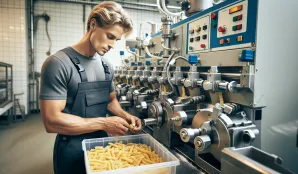
A machine operator in pasta production is responsible for monitoring and controlling the machines that produce pasta in various shapes. The work includes setting up, starting, and continuously inspecting the production lines. Other key tasks include preventing and fixing operational disruptions, performing basic maintenance, and ensuring compliance with hygiene and quality standards. The work environment is characterized by shift work and pace changes, requiring both physical effort and technical knowledge. Regular contact with colleagues in the production team and close collaboration with quality control are common.
Salary development over time
Salaries for machine operators in pasta production have shown some variation over the past three years. In 2022, the average salary was 34 900 SEK, followed by an increase to 32 500 SEK in 2023. In 2024, the average salary has decreased to 35 200 SEK, which is approximately a 4.7% decline compared to the previous year. This change may be due to market factors such as supply and demand for labor, as well as changes in working conditions and company structures within the food industry. Despite the relatively stable salary level over time, seasonal variations and regional differences can influence temporary peaks and troughs. The profession offers a competitive salary relative to the educational requirements and practical experience demanded.
Machine operator, pasta production salary – comprehensive overview
- Average salary: 35 200 SEK/month
- Lowest salary (men): 30,500 SEK
- Lowest salary (women): 33,400 SEK
- Highest salary: 34,600 SEK
- Hourly wage (average): 195 SEK
- Women earn: 104% of men's salary (34,600 SEK vs 34 900 SEK)
- Regional differences: Data varies, but some regions offer higher wages where demand is high
Education and qualifications
To work as a machine operator in pasta production, a high school diploma is usually required, preferably with a focus on food production or engineering. Practical experience from the food industry is highly meritorious, and many employers offer internal training to ensure the right skills. Some workplaces may also require certifications in food safety or machine handling to meet industry standards.
- High school education: Food program or technical program (3 years)
- Internal training: Introductory programs are often offered at the workplace
- Certifications: Examples include HACCP or equivalent food safety certifications
- Internships: Common via high school or summer jobs in the food industry
- Prerequisites: Good understanding of technology, machinery, and hygiene routines
Pasta production requires not only technical skills but also a sense of detail and quality. Many operators develop expertise in different pasta types and process optimization, making the profession more varied than many think.
Common benefits and compensations
Machine operators in pasta production are often offered benefits such as shift allowances, wellness contributions, and work clothing. Other common compensations include overtime pay, evening and night shift supplements, and insurance linked to employment. Some employers also offer opportunities for further training and development discussions.
Competition and challenges
The competition for jobs as a machine operator in pasta production is balanced, with demand for labor maintained by a stable food industry. One of the biggest challenges is quickly adapting to new technologies and production methods, as automation and digitization become more prevalent. The work can be physically demanding and sometimes monotonous, requiring endurance and precision. Seasonal variations can affect workload, especially during peak periods before major holidays. Staying updated on safety routines and quality standards is crucial for success in the profession.
Tips for those who want to become a machine operator in pasta production
To succeed as a machine operator in pasta production, it is good to have a technical interest and the ability to quickly learn new machines. Precision is an important trait, as small mistakes can affect both quality and safety. Flexibility is helpful during shift work and pace changes, while teamwork skills make it easier to work in teams and solve problems together. A positive attitude towards routines and hygiene is also essential, as well as stress resilience when production speed is high. Showing initiative and willingness to develop can open doors to more advanced roles within the company. Finally, being solution-oriented and able to handle unexpected operational disruptions calmly and focused is a big advantage.
Key facts about a machine operator in pasta production
- Education level: High school diploma, often supplemented with internal training
- Work environment: Shift work in a production environment with high hygiene standards
- Demand: 1,437 job openings within the profession according to current statistics
- Gender distribution: Women have higher average salaries than men in the profession
- Special skills: Machine handling and food safety
Career paths and future prospects
After three to five years as a machine operator in pasta production, opportunities exist to advance to roles such as team leader, technician, or production manager. Experience in the profession can also lead to opportunities in quality control or further education in food production. The forecast from the Employment Service indicates continued good demand, with 1,437 job openings within the profession. Automation and technological development mean that skills in advanced machinery are becoming increasingly important, providing good future prospects for those who continuously develop their skills.
Frequently asked questions about a machine operator in pasta production
- What does a machine operator in pasta production earn?
- The average salary is 35 200 SEK per month, with variation between 30,500 SEK and 34,600 SEK depending on experience and gender. - What are the gender differences in salary?
- Women earn on average 34,600 SEK, which is 104% of men's average salary of 34 900 SEK. - What education is required to become a machine operator in pasta production?
- High school education in food or engineering, often supplemented with internal training. - What is the work environment like?
- Production takes place in shifts and the environment demands high standards of hygiene and safety. - Are there good future prospects in the profession?
- Yes, demand is stable with many job openings and opportunities for advancement. - What are the most common benefits?
- Shift allowances, wellness contributions, work clothing, and overtime pay are common. - What are the regional salary differences?
- Some regions offer higher salaries, especially where demand for labor is high.

Salary distributed by age and sector
| Age | Base salary | Monthly salary | |
|---|---|---|---|
| 18-24 | 108% | 28200 kr | 33300 kr |
| 25-34 | 109% | 30900 kr | 34500 kr |
| 35-44 | 100% | 31800 kr | 36700 kr |
| 45-54 | 107% | 31400 kr | 35500 kr |
| 55-64 | 96% | 33100 kr | 37500 kr |
| Snitt | 104% | 30900 kr | 35200 kr |
| Age | Base salary | Monthly salary | |
|---|---|---|---|
| 18-24 | 108% | 28200 kr | 33300 kr |
| 25-34 | 109% | 30900 kr | 34500 kr |
| 35-44 | 100% | 31800 kr | 36700 kr |
| 45-54 | 107% | 31400 kr | 35500 kr |
| 55-64 | 96% | 33100 kr | 37500 kr |
| Snitt | 104% | 30900 kr | 35200 kr |
| Age | Base salary | Monthly salary | |
|---|---|---|---|
| 18-24 | 108% | 28200 kr | 33300 kr |
| 25-34 | 109% | 30900 kr | 34500 kr |
| 35-44 | 100% | 31800 kr | 36700 kr |
| 45-54 | 107% | 31400 kr | 35500 kr |
| 55-64 | 96% | 33100 kr | 37500 kr |
| Snitt | 104% | 30900 kr | 35200 kr |
| Age | Base salary | Monthly salary | |
|---|---|---|---|
| 18-24 | 108% | 28000 kr | 32600 kr |
| 25-34 | 109% | 30800 kr | 34000 kr |
| 35-44 | 100% | 31700 kr | 36800 kr |
| 45-54 | 107% | 31300 kr | 34900 kr |
| 55-64 | 96% | 33500 kr | 38100 kr |
| Snitt | 104% | 30900 kr | 34900 kr |
| Age | Base salary | Monthly salary | |
|---|---|---|---|
| 18-24 | 108% | 28000 kr | 32600 kr |
| 25-34 | 109% | 30800 kr | 34000 kr |
| 35-44 | 100% | 31700 kr | 36800 kr |
| 45-54 | 107% | 31300 kr | 34900 kr |
| 55-64 | 96% | 33500 kr | 38100 kr |
| Snitt | 104% | 30900 kr | 34900 kr |
| Age | Base salary | Monthly salary | |
|---|---|---|---|
| 18-24 | 108% | 28000 kr | 32600 kr |
| 25-34 | 109% | 30800 kr | 34000 kr |
| 35-44 | 100% | 31700 kr | 36800 kr |
| 45-54 | 107% | 31300 kr | 34900 kr |
| 55-64 | 96% | 33500 kr | 38100 kr |
| Snitt | 104% | 30900 kr | 34900 kr |
| Age | Base salary | Monthly salary | |
|---|---|---|---|
| 18-24 | 108% | 28700 kr | 35100 kr |
| 25-34 | 109% | 31400 kr | 37100 kr |
| 35-44 | 100% | 31900 kr | 36600 kr |
| 45-54 | 107% | 31700 kr | 37400 kr |
| 55-64 | 96% | 32300 kr | 36500 kr |
| Snitt | 104% | 31100 kr | 36300 kr |
| Age | Base salary | Monthly salary | |
|---|---|---|---|
| 18-24 | 108% | 28700 kr | 35100 kr |
| 25-34 | 109% | 31400 kr | 37100 kr |
| 35-44 | 100% | 31900 kr | 36600 kr |
| 45-54 | 107% | 31700 kr | 37400 kr |
| 55-64 | 96% | 32300 kr | 36500 kr |
| Snitt | 104% | 31100 kr | 36300 kr |
| Age | Base salary | Monthly salary | |
|---|---|---|---|
| 18-24 | 108% | 28700 kr | 35100 kr |
| 25-34 | 109% | 31400 kr | 37100 kr |
| 35-44 | 100% | 31900 kr | 36600 kr |
| 45-54 | 107% | 31700 kr | 37400 kr |
| 55-64 | 96% | 32300 kr | 36500 kr |
| Snitt | 104% | 31100 kr | 36300 kr |

About the data
All information displayed on this page is based on data from the Swedish Central Bureau of Statistics (SCB), the Swedish Tax Agency and the Swedish employment agency. Learn more about our data and data sources here.
All figures are gross salaries, meaning salaries before tax. The average salary, or mean salary, is calculated by adding up the total salary for all individuals within the profession and dividing it by the number of individuals. For specific job categories, we have also considered various criteria such as experience and education.
Profession Machine operator, pasta production has the SSYK code 8163, which we use to match against the SCB database to obtain the latest salary statistics.
-

Production Worker at Kak Kungen AB in Kumla
Machine operators, mill, bakery and confectionery industry
Thu, 9 Jul 2026 - 00:36 -

Production Line Worker in Bakery and Food Production – Sanus Glutenfri AB
Machine operators, mill, bakery and confectionery industry
Tue, 7 Jul 2026 - 21:50 -
Line Worker in Bakery and Food Production – Sanus Glutenfri AB
Machine operators, mill, bakery and confectionery industry
Fri, 26 Jun 2026 - 23:16 -

Process Operator at Lantmännen in Skara – Temporary with Extension Potential
Machine operators, mill, bakery and confectionery industry
Thu, 25 Jun 2026 - 00:12 -

Seasonal Workers for Grain Facility in Kalmar
Machine operators, mill, bakery and confectionery industry
Thu, 18 Jun 2026 - 23:58
Compare salary, work tasks and job outlook in adjacent occupations to find roles with similar skills or pay levels.
-

Syringe operator, rubber salary
Average salary: 33 900 SEK/month • Industriell tillverkning
Machine operators, rubber industry
Compare with Machine operator, pasta production
Tue, 14 Jul 2026 - 05:30 -

Average salary: 34 800 SEK/month • Industriell tillverkning
Machine operators, filling, packing and labeling
Compare with Machine operator, pasta production
Sun, 12 Jul 2026 - 15:16 -

Average salary: 35 700 SEK/month • Industriell tillverkning
Grinders etc.
Compare with Machine operator, pasta production
Fri, 10 Jul 2026 - 18:59 -

Lime house worker, tannery salary
Average salary: 32 200 SEK/month • Industriell tillverkning
Other machine operators, textile, leather and leather industry
Compare with Machine operator, pasta production
Tue, 14 Jul 2026 - 08:19 -

Inspectors, concrete products salary
Average salary: 37 800 SEK/month • Industriell tillverkning
Machine operators, cement, stone and concrete products
Compare with Machine operator, pasta production
Tue, 14 Jul 2026 - 09:10 -

Average salary: 36 800 SEK/month • Industriell tillverkning
Welders and gas cutters
Compare with Machine operator, pasta production
Tue, 14 Jul 2026 - 07:11


