- Salary statistics
- Linen seamstress salary
Linen seamstress salary
Latest available salary statistics are for 2025. Compare average pay, salary range and related job listings.
33 327 - 32 802 SEK / month
Hantverksyrken
Related tools
Salary progression Linen seamstress
What does a linen seamstress do? – Tasks and work environment
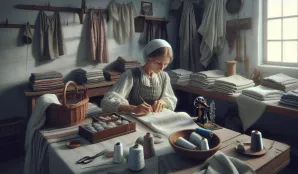
The linen seamstress works with sewing, repairing, and sometimes designing textiles made of linen and other natural materials. The tasks often include creating or repairing tablecloths, napkins, bed linens, and other home textiles with high standards for sewing and details. A linen seamstress can operate in ateliers, textile workshops, small companies, or as a self-employed individual, serving both private clients and businesses such as hotels and restaurants. The work environment is characterized by precision, dexterity, and a good understanding of material properties, often in a seated position at a sewing machine or worktable where lighting and ergonomics are important to reduce strain injuries.
Salary development over time
The salary of a linen seamstress has shown a very slight but steady increase over the past three years. In 2022, the average salary was 30,698 SEK per month, which increased marginally to 31 077 SEK in 2023 and further to 32 802 SEK in 2024. This development corresponds to a total increase of just over 1.2% over the period, indicating a low but steady salary growth. The reasons may include the limited number of positions and the relatively narrow job market for the profession, where demand is stable but not growing. Since the profession is often practiced in small companies or specialized ateliers, salary levels are also affected by the small business climate and competition from industrial textile production. Overall, the salary development reflects a market with low turnover but ongoing need for traditional and artisanal skills.
Salary overview for linen seamstresses
- Average salary: 32 802 SEK/month
- Lowest/Highest salary: Data not available
- Hourly wage: 187 SEK
- Gender differences: Data not available
- Regional differences: Data not available
Education and qualifications
To work as a linen seamstress, a vocational education in sewing or textile crafts is usually required. Many have upper secondary education with a focus on textiles or equivalent courses from folk high schools, supplemented with internships or apprenticeships. Experience working with linen and other natural materials is advantageous, and the profession demands high precision and material knowledge.
- Vocational training in textiles/sewing: 1–3 years, often at upper secondary or folk high school level
- Internship or apprenticeship: Recommended to gain practical experience
- Courses in material knowledge and specialized techniques: Meritorious for working with linen
- Experience with machine sewing and handcrafts: Important for the breadth of the profession
- Prerequisites: Good fine motor skills and interest in crafts
The craftsmanship of linen seamstresses has a long tradition and is often sought after by customers looking for unique, sustainable, and high-quality textiles. Many in the profession have the opportunity to work closely with clients and participate in creative design processes, which adds variety and a personal touch to the work.
Common benefits and compensations
The profession often offers benefits such as flexible working hours, part-time or project-based assignments, and discounts on materials and finished textiles. Some employers also provide wellness allowances and opportunities for further training in textiles and design. For self-employed individuals, the ability to control their workload and assignments is an important benefit.
Competition and challenges
The job market for linen seamstresses is relatively small and characterized by competition from cheaper, industrially produced textiles and a limited number of permanent positions. The profession requires high specialization, which can be a challenge for recent graduates without experience or networks. However, demand for artisanal products remains, especially among customers who value quality and sustainability. At the same time, rapid developments in textile technology and design mean that linen seamstresses must stay updated and adaptable. The ability to market their services and build good customer relationships is crucial for success in the industry.
Tips for those aspiring to become a linen seamstress
To succeed as a linen seamstress, it’s good to have a genuine interest in textiles and crafts, as well as patience and precision in work. Developing a good sense of color and form makes it easier to meet customer wishes and create unique products. Early internships or summer jobs in the textile industry are recommended to build experience and networks. A problem-solving attitude helps when unexpected challenges arise, and flexibility is an asset when tasks vary between machine sewing, handcrafts, and customer contact. Continuously updating oneself on new materials and techniques makes it easier to stay competitive, and good communication skills facilitate collaboration with clients and colleagues.
Key facts about linen seamstresses
- Education level: Vocational training or upper secondary program in textiles
- Work environment: Atelier, workshop, or small business
- Common employment type: Permanent employment or self-employed
- Demand: 341 job openings in the occupational group (2024)
- Special skills: Material knowledge and fine motor skills
Career paths and future prospects
After a few years in the profession, a linen seamstress can develop into an atelier manager, supervisor, or start their own business in textile production and design. It is also possible to specialize in restoration of older textiles or work on exclusive commissions for interior design companies and cultural institutions. Forecasts from the Employment Service show no specific assessment for linen seamstresses, but in the seamstress occupational group, there were 341 job openings during 2024. Since the profession is narrow and demand is often stable rather than growing, it is important to stay updated and flexible to find new niches and opportunities. Digitalization and sustainability trends can also create new career paths within the textile industry.
Common questions about linen seamstresses
- What is the average salary of a linen seamstress?
- The average salary for a linen seamstress is 32 802 SEK per month. - How has the salary development for linen seamstresses been?
- The salary has increased marginally over the past three years, with a total rise of approximately 1.2% between 2022 and 2024. - What education is required to become a linen seamstress?
- Vocational training in textiles or sewing, often at the upper secondary school level or through folk high schools, is most common. - Are there many job openings for linen seamstresses?
- In the occupational group seamstresses, there were 341 job openings during 2024. - Do linen seamstresses mostly work as employees or self-employed?
- Many are employed in small companies or ateliers, but it is also common to work as self-employed. - What personal qualities are important for the profession?
- Precision, patience, fine motor skills, and creativity are important qualities for success as a linen seamstress.

Salary distributed by age and sector

About the data
All information displayed on this page is based on data from the Swedish Central Bureau of Statistics (SCB), the Swedish Tax Agency and the Swedish employment agency. Learn more about our data and data sources here.
All figures are gross salaries, meaning salaries before tax. The average salary, or mean salary, is calculated by adding up the total salary for all individuals within the profession and dividing it by the number of individuals. For specific job categories, we have also considered various criteria such as experience and education.
Profession Linen seamstress has the SSYK code 7532, which we use to match against the SCB database to obtain the latest salary statistics.
Compare salary, work tasks and job outlook in adjacent occupations to find roles with similar skills or pay levels.
-

Average salary: 34 000 SEK/month • Hantverksyrken
Musical instrument makers and other artisans
Compare with Linen seamstress
Tue, 14 Jul 2026 - 10:55 -

Average salary: 34 000 SEK/month • Hantverksyrken
Musical instrument makers and other artisans
Compare with Linen seamstress
Fri, 10 Jul 2026 - 13:12 -

Average salary: 34 000 SEK/month • Hantverksyrken
Musical instrument makers and other artisans
Compare with Linen seamstress
Tue, 14 Jul 2026 - 11:56 -

Average salary: 40 900 SEK/month • Hantverksyrken
Precision mechanics
Compare with Linen seamstress
Tue, 14 Jul 2026 - 13:55 -

Upholstered furniture worker salary
Average salary: 32 200 SEK/month • Hantverksyrken
Upholsterers
Compare with Linen seamstress
Tue, 14 Jul 2026 - 15:02 -

Average salary: 34 000 SEK/month • Hantverksyrken
Musical instrument makers and other artisans
Compare with Linen seamstress
Tue, 14 Jul 2026 - 11:57


