- Salary statistics
- Farmers, livestock farming salary
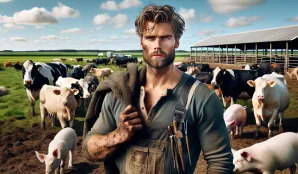
Farmers, livestock farming salary
Latest available salary statistics are for 2025. Compare average pay, salary range and related job listings.
29 000 - 33 900 SEK / month
Women earn 100% of what men do.
Naturbruk
Related tools
Salary progression Farmers, livestock farming
What does a livestock farmer in animal husbandry do? – Tasks and work environment
Livestock farmers in animal husbandry are responsible for breeding, caring for, and managing farm animals such as cows, sheep, pigs, or poultry. Tasks include feeding and health checks, documentation, machinery maintenance, and often also breeding work and preparations for slaughter or sale. The work generally takes place outdoors or in animal barns and involves physically demanding tasks and high responsibility for animal welfare. The work environment varies with the seasons and can involve long days, especially during calving or lambing periods.
Salary development over time
Over the past three years, salary development for livestock farmers in animal husbandry has been relatively stable. In 2022, the average salary was 27,200 SEK per month, while in 2023 and 2024 it amounted to 29 400. This corresponds to an increase of about 4.4% between 2022 and 2023, but thereafter the salary has plateaued and remained unchanged over the past year. This trend reflects an industry where wage growth is closely linked to the economic conditions of agriculture and the price development of agricultural products. The demand for workers remains stable, helping to keep salaries at a consistent level, although further increases have been absent in the recent year.
Livestock farmer in animal husbandry salary – complete overview
- Average salary: 29 400 SEK/month
- Lowest salary (female): 27,000 SEK/month
- Lowest salary (male): 29,700 SEK/month
- Highest salary (female): 32,500 SEK/month
- Highest salary (male): 31,900 SEK/month
- Hourly wage (average): 171 SEK/hour
- Gender pay gap: Women earn 100 % of what men do
Education and qualifications
To work as a livestock farmer in animal husbandry, a high school education with a focus on natural resource management is generally required, but many also supplement with further training and practical experience. Knowledge of animal husbandry, machinery handling, and work environment is essential, and it is common to combine formal education with on-the-job learning. Specializations, such as breeding or organic production, are available through courses and certifications.
- High school education: Natural resource management program, 3 years
- Further training: Courses in animal husbandry, breeding, and environmental management
- Practical training: Often mandatory during education
- Certifications: Possible in organic production and animal welfare
- Prerequisites: Basic eligibility for high school
Livestock farmers often develop a deep understanding of animal behavior and well-being, making the profession both demanding and personally rewarding. Many workdays are characterized by variety and unexpected challenges, where problem-solving skills and flexibility are important traits.
Common benefits and compensations
In animal husbandry, it is common to receive supplements for unsocial hours, especially during weekends and nights when animals require supervision. Other benefits may include work clothing, wellness allowances, and opportunities for further training. Some employers also offer housing on the farm or favorable conditions for keeping animals privately.
Competition and challenges
The profession is characterized by low competition for available positions, but at the same time, there is a paradoxical recruitment situation where many work part-time and employers find it difficult to find the right skills. Physically demanding work environments and seasonal workload variations are significant challenges. Profitability in agriculture is influenced by global market prices and political decisions, which can create uncertainty. Digitalization and sustainability demands increase the need for knowledge and adaptability. Despite these challenges, the demand for livestock farmers in animal husbandry remains stable according to the Employment Service's forecasts.
Tips for those who want to become livestock farmers in animal husbandry
To succeed as a livestock farmer, it is good to have a genuine interest in animals and nature, as the work requires patience and commitment. Being flexible and adaptable is important since tasks can vary greatly between seasons and situations. Good problem-solving skills facilitate handling unexpected challenges in animal care. It is recommended to gain broad practical experience through internships or summer jobs, and to regularly update knowledge through courses or industry meetings. Initiative and independence are valuable traits, especially for those wishing to run their own business. Building a network within the industry can open opportunities for collaboration and facilitate recruitment or purchasing animals and feed. Finally, perseverance is essential, as the work often involves long days and periods of high workload.
Key facts about livestock farmers in animal husbandry
- Education level: High school (natural resource management), often supplemented with courses
- Work environment: Varies, often outdoors or in barns, physically demanding
- Typical employment form: Full-time, but many work part-time
- Demand: Large opportunities nationwide
- Number of available jobs: 360 (May 2024, nationwide)
Career paths and future prospects
After three to five years in the profession, opportunities exist to advance to supervisory roles, specialize in breeding or organic production, or start your own farm. According to the Employment Service's forecast, employment opportunities remain strong, and demand is expected to stay unchanged over five years. Digitalization and increased focus on sustainability may create new roles within technology, animal welfare, and environmental certification. The profession has good future prospects, especially for those who develop broad skills and adapt to industry requirements.
Frequently asked questions about livestock farmers in animal husbandry
- What does a livestock farmer in animal husbandry earn?
- The average salary is 29 400 SEK per month. - What are the gender differences in salary?
- Women earn 100% of what men do in the profession. - What education is required?
- High school education in natural resource management is most common, often supplemented with courses and practical training. - What are the future prospects?
- The Employment Service assesses the employment opportunities as high, and demand is expected to remain unchanged over the next five years. - What are the most common job tasks?
- Feeding, animal care, breeding, documentation, and machinery maintenance. - Are there regional salary differences?
- Salary levels may vary depending on region and employer, but exact figures are not available. - What is the work environment like?
- The work is often physically demanding and takes place outdoors or in animal barns, with varying workload throughout the year.

Salary distributed by age and sector
| Age | Base salary | Monthly salary | |
|---|---|---|---|
| 18-24 | 25200 kr | 26300 kr | |
| 25-34 | 28700 kr | 29300 kr | |
| 35-44 | 29700 kr | 30600 kr | |
| 45-54 | 30900 kr | 31400 kr | |
| 55-64 | 29900 kr | 30300 kr | |
| Snitt | 100% | 28700 kr | 29400 kr |
| Age | Base salary | Monthly salary | |
|---|---|---|---|
| 18-24 | 28400 kr | 30800 kr | |
| 25-34 | 99% | 29200 kr | 30800 kr |
| 35-44 | 115% | 31500 kr | 32600 kr |
| 45-54 | 32100 kr | 33400 kr | |
| 55-64 | 98% | 31000 kr | 32400 kr |
| Snitt | 99% | 30300 kr | 31800 kr |
| Age | Base salary | Monthly salary | |
|---|---|---|---|
| 18-24 | 28400 kr | 30800 kr | |
| 25-34 | 99% | 29200 kr | 30800 kr |
| 35-44 | 115% | 31500 kr | 32600 kr |
| 45-54 | 32100 kr | 33400 kr | |
| 55-64 | 98% | 31000 kr | 32400 kr |
| Snitt | 99% | 30300 kr | 31800 kr |
| Age | Base salary | Monthly salary | |
|---|---|---|---|
| 18-24 | 25200 kr | 26200 kr | |
| 25-34 | 28700 kr | 29300 kr | |
| Snitt | 99% | 28600 kr | 29300 kr |
| Age | Base salary | Monthly salary | |
|---|---|---|---|
| 18-24 | 25200 kr | 26200 kr | |
| 25-34 | 28700 kr | 29300 kr | |
| Snitt | 99% | 28600 kr | 29300 kr |
| Age | Base salary | Monthly salary | |
|---|---|---|---|
| Snitt | 100% | 29100 kr | 29500 kr |
| Age | Base salary | Monthly salary | |
|---|---|---|---|
| 25-34 | 99% | 29900 kr | 31000 kr |
| 35-44 | 115% | 28100 kr | 28800 kr |
| 55-64 | 98% | 30300 kr | 32900 kr |
| Snitt | 99% | 29600 kr | 32000 kr |
| Age | Base salary | Monthly salary | |
|---|---|---|---|
| 25-34 | 99% | 29900 kr | 31000 kr |
| 35-44 | 115% | 28100 kr | 28800 kr |
| 55-64 | 98% | 30300 kr | 32900 kr |
| Snitt | 99% | 29600 kr | 32000 kr |
| Age | Base salary | Monthly salary | |
|---|---|---|---|
| Snitt | 99% | 29100 kr | 29500 kr |
| Age | Base salary | Monthly salary | |
|---|---|---|---|
| Snitt | 99% | 29100 kr | 29500 kr |
| Age | Base salary | Monthly salary | |
|---|---|---|---|
| 18-24 | 24200 kr | 25700 kr | |
| 25-34 | 29400 kr | 30000 kr | |
| Snitt | 100% | 28300 kr | 29300 kr |
| Age | Base salary | Monthly salary | |
|---|---|---|---|
| 18-24 | 28300 kr | 30400 kr | |
| 25-34 | 99% | 29100 kr | 30700 kr |
| 35-44 | 115% | 32000 kr | 33100 kr |
| 45-54 | 32300 kr | 33200 kr | |
| 55-64 | 98% | 31100 kr | 32400 kr |
| Snitt | 99% | 30400 kr | 31800 kr |
| Age | Base salary | Monthly salary | |
|---|---|---|---|
| 18-24 | 28300 kr | 30400 kr | |
| 25-34 | 99% | 29100 kr | 30700 kr |
| 35-44 | 115% | 32000 kr | 33100 kr |
| 45-54 | 32300 kr | 33200 kr | |
| 55-64 | 98% | 31100 kr | 32400 kr |
| Snitt | 99% | 30400 kr | 31800 kr |
| Age | Base salary | Monthly salary | |
|---|---|---|---|
| 25-34 | 29400 kr | 30000 kr | |
| Snitt | 99% | 28300 kr | 29300 kr |
| Age | Base salary | Monthly salary | |
|---|---|---|---|
| 25-34 | 29400 kr | 30000 kr | |
| Snitt | 99% | 28300 kr | 29300 kr |

About the data
All information displayed on this page is based on data from the Swedish Central Bureau of Statistics (SCB), the Swedish Tax Agency and the Swedish employment agency. Learn more about our data and data sources here.
All figures are gross salaries, meaning salaries before tax. The average salary, or mean salary, is calculated by adding up the total salary for all individuals within the profession and dividing it by the number of individuals. For specific job categories, we have also considered various criteria such as experience and education.
Profession Farmers, livestock farming has the SSYK code 6121, which we use to match against the SCB database to obtain the latest salary statistics.
-

Stable Manager for SLU's Educational and Research Stable
Breeders and caretakers of farm animals
Tue, 23 Jun 2026 - 23:08 -

Chick Sorters Needed for Hatchery Services – Kwon Company AB
Breeders and caretakers of farm animals
Tue, 23 Jun 2026 - 01:24 -

Senior Feed Product Specialist (Poultry/Pig)
Breeders and caretakers of farm animals
Mon, 22 Jun 2026 - 21:45 -
Pig Farmer for Integrated Production with 220 Sows
Breeders and caretakers of farm animals
Thu, 18 Jun 2026 - 09:33
Compare salary, work tasks and job outlook in adjacent occupations to find roles with similar skills or pay levels.
-

Average salary: 33 600 SEK/month • Naturbruk
Forestry workers
Compare with Farmers, livestock farming
Tue, 23 Jun 2026 - 14:33 -

Construction worker, garden salary
Average salary: 32 000 SEK/month • Naturbruk
Gardeners etc.
Compare with Farmers, livestock farming
Wed, 24 Jun 2026 - 09:50 -

Average salary: 44 900 SEK/month • Naturbruk
Specialists and advisors in agriculture etc.
Compare with Farmers, livestock farming
Wed, 24 Jun 2026 - 09:29 -

Average salary: 44 900 SEK/month • Naturbruk
Specialists and advisors in agriculture etc.
Compare with Farmers, livestock farming
Wed, 24 Jun 2026 - 08:39 -

Laboratory animal keeper salary
Average salary: 30 000 SEK/month • Naturbruk
Other animal breeders and animal caretakers
Compare with Farmers, livestock farming
Wed, 24 Jun 2026 - 08:46 -

Average salary: 44 900 SEK/month • Naturbruk
Specialists and advisors in agriculture etc.
Compare with Farmers, livestock farming
Wed, 24 Jun 2026 - 08:10


