- Salary statistics
- Conservator, archeology salary
Conservator, archeology salary
Latest available salary statistics are for 2025. Compare average pay, salary range and related job listings.
43 692 - 41 986 SEK / month
Kultur, media, design
Related tools
Salary progression Conservator, archeology
What does a conservator within archaeology do? – Tasks and work environment
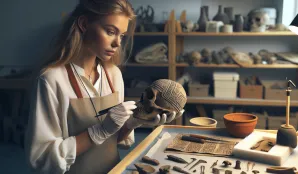
A conservator within archaeology works with preserving, restoring, and analyzing archaeological finds and cultural heritage objects. The profession often involves working with items discovered during excavations, including ceramics, metals, textiles, and organic materials such as wood or bone. Tasks include documentation, conservation, damage assessment, and advice on storage and handling. The work is carried out both in laboratory settings and in the field, often in close collaboration with archaeologists, museum staff, and other specialists. The work environment can vary from modern laboratories to provisional work sites at excavation locations, requiring flexibility and precision.
Salary development over time
The salary development for conservators within archaeology has been positive over the past three years. In 2022, the average salary was 36,200 kronor per month, increasing to 39 779 kronor in 2023 – a rise of approximately 6.1%. In 2024, this trend continued with a further increase to 41 986 kronor, corresponding to about 3.6% growth from the previous year. This salary trend reflects both an increased focus on cultural heritage preservation and a greater demand for qualified professionals in the field. Although the profession is relatively niche, the need for specialists in archaeological conservation has become more apparent, contributing to positive salary adjustments. Market appreciation for conservation expertise and increased requirements for documentation and quality in the cultural sector may also have influenced salary development.
Conservator archaeology salary – comprehensive overview
- Average salary: 41 986 kr/month
- Lowest/Highest salary: No exact data available
- Hourly rate: 239 kr/hour
- Gender differences: No data available
- Regional differences: No data available
Education and qualifications
To work as a conservator within archaeology, a higher education in conservation is usually required, with a focus on archaeological materials. The educational path often includes both theoretical studies and practical experience, emphasizing knowledge about materials and preservation methods. Many programs include internships and close collaboration with museums or archaeological institutions. Background knowledge in science or art history can be advantageous.
- Formal degree: Bachelor's or master's degree in conservation (3–5 years)
- Internship: Often mandatory, conducted at museums or research institutions
- Courses: Specialization in archaeological conservation is recommended
- Prerequisites: Basic eligibility for university studies, often in science subjects
- Tips: Engage in projects and networks within the cultural heritage sector to build experience
Many conservators within archaeology have the opportunity to work with unique objects and remains that have never been documented before. This proximity to history often makes the work both creative and problem-solving, where each find may require a tailored preservation strategy.
Common benefits and compensations
Conservators within archaeology are often offered attractive benefits such as extra vacation days, wellness allowances, opportunities for professional development, and flexible working hours. In addition to the base salary, public sector employers may provide pension contributions and insurance, as well as access to research resources and international collaborations. Project-based employment may also include per diems and compensation for work in other locations.
Competition and challenges
The job market for conservators within archaeology is relatively limited, which can lead to high competition for permanent positions. Many jobs are advertised as project-based or temporary, especially related to specific excavations or research projects. Since the profession requires advanced specialized skills and practical experience, continuous further education and networking are important to improve employment prospects. Challenges include staying updated on new methods and materials, and working with limited resources within the cultural sector. Despite these challenges, opportunities exist within both public and private sectors, especially for those who are geographically flexible and possess broad competencies.
Tips for aspiring conservators within archaeology
To succeed as a conservator within archaeology, it is beneficial to combine a strong interest in history and culture with accuracy and problem-solving skills. Being methodical and detail-oriented is crucial in analyzing and conserving sensitive objects. Early engagement in internships helps build experience and networks within the industry, as practical skills are highly valued. The ability to collaborate and communicate with different professional groups is also important, especially during excavations and projects involving multiple stakeholders. Flexibility and adaptability provide advantages, as the work environment can vary greatly. Creativity and curiosity aid in developing new preservation solutions for unusual finds. Finally, actively staying informed about new research findings and techniques in the field is highly recommended.
Key facts about conservators within archaeology
- Educational level: Bachelor's or master's degree in conservation (3–5 years)
- Work environment: Laboratories, museums, and fieldwork at excavation sites
- Employment type: Often project-based or temporary assignments
- Demand: Limited number of positions, 620 job openings in the profession
- Special skills: Material science, damage assessment, and preservation methods for archaeological finds
Career paths and future prospects
After three to five years in the profession, a conservator within archaeology can advance to more specialized roles, such as project manager for major conservation efforts or responsible for collections at museums and institutions. Some choose to deepen their research or teaching, while others engage in international projects and collaborations. According to forecasts from the Employment Service, no specific assessment is made for conservators within archaeology, but within the art and craft professions, there are a number of job openings and project opportunities. Competition for permanent positions remains high, and the job market is characterized by temporary employment and project-based work. Flexibility and ongoing education are therefore important factors for long-term career development.
Common questions about conservators within archaeology
- What does a conservator within archaeology earn?
- The average salary is 41 986 kronor per month, with an hourly rate of 239 kronor. - What education is required to become a conservator within archaeology?
- A bachelor's or master's degree in conservation, often with practical training, is required. - What is the job market like for conservators within archaeology?
- The market is limited and competition for permanent positions is high, but there are project-based and temporary assignments. - What tasks does a conservator within archaeology perform?
- The work includes conservation, restoration, documentation, and advising on archaeological finds. - Where do conservators within archaeology work?
- Most work at museums, universities, research institutions, or in connection with archaeological excavations. - Are there regional salary differences for conservators within archaeology?
- There is no available data on regional salary differences for this profession. - What personal qualities are important for the profession?
- Accuracy, problem-solving skills, flexibility, and teamwork are central qualities.

Salary distributed by age and sector

About the data
All information displayed on this page is based on data from the Swedish Central Bureau of Statistics (SCB), the Swedish Tax Agency and the Swedish employment agency. Learn more about our data and data sources here.
All figures are gross salaries, meaning salaries before tax. The average salary, or mean salary, is calculated by adding up the total salary for all individuals within the profession and dividing it by the number of individuals. For specific job categories, we have also considered various criteria such as experience and education.
Profession Conservator, archeology has the SSYK code 2651, which we use to match against the SCB database to obtain the latest salary statistics.


Compare salary, work tasks and job outlook in adjacent occupations to find roles with similar skills or pay levels.
-

Average salary: 35 600 SEK/month • Kultur, media, design
Other professions in culture and entertainment
Compare with Conservator, archeology
Sun, 12 Jul 2026 - 20:43 -

Model designer, textile salary
Average salary: 51 700 SEK/month • Kultur, media, design
Other designers and creators
Compare with Conservator, archeology
Tue, 14 Jul 2026 - 04:45 -

Average salary: 40 600 SEK/month • Kultur, media, design
Translators, interpreters and linguists etc.
Compare with Conservator, archeology
Tue, 14 Jul 2026 - 04:03 -

Average salary: 35 600 SEK/month • Kultur, media, design
Other professions in culture and entertainment
Compare with Conservator, archeology
Mon, 13 Jul 2026 - 01:19 -

Average salary: 39 900 SEK/month • Kultur, media, design
Interior designers, decorators and scenographers etc.
Compare with Conservator, archeology
Mon, 13 Jul 2026 - 17:59 -

Average salary: 41 986 SEK/month • Kultur, media, design
Choreographers and dancers
Compare with Conservator, archeology
Mon, 13 Jul 2026 - 19:11


