- Salary statistics
- Industrial sheet metal workers, sheet metal workers salary
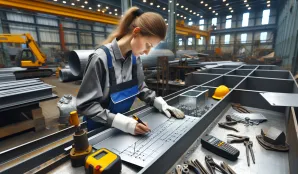
Industrial sheet metal workers, sheet metal workers salary
Latest available salary statistics are for 2025. Compare average pay, salary range and related job listings.
37 300 - 37 500 SEK / month
Industriell tillverkning
Related tools
Salary progression Industrial sheet metal workers, sheet metal workers
What does an industrial sheet metal worker in thin sheet metal do? – Tasks and work environment
An industrial sheet metal worker specializing in thin sheet metal mainly works with manufacturing, assembly, and repair of various types of thin sheet metal structures within industry. Tasks often include reading and interpreting drawings, measuring, cutting, and shaping sheet metal using hand tools and machines, as well as joining details through welding, bolting, or bonding. The work may also involve installing ventilation ducts, enclosures, machine parts, and custom sheet metal components. The work environment varies between manufacturing industries, workshops, and construction sites, where high demands are placed on accuracy, safety, and adherence to work routines. Often, work is performed in noisy facilities and sometimes at heights or in confined spaces, making good physical condition and experience with protective equipment important parts of daily life.
Salary development over time
The salary for an industrial sheet metal worker in thin sheet metal has shown steady and positive growth in recent years. In 2022, the average salary was 32,200 SEK per month, increasing to 35 700 SEK in 2023. The latest data for 2024 shows an average of 37 500 SEK, representing an increase of about 11 percent over a three-year period. This salary increase is linked to a general shortage of skilled sheet metal workers and high demand on the job market, where employers are compelled to offer competitive wages to retain and recruit staff. Despite the positive trend, salary development remains influenced by factors such as geographic location, experience, and education level. The market's need for advanced sheet metal processing and specialized services has also contributed to pushing up wages within the profession.
Industrial sheet metal worker, thin sheet metal worker salary – complete overview
- Average salary: 37 500 SEK/month
- Lowest salary: Data unavailable
- Highest salary: Data unavailable
- Hourly wage (average): 215 SEK
- Gender differences: Men earn 37 600 SEK, data on women is unavailable
- Regional differences: Data unavailable
Education and qualifications
The path to becoming an industrial sheet metal worker in thin sheet metal usually involves the Industrial Technology program in high school with a focus on sheet metal work or equivalent adult education. After completing education, a longer practical period or apprenticeship is typically required to gain necessary experience. Additional courses in welding, reading drawings, and CNC technology are common. The profession requires good technical understanding, problem-solving skills, and a high level of precision.
- High school education: Industrial Technology program, 3 years
- Adult education (Komvux): Available in many locations
- Certifications: Welding certificates and possible special certifications
- Practice/apprenticeship: Usually 1–2 years after education
- Prerequisites: Approved grades in mathematics and technology recommended
Many industrial sheet metal workers develop an impressive sense for material properties over time and can quickly determine the necessary processing for different metals. This tactile skill is often crucial for creating durable and aesthetically pleasing structures, especially for custom orders.
Common benefits and compensations
Industrial sheet metal workers in thin sheet metal often have access to collectively negotiated benefits such as occupational pensions, insurance, and wellness allowances. Compensation for inconvenient working hours, overtime, and shift work occurs, as well as opportunities for work clothes and protective equipment provided by the employer. Some workplaces also offer bonus programs or skills development as part of employment.
Competition and challenges
The job market for industrial sheet metal workers in thin sheet metal is characterized by high demand and some recruitment difficulties, mainly because many leave the profession and the new recruitment does not always meet the need. Competition for the most attractive jobs can be fierce, especially in metropolitan regions and larger industrial companies. At the same time, employers require broad skills, flexibility, and the ability to quickly adapt to new technology and machinery. Physically demanding tasks, safety regulations, and sometimes monotonous work content can pose challenges for both newcomers and experienced professionals.
Tips for those who want to become an industrial sheet metal worker in thin sheet metal
To succeed as an industrial sheet metal worker in thin sheet metal, it is good to combine technical interest with a careful and persistent personality. Early practice in reading drawings and practical tasks during education provides a solid foundation for the future. Good teamwork skills facilitate daily work in teams and make problem-solving easier. Flexibility and a willingness to learn new methods and machines are important traits, as technology in the industry constantly develops. Being solution-oriented helps with unexpected challenges and enables you to undertake special projects confidently. Finally, showing responsibility, especially regarding safety and quality, is highly valued by employers and can lead to more opportunities within the profession.
Key facts about industrial sheet metal workers in thin sheet metal
- Education level: High school or adult education
- Work environment: Industry, workshop, or construction site
- Demand: High, with 1437 job openings in the profession
- Future prospects: Unchanged demand over the next 5 years
- Special skills: Welding and reading drawings are often advantageous
Career paths and future outlook
After three to five years as an industrial sheet metal worker in thin sheet metal, opportunities exist to advance to team leader, production planner, or specialized technician in sheet metal processing and welding. Some choose to further educate themselves in CAD/CAM or CNC technology to work with machine programming. At the national level, the Swedish Public Employment Service estimates that job opportunities in the profession are good, with 1437 job openings and a forecast of unchanged demand over the next five years. However, recruitment difficulties in finding the right skills mean that there are still good chances for both new and experienced professionals.
Common questions about industrial sheet metal workers in thin sheet metal
- What does an industrial sheet metal worker, thin sheet metal worker, earn?
- The average salary is 37 500 SEK per month according to the latest statistics. - How does one become an industrial sheet metal worker in thin sheet metal?
- The most common path is the Industrial Technology program in high school or equivalent adult education, often followed by an apprenticeship period. - What tasks does an industrial sheet metal worker perform?
- Processing, assembly, and repair of thin sheet metal structures, as well as reading drawings and welding. - What is the job market like?
- Demand is high, and there are many job openings within the profession, especially for those with the right skills. - What benefits are usually included in the profession?
- Collectively negotiated benefits such as occupational pension, insurance, and wellness allowances are common. - Are there gender differences in salary?
- Men earn on average 37 600 SEK, but specific information about women is unavailable. - What further training is advantageous?
- For example, certifications in welding, CNC technology, and courses in reading drawings and CAD.

Salary distributed by age and sector
| Age | Base salary | Monthly salary | |
|---|---|---|---|
| 18-24 | 30300 kr | 30400 kr | |
| 25-34 | 37100 kr | 37300 kr | |
| 35-44 | 39500 kr | 39600 kr | |
| 45-54 | 40600 kr | 41100 kr | |
| 55-64 | 36000 kr | 36300 kr | |
| Snitt | 37300 kr | 37500 kr |
| Age | Base salary | Monthly salary | |
|---|---|---|---|
| 18-24 | 30300 kr | 30400 kr | |
| 25-34 | 37100 kr | 37300 kr | |
| 35-44 | 39500 kr | 39600 kr | |
| 45-54 | 40600 kr | 41100 kr | |
| 55-64 | 36000 kr | 36300 kr | |
| Snitt | 37300 kr | 37500 kr |
| Age | Base salary | Monthly salary | |
|---|---|---|---|
| 18-24 | 30300 kr | 30400 kr | |
| 25-34 | 37100 kr | 37300 kr | |
| 35-44 | 39500 kr | 39600 kr | |
| 45-54 | 40600 kr | 41100 kr | |
| 55-64 | 36000 kr | 36300 kr | |
| Snitt | 37300 kr | 37500 kr |
| Age | Base salary | Monthly salary | |
|---|---|---|---|
| 18-24 | 30400 kr | 30500 kr | |
| 25-34 | 37400 kr | 37600 kr | |
| 35-44 | 39700 kr | 39700 kr | |
| 45-54 | 40600 kr | 41100 kr | |
| 55-64 | 36000 kr | 36300 kr | |
| Snitt | 37400 kr | 37600 kr |
| Age | Base salary | Monthly salary | |
|---|---|---|---|
| 18-24 | 30400 kr | 30500 kr | |
| 25-34 | 37400 kr | 37600 kr | |
| 35-44 | 39700 kr | 39700 kr | |
| 45-54 | 40600 kr | 41100 kr | |
| 55-64 | 36000 kr | 36300 kr | |
| Snitt | 37400 kr | 37600 kr |
| Age | Base salary | Monthly salary | |
|---|---|---|---|
| 18-24 | 30400 kr | 30500 kr | |
| 25-34 | 37400 kr | 37600 kr | |
| 35-44 | 39700 kr | 39700 kr | |
| 45-54 | 40600 kr | 41100 kr | |
| 55-64 | 36000 kr | 36300 kr | |
| Snitt | 37400 kr | 37600 kr |

About the data
All information displayed on this page is based on data from the Swedish Central Bureau of Statistics (SCB), the Swedish Tax Agency and the Swedish employment agency. Learn more about our data and data sources here.
All figures are gross salaries, meaning salaries before tax. The average salary, or mean salary, is calculated by adding up the total salary for all individuals within the profession and dividing it by the number of individuals. For specific job categories, we have also considered various criteria such as experience and education.
Profession Industrial sheet metal workers, sheet metal workers has the SSYK code 7214, which we use to match against the SCB database to obtain the latest salary statistics.




Compare salary, work tasks and job outlook in adjacent occupations to find roles with similar skills or pay levels.
-
Tool technician, tool maker salary
Average salary: 37 900 SEK/month • Industriell tillverkning
Toolmakers
Compare with Industrial sheet metal workers, sheet metal workers
Tue, 14 Jul 2026 - 10:09 -

Machine operator, glass wool salary
Average salary: 36 900 SEK/month • Industriell tillverkning
Other process and machine operators
Compare with Industrial sheet metal workers, sheet metal workers
Tue, 14 Jul 2026 - 10:05 -

Average salary: 34 200 SEK/month • Industriell tillverkning
Machine operators, plastics industry
Compare with Industrial sheet metal workers, sheet metal workers
Tue, 14 Jul 2026 - 07:11 -

Average salary: 36 900 SEK/month • Industriell tillverkning
Other process and machine operators
Compare with Industrial sheet metal workers, sheet metal workers
Tue, 14 Jul 2026 - 07:12 -

Average salary: 36 300 SEK/month • Industriell tillverkning
Machine setters and machine operators, metal work
Compare with Industrial sheet metal workers, sheet metal workers
Tue, 14 Jul 2026 - 03:57 -

Stencil manufacturer, screen printing salary
Average salary: 34 600 SEK/month • Industriell tillverkning
Printers
Compare with Industrial sheet metal workers, sheet metal workers
Tue, 14 Jul 2026 - 08:18


